Weather Channel Accused of Mining User Data

The Los Angeles city attorney has filed a lawsuit saying that the Weather Channel collects user data for commercial purposes, not just to provide local forecasts.

The government said the Weather Company, the business behind the app, unfairly manipulated users into turning on location tracking by implying that the information would be used only to localize weather reports. Yet the company, which is owned by IBM, also used the data for unrelated commercial purposes, like targeted marketing and analysis for hedge funds, according to the lawsuit.

The New York Times uses the word «covert» in its headline. It’s not that covert though. The Weather Channel has a How is My Data Used page. I’m not defending them but people really need to start reading privacy policies and service terms. Although using dark patterns to obfuscate this is wrong.

Human War Follows a Universal Mathematical Law

Here’s something you don’t read every day. A new study of human war over the past 600 years that it appears to follow power law distribution.

The thinking goes like this. Society is a complex web of social, political, and economic forces that depend on the network of links between individuals and the countries they represent. These links are constantly rearranging, sometimes because of violence and death. When the level of rearrangement and associated violence rises above a threshold level, we describe the resulting pattern as war.

The second step is building a machine learning system that can predict when the next large-scale conflict is likely to occur. Or maybe we’ll have dystopian war AIs that will use this information against us.

Apple Services are Where the Growth is Now

After some rough financial news, Tim Cook is reassuring investors that Apple isn’t done growing by highlighting Apple services.

Step back from the gyrations of the moment, and there’s an emerging strategy for Apple: Sell fewer iPhones and assorted devices such as Macs and iWatches at a higher price than mass-market rivals, and then flood those millions of users–who have more than average disposable income because they were able to afford those devices in the first place–with apps and content that they will pay for.

I expect big improvements in Apple services in the future. Better iCloud storage, an Apple News content subscription (which I will happily pay for if it means no longer needing to visit ad tracking-riddled websites), an Apple video subscription, and more.

First Images of Galaxy S10 Posted Online

The first images of the Galaxy S10 have appeared online, just under two months before Samsung’s likely announcement of the phone. The images were posted by known gadget leaker and VentureBeat reporter Evan Blass on Twitter, and reported on The Verge. The Galaxy S10 looks to have thin bezels around all the edges, a camera cutout on the top right-hand corner, and a hint of chin towards the bottom.

The photo shows a phone with a nearly full-screen design that’s disrupted only by a camera cutout in the top-right corner and thin bezels around each edge. There’s just the slightest additional thickness for a chin on the bottom. Blass indicates that this will be the standard version of the Galaxy S10. A cheaper model is also expected along with a larger Plus model and a 5G model. Samsung typically announces its Galaxy S phones at the end of February.

Eight Depressing, Illuminating Months With a Flip Phone

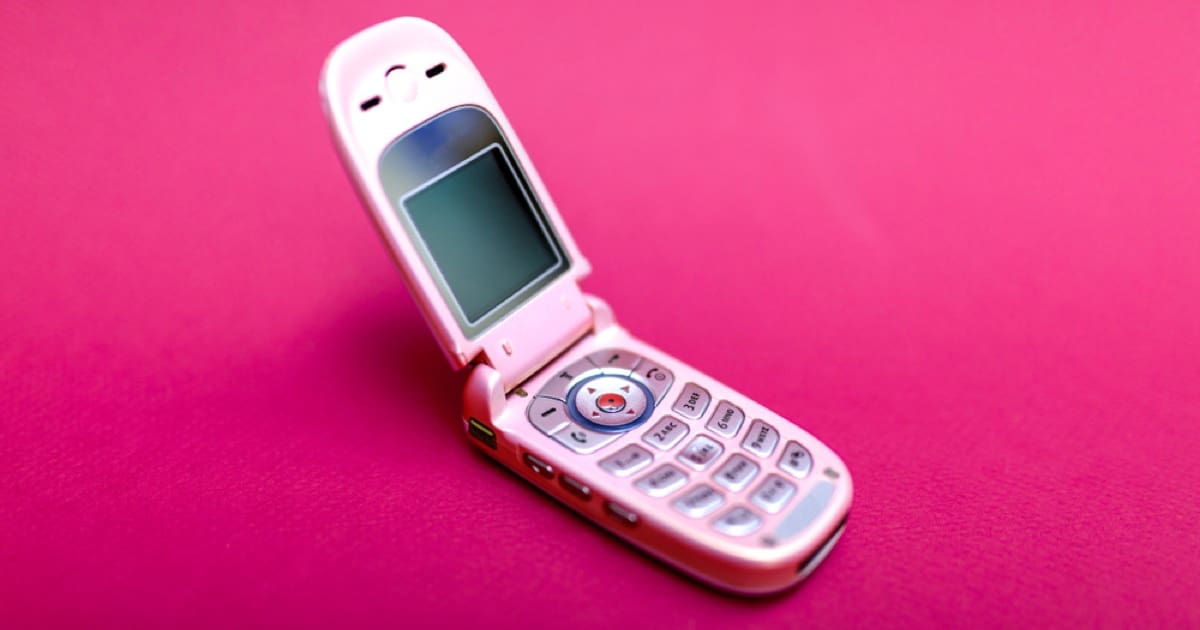
Sometimes, an author can get away with writing about anything if it’s done with charm and grace. In this case Wired’s Jason Kehe decided to try living with a flip phone for eight months to see what he might learn. The story is not so much about the awkward disconnectedness of it all, but rather the remarkable social and technical impact.

Frankly, I’m embarrassed to write about this semifailed experiment. Disconnection has become the most congratulated, least convincing narrative gimmick of recent times, a widely excusable hypocrisy.

The author writes with a certain colorful, literary irony and sparkle. As a result, his social commentary about our fixation and dependence on the smartphone is delightful reading in and of itself. And yet, and yet, the author manages to make us ponder. What have we done to ourselves as humans?

Apple Watch Saved Woman Trapped in Car

A woman from Florida was recently saved by her Apple Watch after she was trapped in a car underwater.

Amanda Antonio told first responders in Hillsborough County, Fla., that she used her Apple Watch to locate her iPhone to call 9-1-1 after her car rolled in a ditch full of mud and water. “It’s up to my waist,” Antonio said according to a transcript of the call obtained by Spectrum Bay News 9, a television station covering the Tampa-St. Petersburg area. She later said, “It’s now up to my chin. I’m freezing. I’m so scared.”

Kids' Programming Language Scratch 3.0 Now Available

Scratch is a programming language for kids and recently celebrated the launch of Scratch 3.0. The update adds new functionalities.

Scratch 3.0 is the next generation of Scratch – designed to expand how, what, and where you can create with Scratch. It includes dozens of new sprites, a totally new sound editor, and many new programming blocks. And with Scratch 3.0, you are able to create and play projects on your tablet, in addition to your laptop or desk computer.

Intel Team Still Fighting Meltdown and Spectre

An elite Intel team is still fighting Meltdown and Spectre, two security vulnerabilities that affected millions of devices.

Throughout 2018, researchers inside and outside Intel continued to find exploitable weaknesses related to this class of «speculative execution» vulnerabilities. Fixing many of them takes not just software patches, but conceptually rethinking how processors are made.

I recommend reading Wired’s article, it’s an interesting look into Intel and how serious the two flaws still are.

Hackers Hijacked Chromecasts and Told Users to Follow PewDePie

Hackers warned thousands of Chromecast users of a security flaw…by hijacking their devices. They were the latest people to work out how to force the Chromecast to play any YouTube video they want. For good measure, the hackers, who go by the names Hacker Giraffe and J3ws3r, encouraged users to subscribe to controversial YouTube personality PewDePie’s channel. Techcrunch spoke to researchers concerned that the vulnerability could leave exposed devices vulnerable to more damaging attacks.

The bug, dubbed CastHack, exploits a weakness in both Chromecast and the router it connects to. Some home routers have enabled Universal Plug and Play (UPnP), a networking standard that can be exploited in many ways. UPnP forwards ports from the internal network to the internet, making Chromecasts and other devices viewable and accessible from anywhere on the internet.