
Sometimes, well almost always, it’s good to wait awhile after Apple encounters a crisis of some sort and not get swept up in the venting, rage and fury. Later, cooler, experienced heads weigh in. This time it’s Ben Thompson at Stratechery. «As rare as last week’s Apple revenue warning from CEO Tim Cook may have been — the company last issued a revenue warning in June 2002 — the company has had other bad quarters in the iPhone era.» This is great analysis, worth reading.

TMO Background Mode Interview with Journalist & TMO Contributor Charlotte Henry
Charlotte is a London-based technical journalist. She writes about Apple — and is now The Mac Observer’s newest regular contributor. She has also written for City A.M. (London’s daily business tabloid,) Computer Business Review, The Independent on Sunday and CapX. Her first book, Not Buying It, will be published in June.
I asked Charlotte how she got started in technical journalism. The first factor derived from the fact, that, as a youth, there were always new technical gadgets showing up in her home. The second was via her early interest in music creation on a Mac during her college years. We chatted about her first news blog and then meeting Jeff Gamet on the British Tech Network. Finally Charlotte shared some of her personal interests when she’s not writing: music, soccer and mystery novels.

Add Four Displays To Your Mac with Targus USB-C Universal Quad HD Docking Station
The beauty of our new USB-C docking station world (don’t say dongles!) is the flexibility and expandability it provides for our Macs. Targus highlights this perfectly with their new USB-C Universal Quad HD Docking Station that they were showing off Sunday at CES Unveiled. In addition to four USB 3.0 ports, an audio in/out port, and a USB-C port with 15W of power, this dock includes four (yes, 4!) HDMI ports, each connectable to a 1080p display. MacOS sees each of these connected displays individually, meaning you could just as easily have four separate screens for your day-trading delights as you could build a multi-screen video «wall» and spread your image across all four of them simultaneously. At US$275 this is a no-brainer if you need those kind of display options. A unit supporting four 4K screens will be out later this year, due to be priced at US$375.

AirPlay 2 on TVs, Project Erasmus Update – TMO Daily Observations 2019-01-07
Samsung announced AirPlay 2 coming to TVs, and there’s a Project Erasmus update. Kelly Guimont hosts Charlotte Henry and Andrew Orr.
Browser Fingerprinting? DuckDuckGo says DuckDuckNo!
In a Whonix forum a person alleged that DuckDuckGo was using browser fingerprinting techniques to track people. The search engine denies the claim however.
“Fingerprinting-detection libraries unfortunately create false positives because they don’t anticipate good actors using some browser APIs for non-nefarious purposes for which they were designed. We know this not only because we’re falsely identified here (and have been elsewhere) but because we are building this type of detection into our mobile app and browser extension and don’t similarly want to make false claims.”
DuckDuckGo CEO Gabe Weinberg said an API they use to determine the size of the browser might be triggering the fingerprinting flag.
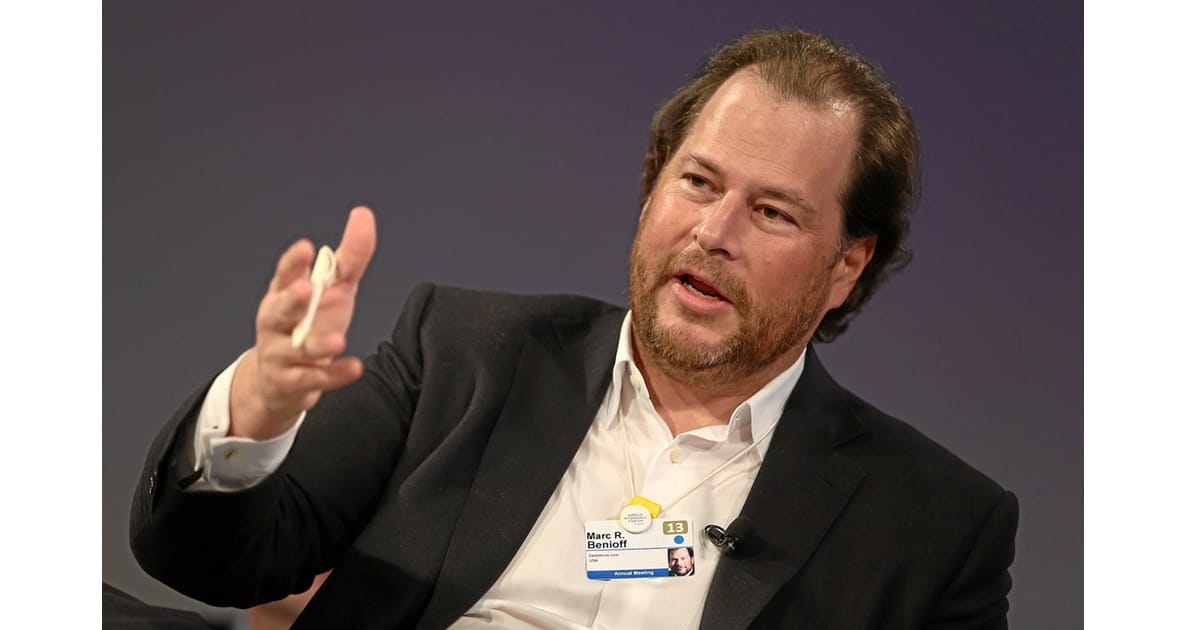
Salesforce’s Marc Benioff Talks Time Off and Time Magazine
Salesforce boss Marc Benioff is one of tech’s most compelling and surprising characters and has been for a long time. This summer, he made a decision that caught most people unawares – he named a co-CEO. A CNBC interview with Mr. Benioff reveals how time off this summer made he decide to focus only on the things he loves and touches on his purchase of Time Magazine.
Weeks at work are filled with dinners, parties, events and business council meetings exclusively for CEOs, meaning that if anyone from Salesforce is to attend, it has to be him. Meanwhile, he’s trying to run a 30,000-person company, build Salesforce towers across the globe, bolster his philanthropy, invest in start-ups, mentor other business leaders and become a louder voice on a number of social and political issues. “So I made a very good decision — to have two CEOs,” Benioff said with a laugh, during a recent interview at his home in San Francisco. “Then it’s a divide and conquer strategy.” Following his time off the grid, Benioff flew to Hawaii refreshed and resolved to focus only on the things in life he enjoys.
M.G. Siegler's 2018 Homescreen and How it Changed
I love reading about how other people use their devices, and every year M.G. Siegler shares how his home screen evolves over time.
We all have our apps that we use on a daily basis. And for new ones to break in, they don’t just have to be better, they have to be so much better that they’re worth replacing another app. More specifically, the time you use another app.
Readers will know I’m a fiend when it comes to organization. So for my iPhone and iPad I keep my most-used apps on the home screen, and organize them all alphabetically.

Apple's International Privacy Trade-Offs
LONDON – Apple has for a long time proudly flaunted its pro-privacy values. It, quite fairly, highlights how its products are aligned with these values, especially when compared to its competitors. However, this is coming under increasing strain. According to a Techcrunch report, European customers, in particular, are beginning to question whether Apple is still putting its money where its mouth is when it comes to privacy. Deals with Google and its ongoing presence in China, are leaving Apple walking something of a tightrope.
Far from Apple’s troubles in emerging markets and China, the company is attracting the ire of what should really be a core supporter demographic naturally aligned with the pro-privacy stance CEO Tim Cook has made into his public soapbox in recent years — but which is instead crying foul over perceived hypocrisy. The problem for this subset of otherwise loyal European iPhone users is that Apple isn’t offering enough privacy.

It is Still Down to Humans to Fight Fake News
2019 is undoubtedly going to be a big year in AI. The discussion over fake news will continue too. Sean Gourley, CEO of machine intelligence company Primer, wrote in Wired that while progress in AI is being made, at the moment humans, not algorithms, need to lead the fight against fake news. I know from my own research into fake news how important a role bots play in the spread of disinformation. Unfortunately, the technology is not yet discerning enough to be relied upon to separate fact from fiction. AI has not been able to fight back. It may be able to one day, but until then, it is down to us humans.
One of the reasons that computational propaganda has been so successful is that the naïve, popularity-based filtering systems employed by today’s leading social networks have proven to be fragile and susceptible to targeted fake information attacks.To solve this problem, we will need to design algorithms that amplify our intelligence when we’re interacting together in large groups. The good news is that the latest research into such systems looks promising.


