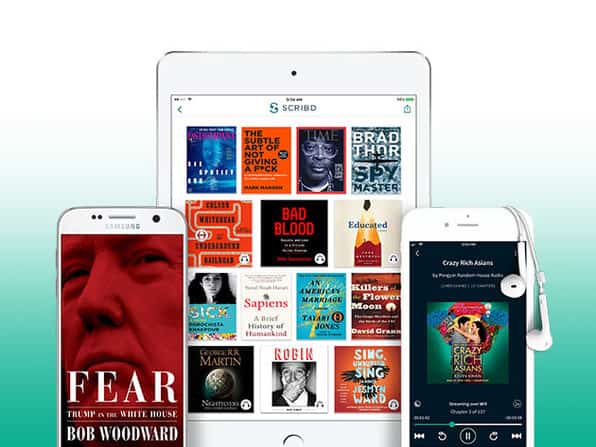
We have a deal today on a one year subscription for Scribd, which gives you access to bestselling and award-winning books and audiobooks, plus articles from leading magazines, newspapers, even sheet music. It requires iOS 9 and later, Android 4.4 and later, or Kindle Fire OS 4 or later.

iPhone XR pre-orders, 4K is here to stay – TMO Daily Observations 2018-10-17
John Martellaro and Andrew Orr join Kelly Guimont to discuss iPhone XR pre-orders and who is lining up, as well as 4K television no longer being a fad.
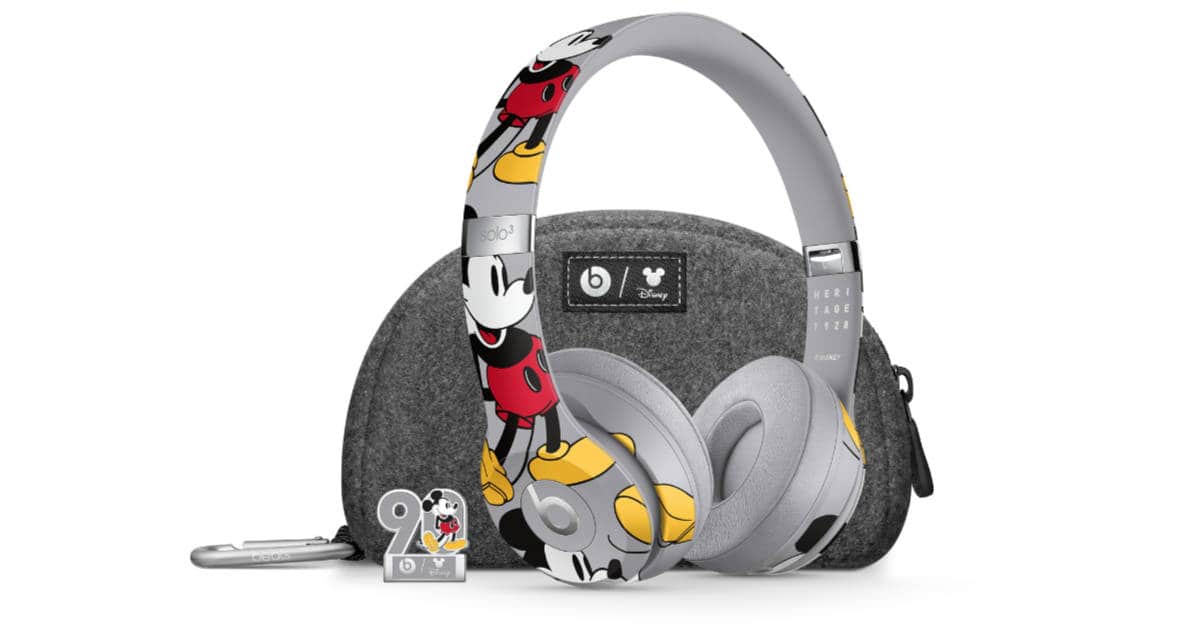
Apple Celebrates Mickey Mouse's 90 Anniversary with Limited Edition Beats Solo 3 Wireless Headphones
It’s the 90th anniversary of Mickey Mouse, so Apple and Disney teamed up for a limited edition version of the Beats Solo 3 Wireless headphones showing off the iconic mouse. The headphones include a gray felt case with Beats and Mickey emblems, a special 90th anniversary Mickey pin, a decal, and of course Mickey is printed on the headphones, too. You can pick up the 90th anniversary Mickey Mouse Beats headphones for US$329.95.
U.S. Customers Get a New Apple Data Tool
Apple customers in the United States, Canada, Australia, and New Zealand get a new Apple data tool. This tool is the same that European users got because of GDPR.
Apple devices such as the iPhone or Apple Watch collect detailed data about users, such as whom they email, call or text message and even biometric data such as heart rates and fingerprints. But Apple’s practice has been to keep much of that data on the devices themselves and encrypt it with the user’s pass code, meaning that Apple does not possess the data and cannot unscramble it if asked to do so by law enforcement officials.
It’s good to see Apple do this, and I’m going to use it and see what changes have been made. You can log into the page here.
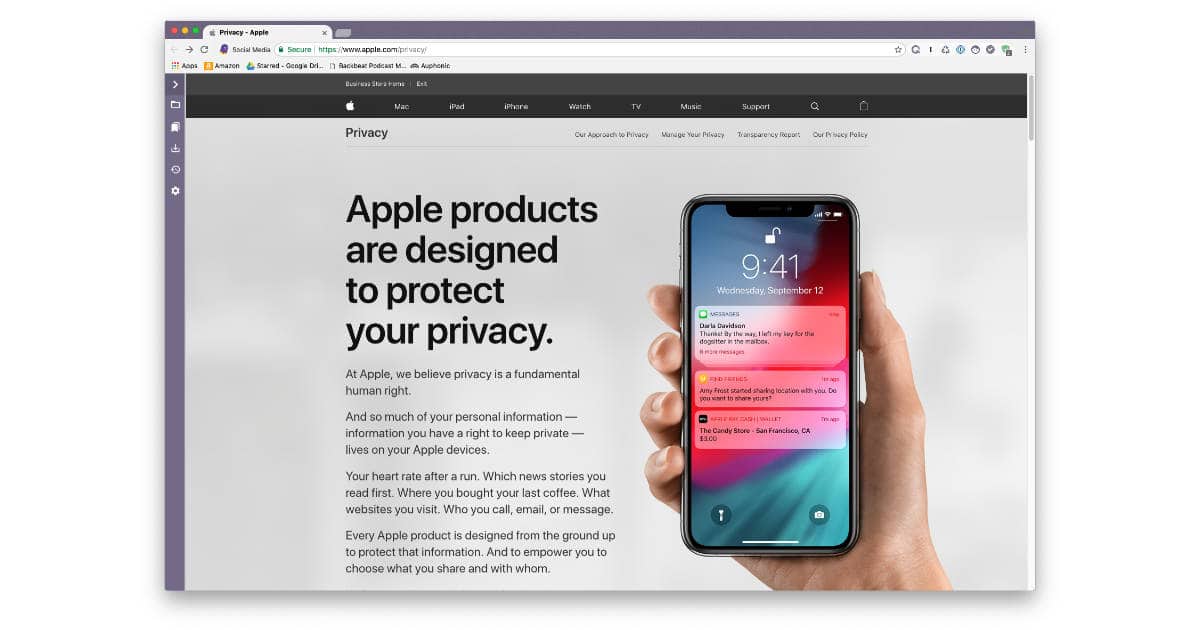
Apple Updates Privacy Website with macOS Mojave and iOS 12 Details
Apple updated its privacy website on Wednesday. The site now details security improvements in macOS Mojave and iOS 12, end-to-end encryption for Screen Time and Group FaceTime, improvements to no-tracking for websites, and more. It also includes links for managing your privacy with Apple devices and services, and Apple’s transparency in privacy report. It’s great to see the effort Apple is putting into protecting user privacy, especially since so many other companies are playing fast and loose with our data.
Popular Web Browsers Dropping TLS 1.0 and 1.1 Support in 2020
The big names in the web browser community, Apple, Google, Microsoft and Mozilla, are all dropping support for Transport Layer Security (TLS) 1.0 and 1.1 in March 2020. The protocol allowed for secure and encrypted connections to web servers for online forms and data transmission, but proved to have several security flaws. It has been superseded by TLS 1.2. Ars Technica noted the pending depreciation saying,
The impact of removing the old protocols shouldn’t be too substantial. All four companies cite usage figures for the old versions; Firefox sees the most TLS 1.0 and 1.1 usage (1.4 percent of all secure connections) while the other three vendors claim a figure below 1.0 percent. The current recommendation is that sites switch to TLS 1.2 (which happens to be the minimum required for HTTP 2.0) and offer only a limited, modern set of encryption algorithms and authentication schemes. TLS 1.3 was recently finalized, but it currently has little widespread adoption.
Odds are most people won’t notice the lack of TLS 1.0 and 1.1 support since the vast majority of sites have already moved on to version 1.2.

Facebook Says its Portal Chat Camera Can Spy On You for Targeted Ads
From Gizmodo: «Facebook announced Portal, a new voice-activated speaker and video chat gadget, and the company said that it would not use data collected through the device to target ads.» But it could. It probably will at some point. What could go wrong? It’s like Mark Zuckerberg has become the anti-Cook.
Privacy Setting Do Not Track Doesn't Do Anything
Privacy setting Do No Track found in virtually all browsers doesn’t actually do much. That’s because its use isn’t enforced.
Why do we have this meaningless option in browsers? The main reason why Do Not Track, or DNT, as insiders call it, became a useless tool is that the government refused to step in and give it any kind of legal authority. If a telemarketer violates the Do Not Call list, they can be fined up to $16,000 per violation. There is no penalty for ignoring Do Not Track.
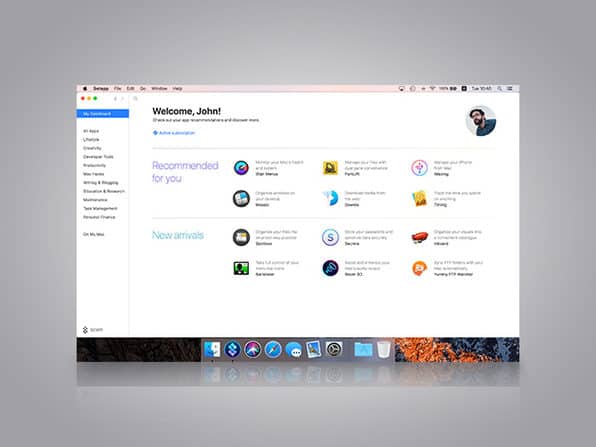
Get 1 Year of Setapp for $69
I am delighted to run today’s deal on a year of Setapp for $69. That’s 42% off retail on a service that was already one of the best in the Mac world. Setapp offers you more than 100 high quality Mac apps for a monthly or yearly subscription. That includes several apps that I use all the time, and I strongly recommend this service.
China Wants Google to Help With its Muslim Persecution
Google wants to create a censored version of its search engine for China. And China has recently shared laws on speech suppression that Google will likely have to use to achieve its Muslim persecution.
Article 28 of the new laws orders telecommunications operators to «put in place monitoring systems and technological prevention measures for audio, messages, and communication records» that may have «extremifying information.»
Forms of «extremification,» as laid out in the laws, are vague. They include «interfering» with people’s ability to interact with people of other ethnicities or faiths and «rejecting or refusing public goods and services.»
Don’t be evil, Don’t be evil, Don’t be evil, Don’t be evil, Don’t be evil, Don’t be evil.


