TMO Background Mode Special Edition Chat with Kelly Guimont: TV Mysteries

Kelly Guimont is a Contributing Editor for The Mac Observer and Social Media Manager for Smile Software. She first appeared here in December, 2015 to tell her career story and has returned several times for interesting technical discussions. In this special edition, we chat about our favorite movie or two, and how, for some movies, the music has become a thing in itself, the soundtrack of our lives. Then we delved into the legendary BBC/CBC mysteries: Foyle’s War, Murdoch Mysteries, Shetland, Death in Paradise, and Broadchurch. For most of these mysteries, we look at their celebration of place that becomes an integral part of the show. Join us as we explore together what makes these shows so cool.


 

Ways That Apple Could Improve the Phone App

u/beyondthetech recently posted in the Apple subreddit about ways to improve the Phone app. I think it’s an interesting list, and it could improve the iPhone experience.

I certainly believe that these changes are not too difficult to implement, and I’ve been asking Apple for years to make this happen. Maybe CallKit and Do Not Disturb were their first implementations to my request, but honestly, they’re still both very basic and very naive. With everything else in iOS getting more robust and more smart, Apple needs to really take a fresh look at this area and address it much better this time around in time for iOS 12’s release, or at least in a 12.1 release, if they are already time-constrained.

Cyber Warfare Has Three Aspects, Including Cognition

Cyber warfare has three aspects: physical, informational, and cognitive. So writes Richard Forno for The Conversation. It seems to me that cognition would be a subset of informational warfare, instead of being a separate dimension. Cyber tools can be used to target your thoughts and perceptions of reality, and we’re seeing this virtually in real time.

However, I believe this isn’t a new form of war at all: Rather, it is the same old strategies taking advantage of the latest available technologies. Just as online marketing companies use sponsored content and search engine manipulation to distribute biased information to the public, governments are using internet-based tools to pursue their agendas. In other words, they’re hacking a different kind of system through social engineering on a grand scale.

There's an Original Mac on Display at Microsoft's Headquarters

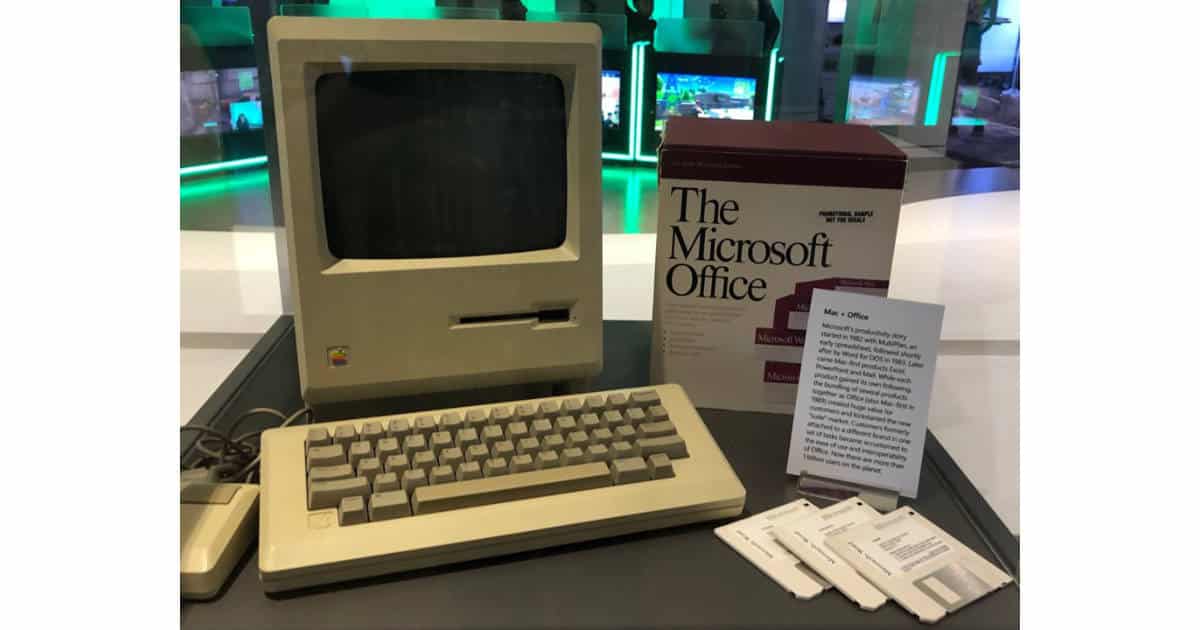
There’s an original Mac on display at Microsoft’s headquarters commemorating the fact that Microsoft Office was released first for Apple’s computer platform, and not the PC. That’s pretty cool because the company could’ve easily chosen to not recognize that bit of history and most people would’ve been none the wiser. Apple played a significant role in Microsoft’s early growth, so seeing a Mac with Office installer floppy discs, as Business Insider notes, next to Bill Gates’ original business card is great. You can check out the ancient Mac at Microsoft’s visitor center in Redmond, Washington.

Senator Wyden Wants US Government to Stop Using Adobe Flash

Flash is dead and any remaining support for the former king of online multimedia officially ends in 2020, so Senator Ron Wyden (D-OR) is urging U.S. government agencies to drop the platform. In a letter to the National Institute of Standards and Technology he said,

While Flash will continue to exist past this point, it will no longer receive necessary technical support, significantly magnifying its existing cybersecurity deficiencies.

Considering the ridiculously long list of security flaws in Flash, ditching the platform is something the government should’ve done long ago.

The Inside Story of how a Call to Andy Grove May Have Helped Apple Buy NeXT

Check out this great account from former NeXT employee Chris MacAskill. He talks about how a phone call he made behind then-NeXT CEO Steve Jobs’s back (as you do) to Intel CEO Andy Grove probably played a role in Apple eventually buying NeXT. It’s a long story with lots of anecdotal details about working at NeXT and the things that were happening there in the lead-up to Apple buying the company. I love this stuff, I love the lore and the behind-the-scenes stories of how things happened. Mr. MacAskill isn’t taking all the credit for Apple buying NeXT, but he played a (hidden) role. If you like Apple history, this is a must-read. Here’s just a tiny taste:

The thing I loved most about working in developer relations at NeXT was how Steve could call anyone.

He would burst in my office and say, “I’m gonna call Bill about TrueType,” and gesture for me to follow. A minute later he’d have Bill Gates on the speaker phone with me in fly-on-the-wall mode.

“BUT BILL! You ripped off Adobe and made John cry.” (John Warnock was the CEO of Adobe.)

“Steve, we didn’t want to get into the font business. It’s a nightmare. But Adobe wouldn’t open their fonts until they had competition.”