
Charlotte Henry and John Martellaro join guest-host Bryan Chaffin to discuss FitBit’s efforts to claw back some space from Apple Watch with a heart-monitoring feature. They also discuss the EU’s weird antitrust concern about Apple Pay.

Rabbit Charger with Retractable Cable, Swappable Charging Tips, and More: $45.95
We have a deal on the Rabbit charger, an interesting wall-mounted charging station for your mobile devices. It features a built-in, retractable cable, and that cable has two charging plugs you can use at the same time. Plus, the charging tips are swappable, and it comes with two USB-C tips and two Lightning tips, all of which fit over micro USB tips built-in to the cable. Lastly, it also has a built-in AC outlet so that it still leaves you with a standard plug. This device is $45.95 through our deal.
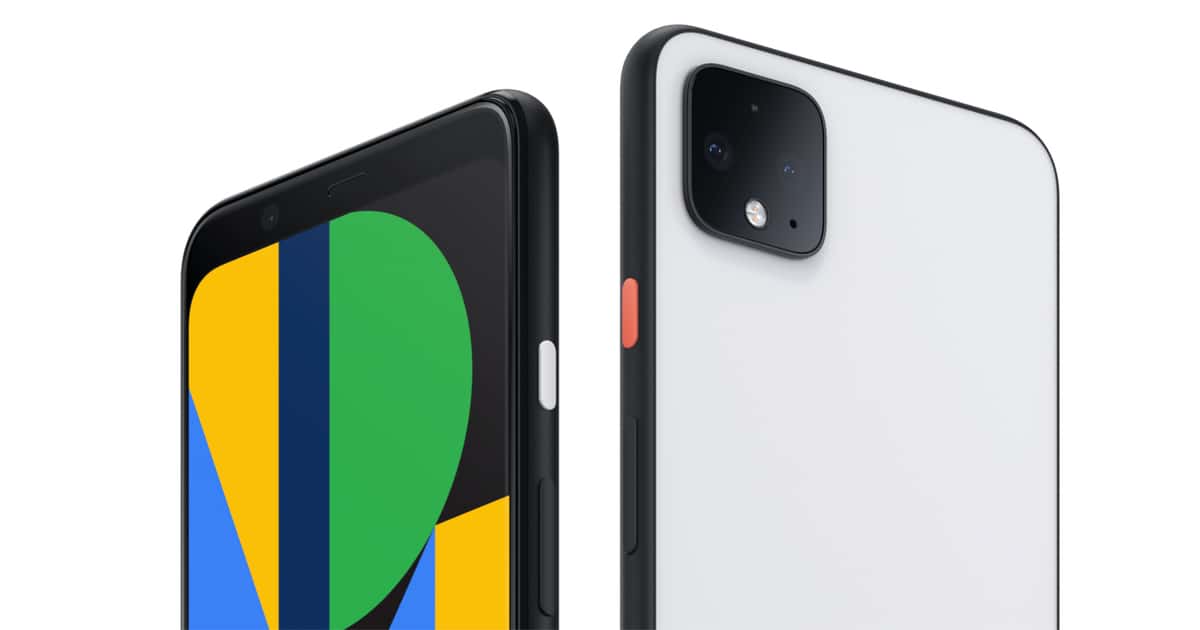
Apple Could Still Learn From Google, Even if The Pixel 4 Event Was Terrible
Google launched its latest smartphones, the Pixel 4, the other day. Its event did not quite capture the imagination in the way Apple’s iPhone events do. However, argues Rene Ritchie at iMore, Apple could still learn a thing or two from Google.
It was like watching Game of Thrones Season 8, offering them more episodes, begging them for more episodes, and just watching them mic drop and end it.. like that. Anyway. The products and technology that did manage to somehow sneak out on stage was so good, that it almost makes up for the obvious lack of planning and organization that went into the event, and the extreme disrespect shown the audience, both live and streaming. Almost.

For All Mankind Stars Given New iPhone 11s
It seems that being in «a billion pockets,» as Oprah put it, is not the only perk of media stars working with Apple. The stars of For All Mankind were all given iPhone 11s ahead of the premiere, Variety reported.
Apple’s clean-cut aesthetics for the big premiere weren’t surprising for the multinational company and perhaps even less surprising was how generous the company has been with granting the cast and crew access to their latest technology. The entire cast even received new iPhone 11s from Apple ahead of the premiere. “[Apple has] been so supportive. They come and do set visits and they’re excited to see us. They gave us all free iPhones. That is a perk,” star Krys Marshall told Variety on the carpet. “We all got the 11 yesterday. It’s nice. But aside from the free phones, they have just been fabulous, really encouraging. They believe in us.”

UK Drops Plans for Controversial 'Porn Blocker'
The UK Government has dropped controversial plans for a ‘porn blocker’ law, BBC News reported. It was going to introduce stringent age verification checks intended to stop under-18s viewing porn online.
It said the policy, which was initially set to launch in April 2018, would «not be commencing» after repeated delays, and fears it would not work. The so-called porn blocker would have forced commercial porn providers to verify users’ ages, or face a UK ban. Digital Secretary Nicky Morgan said other measures would be deployed to achieve the same objectives. The government first mooted the idea of a porn blocker in 2015, with the aim of stopping youngsters «stumbling across» inappropriate content.
Apple Hit with iPhone Throttling Class Action Suit
Another day, another lawsuit against Apple. The latest class action lawsuit, brought in the U.S. District Court for the Northern District of California, accused Apple of a variety of offenses, including iPhone throttling, AppleInsider reported.
Among the causes of action laid out by plaintiffs are counts of trespass to chattels, violation of the Computer Fraud and Abuse Act (CFAA), violation of California’s Computer Data Access and Fraud Act, unfair business practices and false advertisement. Plaintiffs allege Apple harmed owners of iPhone 6, 6 Plus, 6s, 6s Plus, SE, 7 and 7 Plus units by implementing an iOS feature that, under certain conditions, temporarily throttles an iPhone’s processor during instances of heavy load.

Foursquare CEO Calls for Congress to Regulate Consumer Location Data Use
Foursquare CEO Jeff Glueck called on Congress to regulate the use of consumer location data in an op-ed published by The New York Times. He further said such regulation should include three principles: 1.) Location data requests in apps be tied to an actual service; 2.) Transparency for users, 3.) That companies getting location data agree to «do no harm.» It’s an interesting read, especially from one of the big players in location data use. Here’s a snippet:
There are no formal rules for what is ethical — or even legal — in the location data business. We could all take a Hippocratic oath for data science (as in medicine: “First do no harm”), and hope that living by such an oath would curb abuses. But even in the best of circumstances, that oath is voluntary. It’s time for Congress to regulate the industry.

TREBLAB Z2 Bluetooth 5.0 Noise-Cancelling Headphones: $78.99
We have a deal on a pair of TREBLAB Z2 Bluetooth 5.0 Noise-Cancelling Headphones. This is an updated version of the TREBLAB Z2 headphones, with an all-black design and support for Bluetooth 5, as well as the active noise cancellation.
Breaking Up Big Tech, Apple as Media Company – TMO Daily Observations 2019-10-16
Bryan Chaffin and John Martellaro join host Kelly Guimont to discuss breaking up «big tech» companies, and Apple as a media company.

A Technique to Help AI Understand Video Better
AI technology is improving at an amazing rate. However, video is still a significant challenge. Wired reported on a development that may improve things, whilst also using less processing power.
A group from MIT and IBM developed an algorithm capable of accurately recognizing actions in videos while consuming a small fraction of the processing power previously required, potentially changing the economics of applying AI to large amounts of video. The method adapts an AI approach used to process still images to give it a crude concept of passing time. The work is a step towards having AI recognize what’s happening in video, perhaps helping to tame the vast amounts now being generated. On YouTube alone, over 500 hours of video were uploaded every minute during May 2019. Companies would like to use AI to automatically generate detailed descriptions of videos, letting users discover clips that haven’t been annotated. And, of course, they would love to sell ads based on what’s happening in a video.


