
Bryan Chaffin and John Martellaro join Jeff Gamet to look at what’s working, and what isn’t, with Apple’s product naming conventions.
Clearing Up Misinformation About That Facebook Phone Number Ad Thing
What I call the «Facebook phone number ad thing» has been in the news a lot. Facebook confirmed it uses your two-factor authentication phone number for advertising purposes. But let’s cut through the clickbait headlines.
One of the many ways that ads get in front of your eyeballs on Facebook and Instagram is that the social networking giant lets an advertiser upload a list of phone numbers or email addresses it has on file; it will then put an ad in front of accounts associated with that contact information.
Facebook is not handing out your phone number to advertisers. What is happening is if an advertiser already has a phone number, they can go to Facebook and say: «Please show an ad to the profile with this phone number.» The only difference now is that Facebook uses your two-factor authentication number for this, even if you haven’t put your phone number in your profile elsewhere. Still sh*tty though.
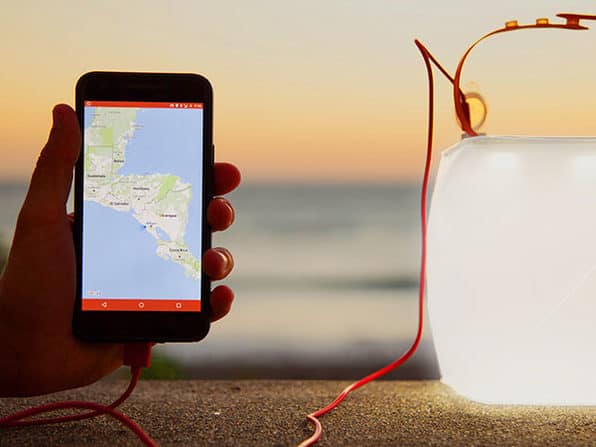
Inflatable, Solar-Powered, and Completely Waterproof Portable iPhone Charger
We have a deal on the LuminAID PackLite Max 2-in-1 Phone Charger. This device is inflatable, solar powered, and waterproof, and it’s part lantern, part portable battery for charging your iPhone and other devices. The lantern puts out 150 lumens, while the battery has a capacity of 2,000mAh. It’s $39.95 through our deal. Check out the promo video.
The Guy Who Named the iMac Says iPhone Naming Sucks
Ken Segall, the guy who came up with the iMac name, says Apple has totally blown it with the iPhone naming convention—or lack of convention. He says it’s confusing, and mixing Roman numerals with letters, and making those letters seem arbitrary at best. He says in a blog post,
Last year’s models set new standards for complexity. We had an 8, 8 Plus, X and SE. That’s two numbers, one Roman numeral, one paring of letters, plus an odd numerical gap between 8 and 10. Or, in Apple lingo, between 8 and X.
Now we have Roman numerals and letters, and odds are it’ll get worse next year with the iPhone X2. He adds, «Then, one year later, the Holy Grail of bad product naming will be within Apple’s grasp. An iPhone X2S will feature a Roman numeral, a number and a letter, all in one name.» Yep. Good luck with that one, Apple.

AWS4 Love, Design Meets Science, Apple's PG TV Dreams - ACM 481
Bryan Chaffin and Jeff Gamet can’t get enough of Apple Watch Series 4, even though Jeff is wrong about the Infograph Watch Face. They also find it interesting that a designer got recognized by the world of science, and they weigh whether or not Apple’s plan to avoid sex, violence, and politics with its original TV shows will hurt its streaming service.
Ajit Pai Couldn't Care Less About Rural America
Republicans don’t want the government to interfere with things…until they use the government to interfere with things. Rural America is notorious for its lack of broadband, and Ajit Pai couldn’t care less.
The Federal Communications Commission today finalized an order that will prevent city and town governments from charging wireless carriers about $2 billion dollars’ worth of fees related to deployment of wireless equipment such as small cells.
The $2 billion savings is less than 1 percent of the estimated $275 billion that carriers will have to spend to deploy 5G small cells throughout the US. That level of savings won’t spur extra deployment «because the hard economics of rural deployment do not change with this decision,» Rosenworcel said.
Websites Can Access Your iPhone Sensor Data
As if apps collecting your personal data wasn’t bad enough, apparently websites in Safari can access your iPhone sensor data.
That mobile browsers offer developers access to sensors isn’t necessarily problematic on its own. It’s what helps those services automatically adjust their layout, for example, when you switch your phone’s orientation. And the World Wide Web Consortium standards body has codified how web applications can access sensor data. But the researchers…found that the standards allow for unfettered access to certain sensors. And sites are using it.
HomePod in Hotels, iOS 12 Shortcuts - TMO Daily Observations 2018-09-27
Adam Christianson from the Maccast and Dave Hamilton join Jeff Gamet to talk about HomePod coming to Marriott hotel rooms, plus they explore who will be interested in iOS 12 Shortcuts.
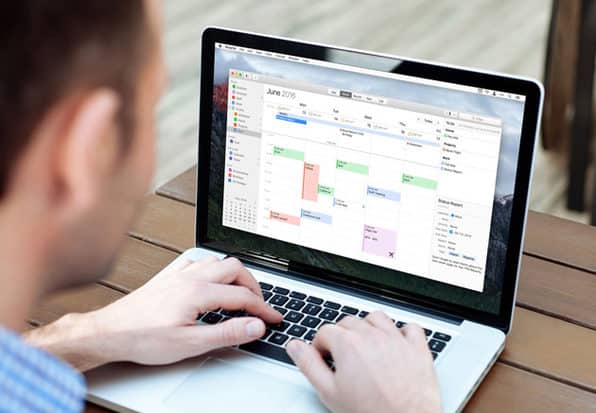
BusyCal 3: $19.99
We have a deal on BusyCal 3, one of our favorite utilities at TMO. This Calendar replacement is designed for power users, giving you far more control over your Calendar and events. Custom categories, icons, graphics…this app gives you all the things you wish Apple would put into Calendar, all while using your Apple calendar database, so you don’t worry about syncing. You can get it for $19.99 through us, 60% off retail.
Does Blue Light From Smartphones Cause Blindness?
Does blue light from smartphones cause blindness? Short answer: No. Headlines claiming that the blue light from our smartphones have been making the rounds. As is usually the case with the media when it comes to science, there’s always greater context (or it’s just downright BS).
The American Academy of Ophthalmology spelled it out recently: No, Blue Light From Your Smartphone Is Not Blinding You. That was in response to a study published this summer that found blue light, plus a chemical naturally found in certain eye cells, could damage cells. The catch: researchers did not use any actual cells from our eyes, because our eyes have defenses against exactly this sort of damage. (They were studying a question unrelated to eye health; the Verge has more on the purpose and meaning of the experiment.)


