

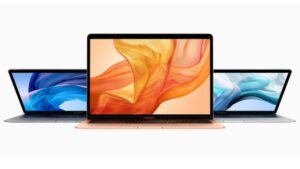
Microsoft’s latest marketing push for “Copilot+ PCs” revives a year-old claim that the newest Snapdragon X Elite, Intel Core Ultra Series 2 and Ryzen AI laptops are “up to 58 percent faster” than Apple’s M3-based MacBook Air in Cinebench 2024 multi-core tests.
The fine print now adds that some configurations also edge out Apple’s fanless M4 MacBook Air, yet Microsoft still stresses raw benchmark wins while Apple continues to lean on its industry-leading performance-per-watt and all-day battery life.
Below is a closer look at the numbers, the hardware behind them, and what they mean in real-world use.
Don’t miss the best of The Mac Observer
Set us as a preferred source and our Apple reporting ranks higher in your Google Search results and Discover feed — one tap, no account changes.
Where the “58 percent faster” figure comes from
Microsoft’s original briefing showed a Surface Laptop with Qualcomm’s Snapdragon X Elite scoring 980 points in Cinebench 2024 multi-core, versus 650 for the 15-inch MacBook Air M3.
That gap rounds to roughly 58 percent. Cinebench is a cross-platform CPU test that scales well with core count and sustained power, making it a popular yard-stick for short, repeatable workloads.
| Device | Processor | Cinebench 2024 Multi-core |
|---|---|---|
| Surface Laptop (2024) | Snapdragon X Elite | 980 |
| Lenovo Yoga Slim 7x | Snapdragon X Elite | 984 |
| HP OmniBook Ultra 14 | Ryzen AI 9 HX 375 | 1162 |
| MacBook Air 15-inch (M4) | Apple M4 (10-core) | 874 |
| MacBook Air 15-inch (M3) | Apple M3 (10-core) | 598 |
*Scores are taken from recent independent reviews or, where noted, Microsoft-commissioned testing.
Raw speed vs. efficiency
Snapdragon X Elite’s 12 cores and 45-TOPS NPU deliver eye-catching bursts in synthetic tests and AI workloads, often topping Intel’s Meteor Lake and Apple’s M3 silicon.
AMD’s Ryzen AI 9 HX 375 goes further on the CPU side, crossing the 1 100-point threshold in Cinebench 2024 despite drawing more power.
Apple’s response is unchanged: the M4 family targets performance per watt rather than peak scores. Notebookcheck measured 33.7 points per watt in Cinebench 2024 multi-core on the fanless MacBook Air M4, nearly double the best Windows rivals tested.
What counts as a Copilot+ PC?
Microsoft’s Copilot+ badge denotes machines with:
- A modern Arm or x86 CPU tuned for local AI (≥40 TOPS NPU)
- At least 16 GB RAM, 256 GB SSD
- Windows 11 24H2 and on-device Copilot features such as Recall (delayed until late 2025) and Live Captions.
Bottom line
Microsoft is right that several Copilot+ PCs can outrun Apple’s MacBook Air in short, heavily-threaded CPU tests. Yet Apple still leads on efficiency, acoustics and battery life, and macOS remains a non-starter for Windows die-hards — just as Windows can be a deal-breaker for those locked into the Apple ecosystem.



Discussion