

Apple plans to launch a new low-cost MacBook in March, and this machine stands out from anything in the current lineup. Reports suggest the company will unveil it in under two weeks, possibly around its March 4 Special Experience event in New York, London, and Shanghai. Unlike recent Macs, this model will not use an M-series chip. Instead, Apple will power it with an A-series processor, which signals a major shift in strategy.
This low-cost MacBook targets students and everyday users who need a reliable laptop for daily work. Based on consistent reports, Apple aims to position it as an affordable alternative to the MacBook Air while keeping the design modern and appealing. Here is everything we know so far.
Design and Build

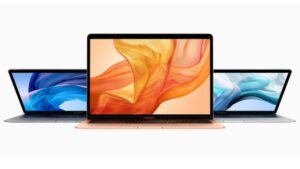
Rumors describe a design that looks similar to the MacBook Air. The laptop will likely feature an aluminum chassis and a 12.9-inch or 13-inch display, depending on which supply chain report proves accurate. The overall look will remain clean and minimal, in line with Apple’s recent design language.
Don’t miss the best of The Mac Observer
Set us as a preferred source and our Apple reporting ranks higher in your Google Search results and Discover feed — one tap, no account changes.
Some sources suggest Apple may keep the body slightly thicker to reduce costs. Apple used a similar approach with its low-cost iPad models, where it relied on older display technology to manage pricing. A thicker chassis paired with a power-efficient chip can improve battery life, which makes sense for an education-focused device.
There is also speculation that this machine could revive the spirit of Apple’s older 12-inch MacBook that used a low-power Core M chip. However, Apple must balance thinness with pricing, since making it slimmer than the MacBook Air would confuse the lineup and raise costs.
Color Options

This MacBook will stand out because of its colors. According to Bloomberg, Apple has tested light yellow, light green, blue, pink, silver, and dark gray. Not all of these colors will reach production, but reports suggest Apple will ship at least four options.
Apple analyst Ming-Chi Kuo believes the final lineup will include:
- Yellow
- Silver
- Blue
- Pink
These shades match the colors Apple offers for the iPad, which strengthens the idea that this MacBook targets students and younger buyers.
A-Series Chip Strategy

The most important change lies inside the machine. Instead of an M-series Mac chip, Apple plans to use the A18 Pro chip. Apple first introduced this processor in the iPhone 16 Pro, and it uses a second-generation 3-nanometer process.
The A18 Pro includes:
- 6-core CPU with four performance cores and two efficiency cores
- 6-core GPU
- 16-core Neural Engine for AI-based tasks
In Geekbench benchmarks, the A18 Pro posts:
- Single-core score: 3451
- Multi-core score: 8572
For comparison, the M4 iPad Pro reaches 3694 in single-core and 13732 in multi-core tests. The A18 Pro also outperforms the M1 chip, which Apple previously used in lower-cost MacBook Air models.
In real-world use, this MacBook will handle:
- Web browsing
- Document creation
- Streaming video
- Light photo editing
- Light video editing
However, it will not match the performance of M-series Macs for 4K video editing, 3D rendering, or heavy gaming. Still, for students and general users, the performance should feel fast and responsive.
Memory and Storage
Current Macs start with 16GB of RAM, but the iPhone 16 Pro ships with 8GB, which supports Apple Intelligence features. Reports suggest this MacBook will include at least 8GB of RAM. Apple may choose 12GB to maintain consistency across the Mac lineup, but no confirmation exists yet.
Storage could begin at 128GB, which is lower than the MacBook Air’s 256GB base option. Apple often lowers storage capacity to reach a more aggressive price point, so this strategy fits the goal of affordability.
Ports and Connectivity
The A18 Pro chip in the iPhone 16 Pro does not support Thunderbolt. As a result, this MacBook will likely include standard USB-C ports with speeds up to 10Gb/s.
This limitation means:
- No Thunderbolt support
- Likely support for only one external display
- Reduced high-speed accessory compatibility
While that restricts professional workflows, it aligns with the device’s student-focused positioning.
Naming and Positioning
Apple has not confirmed the name. The company currently sells the MacBook Air and MacBook Pro, leaving the simple “MacBook” name available. Apple has used that name multiple times in the past, and many reports suggest it could return for this model.
The strategy appears clear. Apple wants to compete with affordable Chromebook laptops that schools often adopt. By offering a lower-cost Mac, Apple can enter that segment without lowering the price of the MacBook Air.
Expected Pricing
The MacBook Air starts at $999, so this model must sit well below that mark. Analysts expect a price between $599 and $799.
Here is how it fits into Apple’s lineup:
- Low-cost iPad with A16 chip: $349
- iPad Air with M2 chip: $599
- MacBook Air: $999
A $599 price would match popular Chromebook pricing and align with the iPad Air. A $699 or $799 price would position it as a more premium student laptop without overlapping too closely with the MacBook Air.
Launch Timeline
Reports suggest Apple will introduce the Low-cost MacBook at or just before its March 4 Special Experience event. Apple may announce it through a press release ahead of the event, followed by hands-on demos for invited media in New York, London, and Shanghai.
If these reports hold, this launch will mark one of Apple’s most unusual Mac releases in years. By combining bright colors, an A-series chip, and aggressive pricing, Apple aims to redefine entry-level Mac computing for students and everyday users.



Discussion