

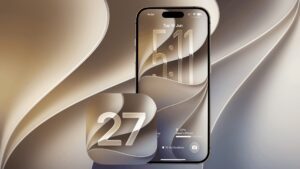
Samsung is reportedly working on a holographic smartphone display that creates glasses-free 3D depth effects directly on a phone screen, and the same technology is now fueling rumors about a future “Spatial iPhone” from Apple.
The leaked project, reportedly codenamed “MH1” or “H1,” points toward a new type of mobile display that blends spatial visuals, eye tracking, and holographic projection into a standard smartphone form factor.
According to leaker Schrödinger on X, the display uses “advanced eye-tracking with diffractive beam-steering” to redirect light toward a user’s eyes at precise angles, allowing images to appear above the screen surface without requiring special glasses. The report also claims Samsung has integrated a “nano-structured holographic layer” directly into the AMOLED panel stack, creating floating depth effects while preserving normal 4K quality for regular apps and videos.
Don’t miss the best of The Mac Observer
Set us as a preferred source and our Apple reporting ranks higher in your Google Search results and Discover feed — one tap, no account changes.
Schrödinger described the system as offering “Zero Clarity Loss,” which matters because older 3D displays usually reduced sharpness or brightness when enabling depth effects. The leak also claims users would be able to tilt the phone to “see around objects in a video,” creating a more immersive viewing experience similar to that of spatial computing devices.
Samsung’s Advanced Institute of Technology published research on slim holographic displays back in 2020. In a Nature Communications paper, researchers detailed a “steering-backlight unit” that reportedly improved holographic viewing angles by “30 times compared to conventional designs.” The prototype at the time supported 4K holographic video at 30fps in a panel roughly 1cm thick.
Apple’s name entered the discussion because supply chain conversations reportedly reference a “Spatial iPhone.” Apple has also explored similar ideas for years through patents covering “Interactive holographic display device” technology and glasses free 3D systems.
Last month, Apple hardware chief John Ternus described blending the digital and physical world as an “inevitability,” while calling spatial computing “early innings.” The leaked MH1 project reportedly remains in early R&D, with holographic smartphones currently targeting a 2030 timeline.


Discussion