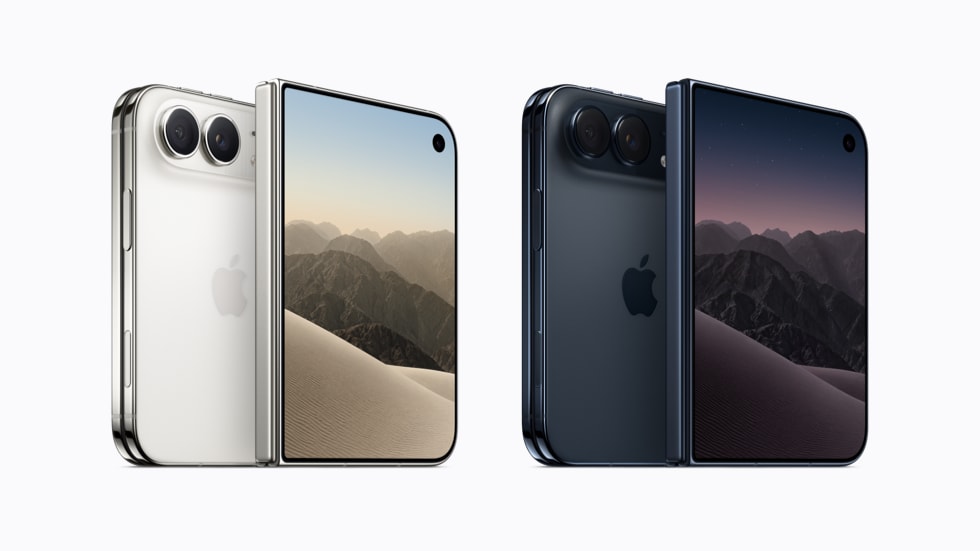
The iPhone Duo is the first iPhone with two Always-On displays. Apple lists Always-On and ProMotion adaptive refresh up to 120Hz for both the 7.6-inch folding inner display and the 5.4-inch outer display, and it has not published how the two screens divide that job between them.
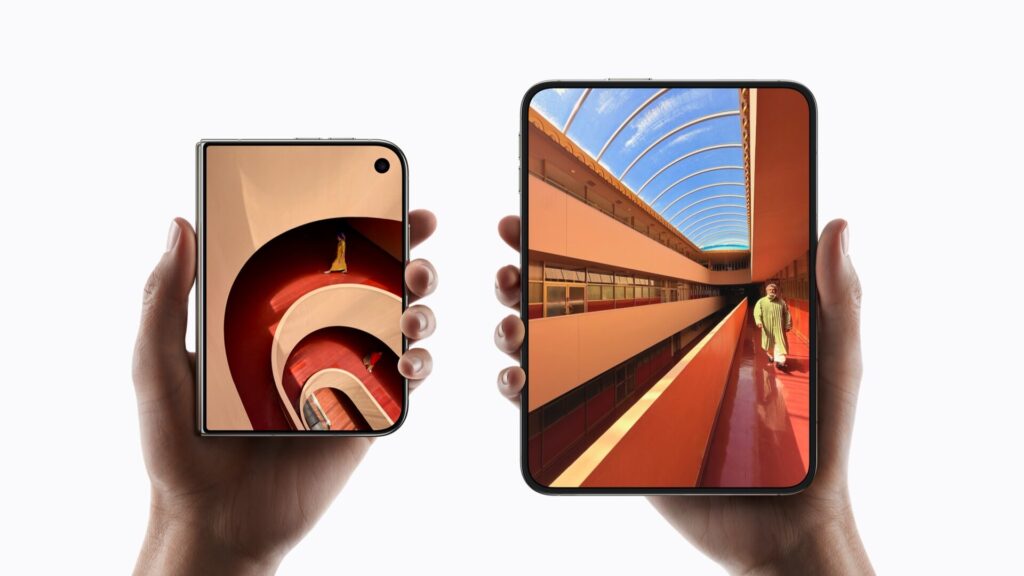
On every previous iPhone, Always-On described one panel doing one thing: showing the time, widgets and Live Activities when the screen was idle. On a phone that folds, the same feature has to answer a second question about which display is idle and which is put away.
Key facts: Always-On and ProMotion on both displays
| Spec | Inner display | Outer display |
|---|---|---|
| Size | 7.6-inch folding Super Retina XDR OLED | 5.4-inch Super Retina XDR OLED |
| Resolution | 1878 by 2670 pixels, 430 ppi | 1398 by 2034 pixels, 460 ppi |
| Refresh | ProMotion up to 120Hz | ProMotion up to 120Hz |
| Always-On | Yes | Yes |
| Peak outdoor brightness | 3000 nits | 3000 nits |
| Published refresh floor | None | None |
| Published Always-On power figure | None | None |
What Apple has confirmed about Always-On here
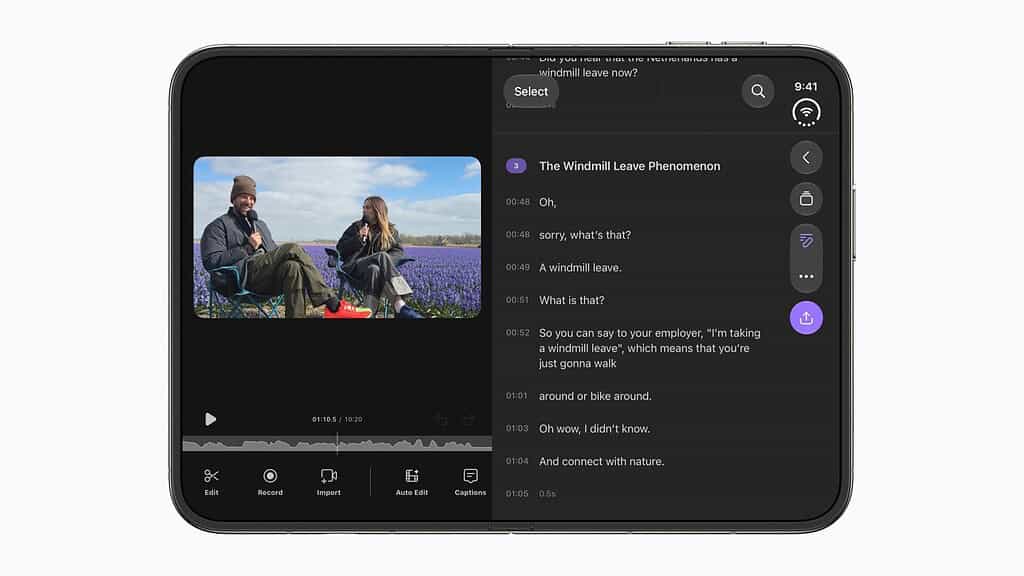
Apple’s press material for the iPhone Duo states plainly that the displays are Always-On as well as ProMotion, with 3000 nits peak and the nano-texture finish on the inner panel. That is the extent of it.
Don’t miss the best of The Mac Observer
Set us as a preferred source and our Apple reporting ranks higher in your Google Search results and Discover feed — one tap, no account changes.
What Apple does not describe is behaviour: whether the inner display keeps an Always-On state while folded shut, whether both can be lit at once, or what happens to the outer display when you open the phone. Those are software questions, and Apple has published no support document for any product announced on September 9.
The hardware hints at attention being paid. Apple’s sensor list for the Duo includes four ambient light sensors, which is the sort of arrangement a phone needs if two panels can face two different rooms at once.
ProMotion with a ceiling and no published floor
Apple’s phrasing is ProMotion adaptive refresh up to 120Hz, the same wording it uses for the iPhone 18 Pro and Pro Max. The number Apple publishes is the maximum.
It has not published the minimum refresh rate either display drops to, which is the figure that actually governs an Always-On screen’s power draw. Apple has published a 1Hz floor for other Always-On products in its lineup and does not do so here.
Driving both panels is work the chip has to do. According to keynote coverage, the A20 Pro in the Duo carries a custom display engine that can run both displays at once, a job the same chip in the iPhone 18 Pro never has to do.
Four light sensors and five posed positions
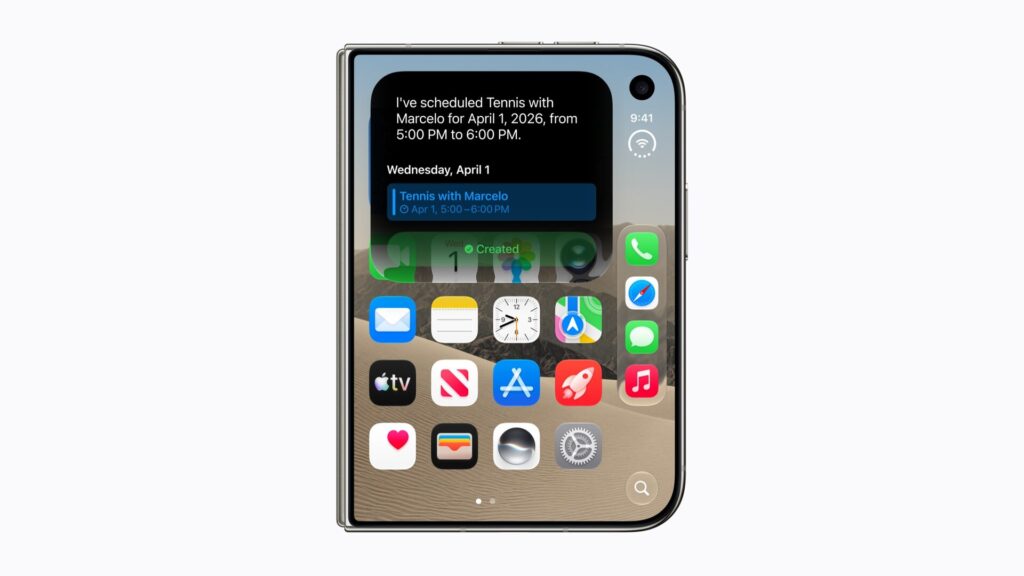
Always-On matters more on the Duo than on a slab because Apple expects the phone to sit propped up rather than in a pocket. Apple says iOS responds to how the phone is posed, and names StandBy, landscape, portrait, seated and standing positions.
The Duo ships with iOS 27.1 rather than the iOS 27 release that reaches other iPhones on September 14, and Apple credits that build with Split View, an upgraded StandBy, a redesigned Dynamic Island in vertical orientation and a Call Context widget.
- Four ambient light sensors, a barometer, a high dynamic range gyro, a high-g accelerometer and a proximity sensor
- Dynamic Island on both displays, redesigned for the Duo’s vertical orientation
- Upgraded StandBy, which is the mode most likely to lean on Always-On
- Apple Pencil with USB-C on either display, arriving later in 2026
The battery arithmetic behind two live screens
Apple publishes battery ratings per display, and the 24-hour typical use figure comes with a stated condition: it assumes equal use of the inner and outer displays.
| Rating | Figure |
|---|---|
| Typical use, mixed | Up to 24 hours, assuming equal inner and outer display use |
| Video playback, outer display | Up to 44 hours |
| Video playback, inner display | Up to 31 hours |
| Streamed video, outer then inner | Up to 37 hours, then up to 26 hours |
| Battery design | Dual-battery system, one cell per side |
| Wired charging | 50 percent in about 20 minutes with a 60W adapter |
The 13-hour spread between the two video figures is the clearest published evidence of what the larger panel costs. Apple attaches no equivalent figure to Always-On itself.
What Apple has not said
Apple has not published a minimum refresh rate, an Always-On power figure, or any description of how Always-On behaves when the Duo is shut, opened or posed. It has also not published the outer display’s contrast ratio, which it lists as 2,000,000:1 for the inner panel only.
No reviewer outside Apple has used the phone, so none of that can be checked yet. Pre-orders open Friday, October 16 at 5 a.m. PT, with availability from Friday, October 23.