
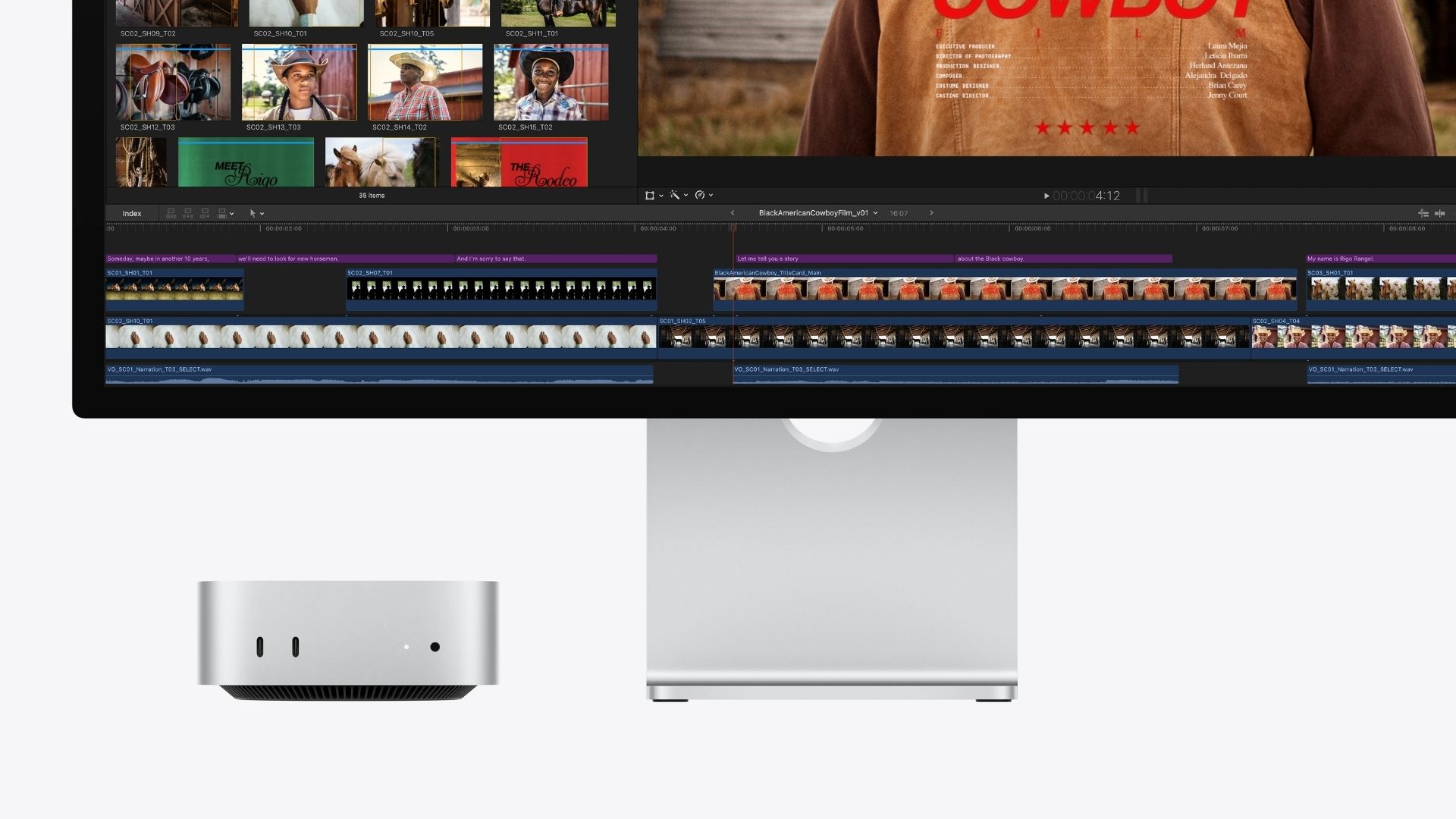
An unverified Geekbench 7 result attributed to Apple’s M6 chip has appeared ahead of the new Mac mini’s September 22 release, offering an early and incomplete look at potential CPU gains.
Geekbench is a synthetic benchmark designed to compare processor performance through a defined workload. Its result can be useful as a point of comparison, but it does not measure every part of a Mac mini experience. Storage performance, graphics performance, memory capacity, thermals and application-specific behavior require separate evidence.
The upcoming Mac mini will be the first announced Mac with M6, according to the report. Until retail machines ship and reviewers can test them under consistent conditions, the listed score should not be used to make a precise upgrade recommendation. It is best read as a preliminary result that broadly aligns with, but does not independently prove, Apple’s published CPU claim.
Don’t miss the best of The Mac Observer
Set us as a preferred source and our Apple reporting ranks higher in your Google Search results and Discover feed — one tap, no account changes.
The original Geekbench 7 result lists an Apple M6 with a single-core score of 4,071 and a multi-core score of 22,783. It identifies a Mac18,5 system with 32GB of memory running macOS 27.0. A public benchmark result is not the same as a review of a retail Mac mini.
| Geekbench 7 measure | Listed M6 result |
|---|---|
| Single-core CPU | 4,071 |
| Multi-core CPU | 22,783 |
| System memory | 32GB |
Those figures need caution. This is one database entry, and its result can be affected by configuration, software and test conditions. Benchmark results can also change as more submissions appear and do not predict performance in every application.
Apple has announced the M6 Mac mini and says the chip offers up to 1.2 times faster multithreaded performance than M5. The Mac mini announcement, rather than this early benchmark, remains the source for Apple’s official specifications and claims.


Discussion