
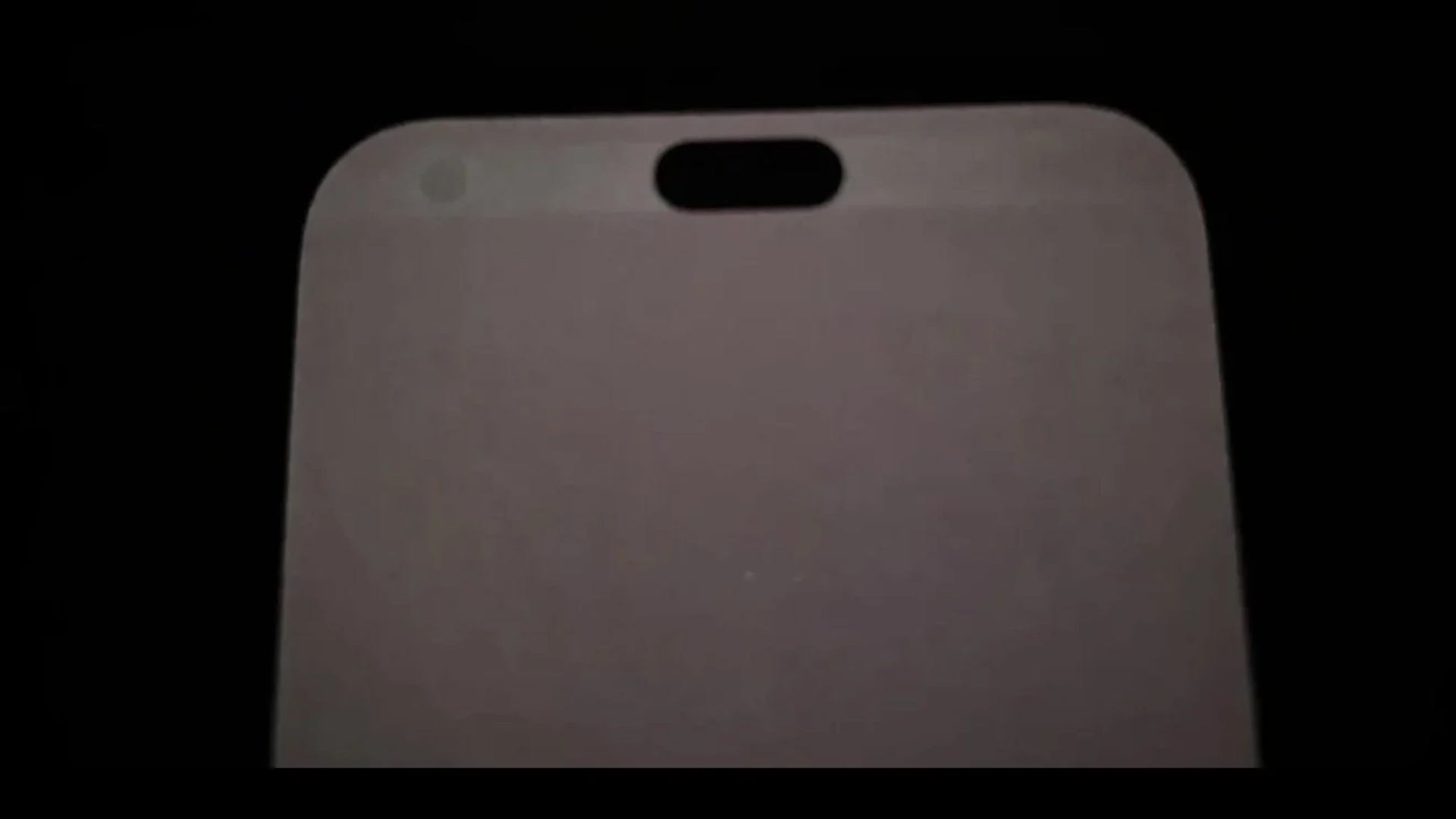
Some iPhone 18 Pro owners have noticed that part of the display beside the clock can look faintly warped or less sharp. The effect is real, but current evidence points to the screen design around an under-display Face ID sensor, not a physically bent panel or a confirmed defect.
The effect drew attention after Xiaobai Evaluation showed the iPhone 18 Pro and Pro Max in a detailed review. It appears as a subtle patch in the upper-left corner, close to the time. The area can be easier to see at low brightness, on a uniform background, from an angle, or when photographed up close.
iFixit’s microscope images explain why. Apple placed an infrared camera for Face ID beneath this section of the OLED panel. Every other row of display pixels is absent above the camera so infrared light can pass through. A gradual transition back to the normal pixel pattern helps conceal the opening, but it can also make nearby text look slightly softer.
Don’t miss the best of The Mac Observer
Set us as a preferred source and our Apple reporting ranks higher in your Google Search results and Discover feed — one tap, no account changes.
This is the hardware change that helped Apple create the smaller Dynamic Island. Earlier reports had suggested the iPhone 18 Pro would retain the Dynamic Island, and Apple ultimately reduced it instead of removing it.
iFixit says the circular area is barely visible to the naked eye and that photographs can exaggerate it. Owner reports vary: some people notice pixelation around the clock immediately, while others cannot see a difference even after looking for it. There is not enough controlled testing to measure how much visibility varies between individual panels.
If the patch is limited to the sensor area and only appears under particular viewing conditions, it is consistent with the known pixel layout. Owners who see strong discoloration, persistent lines, flickering, or distortion elsewhere should document the behavior and ask Apple to inspect the phone, since those symptoms may have another cause.
Apple has not publicly acknowledged the faint patch as a display problem or announced a repair program. For now, describing it as a local pixel-density transition is more accurate than calling the screen bent or defective.



Discussion