
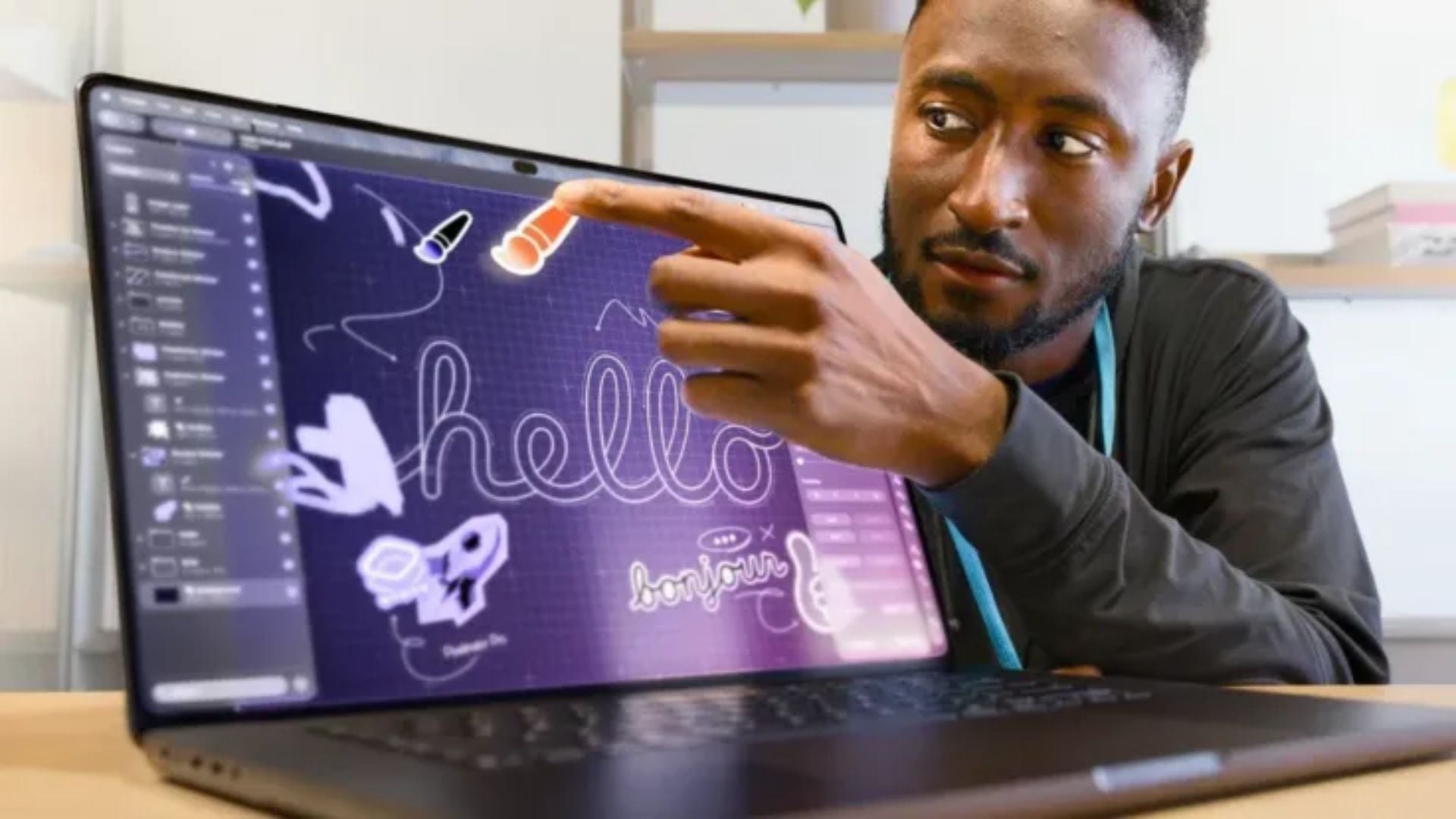
Apple’s first touchscreen MacBook Pro has received mixed reactions from popular tech reviewer Marques Brownlee, who praised its OLED display and lighter design but questioned whether touch controls offer any meaningful benefit during everyday use.
The redesigned MacBook Pro introduces touchscreen support to Apple’s laptop lineup for the first time, allowing users to interact directly with macOS alongside the traditional keyboard and trackpad. However, Brownlee’s early experience suggests that the feature still faces some practical limitations, particularly when users need to reach across their desks to interact with the display.
According to a report from IBTimes UK, Brownlee described the touchscreen as responsive and functional, although he remains unconvinced that it will change how he uses his MacBook Pro.
Don’t miss the best of The Mac Observer
Set us as a preferred source and our Apple reporting ranks higher in your Google Search results and Discover feed — one tap, no account changes.
MKBHD Questions the Practical Value of Touchscreen on MacBook Pro
One of Brownlee’s biggest concerns involves the physical effort required to use a touchscreen on a laptop, especially when the display sits upright and users must repeatedly lift their hands away from the keyboard.
He also noticed that the screen moves slightly when touched, raising questions about stability during regular use, particularly for people who frequently interact with on-screen controls.
Meanwhile, macOS continues to rely heavily on keyboard, mouse, and trackpad interactions, which means the touchscreen currently offers limited advantages for users who already have established desktop workflows.
Despite these concerns, Brownlee praised the MacBook Pro’s improved OLED display, which offers a better viewing experience for watching videos, editing content, and handling other visual tasks.
He also appreciated the lighter chassis, which makes the laptop more convenient to carry without sacrificing the premium design associated with Apple’s professional notebooks.
For now, Brownlee’s early impressions suggest that Apple’s touchscreen implementation works well, although reaching toward the display and dealing with screen movement remain concerns that could discourage regular use.
As more people begin using the redesigned MacBook Pro, their experiences should provide a clearer picture of whether touchscreen support becomes a useful addition to macOS or remains an occasional convenience.

Discussion