Google Image Search's Creepy Sexism Problem

Google Image’s search algorithm is fantastically useful a lot of the time. Other times, it is kind of creepy, especially if you’re searching for female stars. Wired looked at the different results the service produced when users searched for pictures of men and women.

If you’re searching for a man, Google’s image-hunting algorithm will mostly focus on his career. If you’re searching for a woman, Google’s algorithm will focus on her body. Do a Google Images search for Robert Downey, Jr., for example, and only four out of the 30 algorithmically-generated related search terms relate to his physical appearance: workout, body, handsome, cute. The vast majority focus on films he has starred in and actors he has appeared alongside. Do the same for Avengers co-star Scarlett Johansson and Google will recommend no fewer than 14 related visual searches based on her physical appearance, from “stomach” to “figure” and “big” to “rack”. It’s the male gaze, algorithm style.


Colorado Students Secretly Photographed for Military Research

From 2012 to 2013, students at the University of Colorado’s Colorado Springs campus were secretly photographed as part of a research project. The U.S. Navy wanted to improve its facial recognition algorithms.

To conduct the study, [professor] Boult set up a long-range surveillance camera in an office window about 150 meters away from the West Lawn of the Colorado Springs campus, a public area where passers-by would not have a reasonable expectation of privacy. The camera surreptitiously photographed people walking in the area of the West Lawn on certain days during the spring semesters of 2012 and 2013.

First T-Mobile 5G Test Reaches 493 Mbps in New York

During the first T-Mobile 5G test in New York City, the service scored 493 Mbps using a Verizon phone.

T-Mobile’s feat becomes greater when you understand that the carrier is using much less spectrum than Verizon is. Allnet Insights says T-Mobile is using 80MHz of spectrum in New York, which would make its theoretical maximum speed 500Mbps, but I’ve also heard that T-Mobile is using 100MHz, which would make the theoretical maximum 625Mbps.

Teen Who Hacked Apple Wanted Job There

A teenager from Adelaide, Australia who hacked Apple in 2015 and 2017 did so because he wanted a job there. The first hack happened when the accused was just 13. He was looking to impress Apple with his skills, according to Australian outlet ABC.

The court heard he and another teenager from Melbourne hacked into the technology giant’s mainframe in December 2015 and then again in early 2017 and downloaded internal documents and data. It heard he used his «high level of expertise» in information technology to create false digital credentials which tricked Apple’s server into thinking he was a company employee. His actions were reported to the FBI who contacted the Australian Federal Police (AFP).

Pegatron Looking to Assemble iPhone Chips in Indonesia

Shortly after Pegatron reportedly decided to expand Mac and iPad chip production in Indonesia, the firm looks set to make another major investment there. It is thought to be preparing to build iPhone chips in the country too. Reuters reported comments from Indonesia’s  Deputy Industry Minister, who expects a $1 billion investment.

Pegatron plans to assemble the phone chips in partnership with Indonesian electronics company PT Sat Nusapersada at a factory on the island of Batam, Deputy Minister Warsito Ignatius told Reuters. He had earlier said it would produce chips but later clarified by text message that the factory would “assemble the chips for Apple smartphones, while the raw components would be imported.” “The factory might also be used to produce MacBook components as well, but it would not be in the short term,” Ignatius said.

Inside Apple’s Secure Enclave Stress Testing Efforts

The Independent recently published an interview with Craig Federighi, talking about privacy and Apple chips.

Those chips are here to see whether they can withstand whatever assault anyone might try on them when they make their way out into the world. If they succeed here, then they should succeed anywhere; that’s important, because if they fail out in the world then so would Apple. These chips are the great line of defence in a battle that Apple never stops fighting as it tries to keep users’ data private.

I don’t think the article was written well, but to me the most interesting part was Secure Enclave stress testing, which involves temperature. I assume Apple is trying to prevent hacks like this.

Backup Your Syncs – Mac Geek Gab Podcast 763

Ever get a beachball in Messages on your Mac? Want to re-arrange your CarPlay icons? Need an easy way to find files on your Mac, but the Finder’s not cutting it? These are just a few of the ways John and Dave start Mac Geek Gab this week, and then it’s time to dive into the harder questions! Press play and enjoy learning at least five new things!

Mac Hardware at WWDC, AppKit vs. UIKit, Next-Gen Wi-Fi, with John Kheit - ACM 513

Bryan Chaffin and guest John Kheit start this week’s show off with an immediate siderail about The Curse of Oak Island and Cooper’s Treasure, because that’s what they do. The real topics, however, include what Apple’s MacBook Pro announcement might mean for Mac hardware at WWDC. They also look at the brewing fight between UIKit and AppKit, and what’s coming in the world of Wi-Fi.

SCOUT Wireless 5,000mAh Portable Charger: $34 with Coupon Code

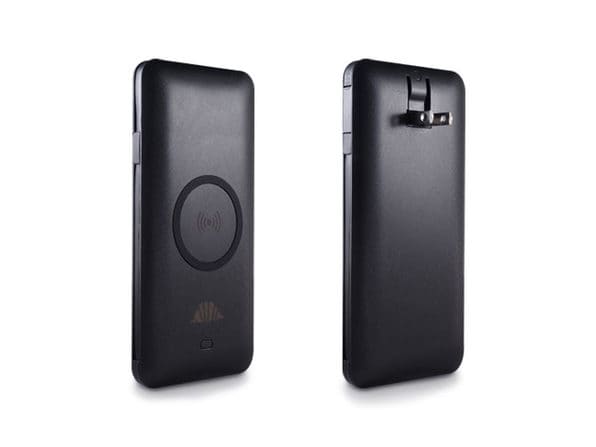
We have a deal on the SCOUT Wireless 5,000mAh Portable Charger, a Qi charger that also has three different built-in charging cables, all in a compact form factor. Those cables include USB-C, USB-A (regular USB), and a Lightning cable. That means you can use it on your new iPad Pro and your iPhone X/S/R/Max, too. It’s $39.99 through our deal, but coupon code WEEKEND15 brings it down to $34 at checkout. Here’s a promo video with a closer look: