North Face is Really Sorry for Spamming Wikipedia

North Face as issued an apology over its manipulating campaign to spam Wikipedia pages and game Google search results.

We believe deeply in @Wikipedia’s mission and apologize for engaging in activity inconsistent with those principles. Effective immediately, we have ended the campaign and moving forward, we’ll commit to ensuring that our teams and vendors are better trained on the site policies.

If the idiots didn’t openly brag about it, they probably could’ve gotten away with it, at least for a while longer.


An Inside Look at the Qualcomm Monopoly Ruling

Timothy Lee did a nice deep dive into the 233-page Qualcomm monopoly ruling from Judge Lucy Koh. I’ve heard hot takes of the settlement between Apple and Qualcomm that suggested maybe Apple knew it was going to lose and gave up. But Judge Koh ordered Qualcomm to renegotiate with its customers.

The legal document outlines a nearly 20-year history of overcharging smartphone makers for cellular chips. Qualcomm structured its contracts with smartphone makers in ways that made it almost impossible for other chipmakers to challenge Qualcomm’s dominance. Customers who didn’t go along with Qualcomm’s one-sided terms were threatened with an abrupt and crippling loss of access to modem chips.

In her ruling, Koh ordered Qualcomm to stop threatening customers with chip cutoffs. Qualcomm must now re-negotiate all of its agreements with customers and license its patents to competitors on reasonable terms.

Angry Face Emoji Protestors at Facebook Annual Meeting

Protestors armed with an angry face emoji attended Facebook’s annual shareholder meeting Wednesday. They were airing concerns about the scandals currently engulfing the firm. As Reuters noted, attempts to get reform in the company can easily be outvoted by Mark Zuckerberg and those close to him. However, the meeting will give a good indication as to whether investors share the protestors’ angry face sentiment.

The measures had little chance of succeeding, as a dual class share structure gives Zuckerberg and other insiders control of about 58% of the votes. Many investors have shrugged off the scandals swirling around the company, as it has beaten Wall Street’s estimates for revenue growth and continues to add users globally. Zuckerberg declined to answer a shareholder question on why he would not agree to create an independent board chair, instead restating his view that regulators should set the rules for companies around privacy and content.

Cardiogram Will Judge Most Exciting Parts of WWDC Keynote

What gets your heart racing at WWDC? Cardiogram is going to find out. The Apple Watch heart rate sensor app is going to monitor the heart rates of those who want to play along during the WWDC keynote, and reveal what the most exciting moment was, reported AppleInsider.

Cardiogram will be allowing its users to start recording their heart rate on the Apple Watch continuously before the WWDC keynote begins, one which uses the Apple Watch’s heart rate sensor. The data is shared minute-by-minute with the company, which is then compiled with data provided by other users. During the event, a dedicated live heart rate chart will update to show what the current heart rate of participants taking part in the monitoring scheme is, and what the group rate was in previous minutes. In theory, the heart rate will be highest shortly after major new announcements.

IBM Sells Technology to a Dictatorship...Again

IBM is no stranger to selling stuff to dictators. First it was the Nazis, now it’s the United Arab Emirates.

But even as [facial recognition] technology comes under more scrutiny in the United States, tech giants such as IBM, and China’s Hikvision and Huawei, are marketing biometric surveillance systems in the UAE, where citizens have fewer options to push back. The UAE has used cellphone hacking software to spy on hundreds of dissidents, journalists, and suspected criminals, and has invested heavily in surveillance technology, according to human rights groups and international media reports.


The Fake Nancy Pelosi Video and Facebook's Immunity

There has been lots of controversy and discussion about a video of House Speaker Nancy Pelosi circulating online. It to show Speaker Pelosi as apparently unwell, or drunk. It was false, edited to look like that. YouTube chose to take the video off its platform but Facebook did not. In her recent New York Times column, Kara Swisher blasted the social media giant’s decision.

The only thing the incident shows is how expert Facebook has become at blurring the lines between simple mistakes and deliberate deception, thereby abrogating its responsibility as the key distributor of news on the planet. Would a broadcast network air this? Never. Would a newspaper publish it? Not without serious repercussions. Would a marketing campaign like this ever pass muster? False advertising. No other media could get away with spreading anything like this because they lack the immunity protection that Facebook and other tech companies enjoy under Section 230 of the Communications Decency Act.

Monitor the Quality and Safety of the Air You Breathe Wherever You Go with AtmoTube Plus: $79.99

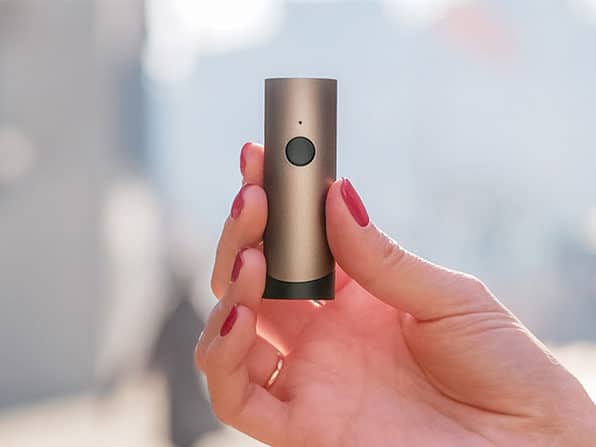
We have a deal on a device called AtmoTube Plus that monitors the quality and safety of the air—and it’s small enough to clip on to your belt or purse. It measures real-time air pollution caused by harmful gases and a wide range of Volatile Organic compounds (VOCs) like acetone, methanol, benzene, ethanol, toluene, xylene, and formaldehyde. It also measures atmospheric pressure, temperature, and humidity. It communicates with your iPhone (or Android device) via Bluetooth 5.0. You can get this device through our deal for $79.99.

The Splinternet is Growing Bigger

The splinternet, also known as cyberbalkanization, refers to how governments split the World Wide Web into national internets.

It’s not just authoritarian countries trying to bend the global web to national values. The same social media companies that gave rise to unrest in the Middle East have come under fire in the West for allowing their services to be used to promote hatred and terrorism. In response, England and Australia have recently passed laws demanding tech firms provide easier access to web users’ communications.

Sometimes I think that in the future there will be no internet. There won’t be a web browser, there will just be apps that are easier to censor and control.