
John Martellaro and Bryan Chaffin join host Kelly Guimont to discuss the effects of machine learning on creativity and artistic pursuits.
iPhone China Sales Down 30% in Q1 2019
Apple’s iPhone China sales are down 30% in Q1 2019. Huawei continues to dominate, capturing 34% of China’s smartphone market.
Apple’s performance in China is concerning, given that the worst quarter for iPhone shipments is usually Q2 or Q3, not Q1 when new devices are still fresh. Apple has acted to cut iPhone retail prices, which has largely relieved the pressure from its channel partners.
I wonder how much of iPhone sales in China were impacted by Chinese companies encouraging employees to boycott Apple in favor of Huawei.

Vodafone Denies Huawei Italy ‘Backdoor’
A report from Bloomberg says software flaws found in Vodafone’s Huawei equipment back in 2011-2012 were backdoors. Vodafone, while admitting that the equipment did have security flaws, denies that Huawei could have used them as such.
The issues in Italy identified in the Bloomberg story were all resolved and date back to 2011 and 2012. The ‘backdoor’ that Bloomberg refers to is Telnet, which is a protocol that is commonly used by many vendors in the industry for performing diagnostic functions. It would not have been accessible from the internet. Bloomberg is incorrect in saying that this ‘could have given Huawei unauthorised access to the carrier’s fixed-line network in Italy’.
The BBC article is worth the read. Also keep in mind that this isn’t the first time Bloomberg has reported on alleged backdoors by a Chinese company. They provided no evidence the first time and so far have refused to issue a retraction.

How Twitter is Working to Foster Healthier Conversation
The nastiness that frequently occurs on Twitter has been a hot topic of discussion for a while now. Consequently, it is a matter of concern for CEO Jack Dorsey and his team. Recode reported on Twitter’s efforts to become a healthier platform.
Everything the company seems to do — from cracking down on bots to building new conversation features — has been done in the name of a healthier Twitter. When the company’s user base started shrinking noticeably last year, Twitter said that its focus on health was at least partly to blame. Measuring the health of interactions is just one part of that broader effort, but it’s one of the more challenging and confusing parts. Removing bots and spam are technical problems. Truly understanding the health of a conversation requires things like understanding who is talking, what they’re talking about, or when someone is using sarcasm. Not all arguments, of course, are bad.
Foxconn Said to Be Developing micro-LED Tech for Apple
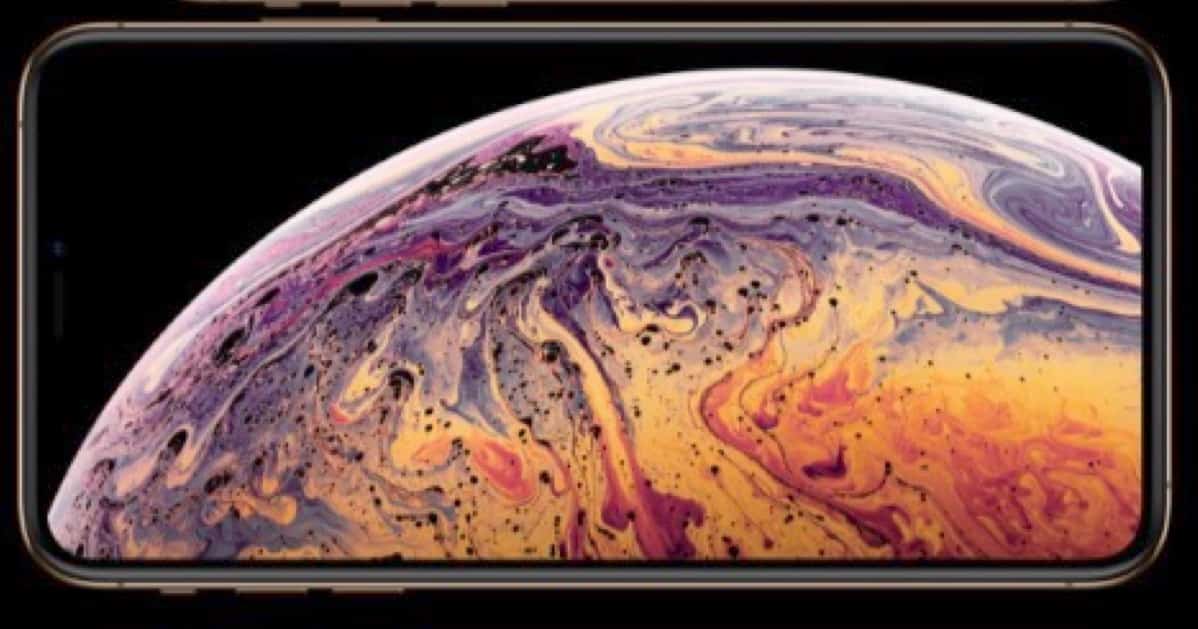
Foxconn is said to be developing micro-LED displays to be used in iPhones and maybe other Apple devices. 9to5Mac compiled stories emerging out of Asia and explained why the technology would be a significant step forward.
micro-LED is generally seen as a superior display panel to OLED displays, the latter is what Apple currently uses in the Apple Watch, iPhone X and iPhone XS. micro-LED screens need no backlight as the pixels themselves emit their own light, just like OLED screens. This means you can get the same rich colors and high-contrast appearance…Naturally, we would expect Apple to also want to bring the technology to its flagship iPhone line and this latest report about Foxconn’s interest corroborates that intent. Nevertheless, this technology is still firmly in the medium-term future. Do not expect micro-LED screens on mass volume products anytime soon.

Apple Poached Lead 5G Intel Developer Umashankar Thyagarajan
Just weeks before Apple and Qualcomm reached a settlement, Apple poached Intel employee Umashankar Thyagarajan.
Mr. Thyagarajan’s departure is understood to have been a setback to Intel’s efforts, forcing the company to reshuffle the 5G project. Shortly afterwards, Intel said it would not be able to release a 5G smartphone chip until 2020, more than a year after Qualcomm.
Very interesting. More and more pieces of the puzzle are being revealed.
Belgian Programmer Solves 20 Year Old Crypto Puzzle
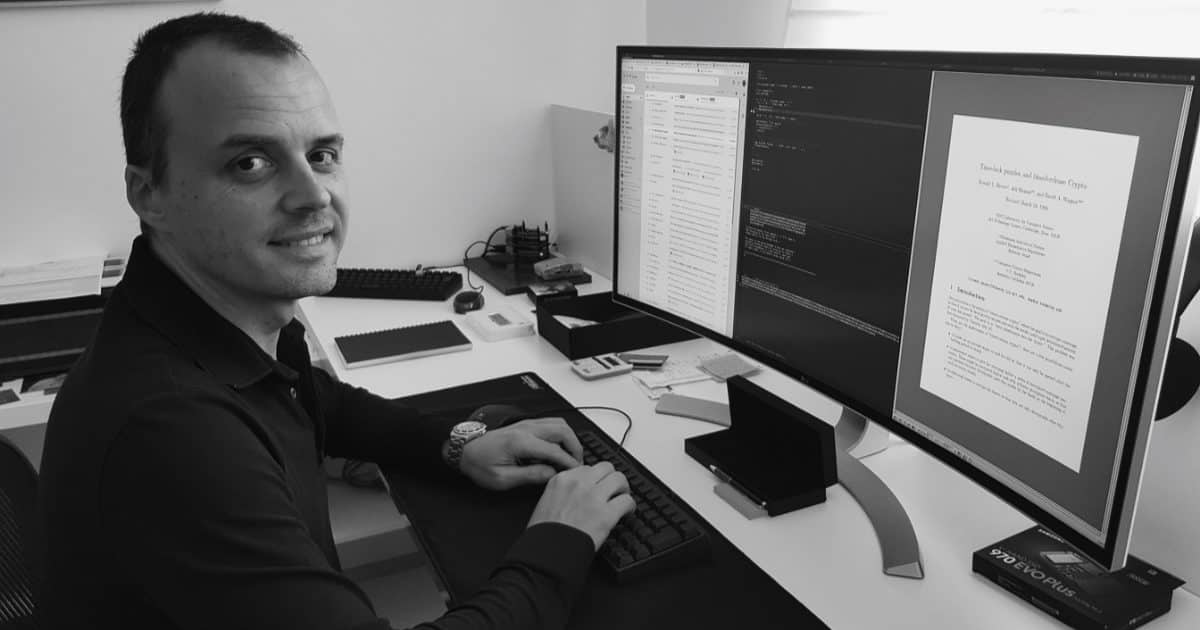
In 1999, MIT created a puzzle designed to take 35 years to solve. Belgian programmer Bernard Fabrot has solved it early.
The puzzle essentially involves doing roughly 80 trillion successive squarings of a starting number, and was specifically designed to foil anyone trying to solve it more quickly by using parallel computing.
“There have been hardware and software advances beyond what I predicted in 1999,” says MIT professor Ron Rivest, who first announced the puzzle in April 1999. “The puzzle’s fundamental challenge of doing roughly 80 trillion squarings remains unbroken, but the resources required to do a single squaring have been reduced by much more than I predicted.”

Not all USB-C Is Created Equal – Mac Geek Gab 759
Just when you thought it couldn’t get any more confusing, USB-C cables can add some additional questions to the mix. Add to this lots of Cool Stuff Found, a discussion about the best desktop Mac to buy, some tips and follow-ups from recent episodes, and you’ve got yourself this week’s Mac Geek Gab. You’re guaranteed to join John and Dave in learning at least five new things. Press play, and enjoy!

Humans May Emotionally Bond With Robots
Big Think writes:
- Human-like robots may creep us, at first, but roboticists believe the more like us they appear, the more likely we’ll feel comfortable around them.
- Some studies suggest that we could develop feelings for robots, despite them not being human.
- As the loneliness epidemic continues, such robots may fill certain people’s social voids.
This is not so crazy. After all, I heard about a guy who married his iPhone.
TMO Background Mode Interview with Cosmologist Dr. Andrew Friedman
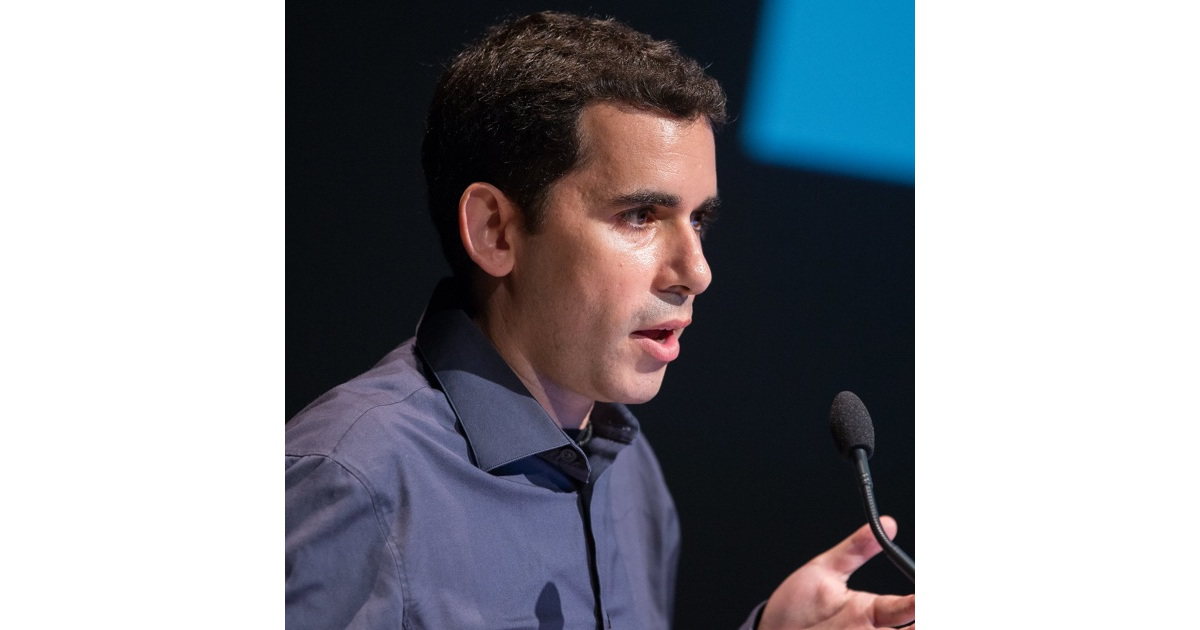
Dr. Andrew Friedman is an astronomer, cosmologist, and data scientist. He’s currently an NSF funded Assistant Research Scientist at the University of California at San Diego Center for Astrophysics & Space Sciences. He is also a Research Affiliate in the MIT Program in Science, Technology and Society. He holds a Ph.D. in Astronomy and Astrophysics from Harvard.
We chatted about how science fiction inspired him as a youth to become a cosmologist. Also, how important it is to have a Ph.D. thesis advisor who’s enthusiastically supportive. Then, we got into some cool topics of cosmology: using Type Ia supernovae to measure the rate of expansion of the universe, why infrared observations of those stars are helpful, whether quantum entanglement suggests a substrate on which spacetime resides, the multiverse, and the implications of the Planck length and Higgs field for our very existence.


