
I have two little nuggets for you. The first is that Microsoft has an undersea data center its experimenting with called Project Natick. The second is that they now have a webcam—two webcams, actually—for you to get a gander at the operation, as well as all the oceanic wildlife also checking it out. How they don’t call those cams Finding Clippy is beyond me, so I just took care of it for them. UR WELCOME. In any event, this whole thing is a giant experiment to see if Microsoft can save money by using the chilly ocean waters off the coast of Scotland to cool a data center. And yeah, my kneejerk reaction is that this will help heat the oceans, and don’t we want to avoid that? Plus, you know, the law of unintended consequences, but whatevs. They didn’t ask me, and they do have proper scientists working on this, so maybe it’s just an awesome idea. It’s certainly outside the box thinking. I found this, BTW, from a piece on The Verge that is full of cheezeball puns that had me snorting out loud in my office.

Turns out Blue Light Can Accelerate Blindness
I’ve got some good news and some bad news for you. Let’s start with the bad news: blue light (such as light from our devices) can accelerate macular degeneration in our eyes, something that can cause blindness over time. The good news, or at least better news, is that a group of scientists have discovered how that process works. They told The Guardian UK, «Our experiments explain how this happens, and we hope this leads to therapies that slow macular degeneration, such as a new kind of eye drop.» To me, this emphasizes the importance of shifting our displays red at night. I use the f.lux app on my Mac, and Apple has a similar feature baked into iOS. In addition to theoretically helping me sleep, seems it could be good for my eyes, too. There are more details about the scientists’ experiments in the full article, and it’s an interesting read.
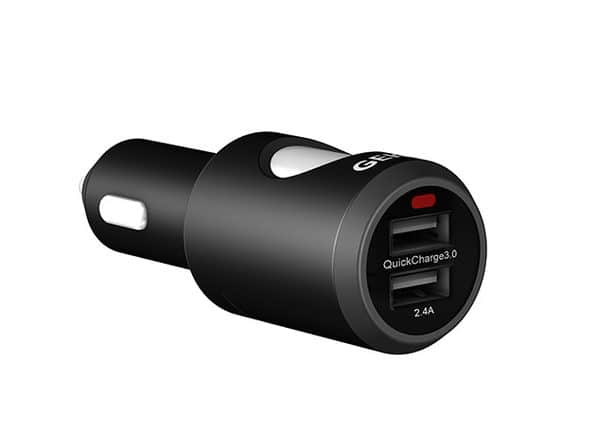
PanicSafe Emergency Locator and Car Charger: $49.99
We have a deal on a cool little gadget called the PanicSafe Emergency Locator and Car Charger. It plugs into your auxiliary port (i.e. cigarette lighter) and works as a normal car charger for your devices (including QuickCharge support). But it also can communicate with your iPhone or Android device and send messages to pre-arranged contacts in the case of an accident or if you trigger the panic button. It’s $49.99 through our deal, and there’s no additional subscription fee.
Internet Trolls Have Won. Time to Give Up
The New York Times writes how internet trolls have won, and there’s not much we can do about it.
Case in point: the right-wing conspiracy site Infowars. For years, the site distributed false information that inspired internet trolls to harass people who were close to victims of the Sandy Hook school shooting. This week, after much hemming and hawing about whether to get involved, some giant tech firms banned content from Infowars. (Twitter did not, after determining Infowars had not violated its policies.)
What does that show us? That you as an internet user have little power over content you find offensive or harmful online. It’s the tech companies that hold the cards.
Maybe social networks should have decency laws like broadcasts radio and television do. That will only stop the most vitriolic of trolls, but at least people will be able to visit sites like Twitter without getting a flood of harassing DMs.
Apple: Privacy Hero or Privacy Villain?
Bloomberg recently came out with a piece about Apple, asking if the company is really the privacy hero we think it is. Short answer: yes, but here’s a quote:
When developers get our information, and that of the acquaintances in our contacts list, it’s theirs to use and move around unseen by Apple. It can be sold to data brokers, shared with political campaigns, or posted on the internet. The new rule forbids that, but Apple does nothing to make it technically difficult for developers to harvest the information.
As we discussed on today’s TDO, my problem is that Ms. Frier tries and fails to compare this to the Cambridge-Analytica scandal. App permissions and developers with data access are entirely different to what Facebook and C/A did. Apple could improve the system to be sure, but there’s only so much companies can do before we realize that we need to be more proactive about these issues ourselves, not reactive.

Apple and Privacy Protection, Anki Vector Robot - TMO Daily Observations 2018-08-09
Adam Christianson from the Maccast and Andrew Orr join Jeff Gamet to share their thoughts on whether or not Apple is doing enough to protect our privacy, plus they have some first impressions on Anki’s new Vector robot.
Comcast Security Flaw Exposed Addresses, Social Security Numbers for 26.5M Customers
A design flaw in Comcast’s online payment portal exposed partial home addresses and social security numbers for 26.5 million customers. The flaw displayed the first number and street name for addresses, and the last four digits in social security numbers. Buzzfeed broke the news, and Comcast quickly patched the flaw. Comcast says no one exploited the flaw, and they had it patched within hours of learning about it. Still, the fact that nearly anyone had access to the information is pretty creepy.

Apple: Infowars App Can Stay on App Store
Apple removed the Infowars podcasts from its iTunes listings citing hate speech violations, but is letting the Infowars Official app stay on its iPhone and iPad App Store. Why remove the podcasts, but not the app, since they all offer the same content? Even though the podcasts violate Apple’s guidelines, the app doesn’t. In a statement to Buzzfeed, Apple said,
We strongly support all points of view being represented on the App Store, as long as the apps are respectful to users with differing opinions, and follow our clear guidelines, ensuring the App Store is a safe marketplace for all. We continue to monitor apps for violations of our guidelines and if we find content that violates our guidelines and is harmful to users we will remove those apps from the store as we have done previously.
The problem here is that Apple’s App Store guidelines Alex Jones Infowars App Still on App Store Even After Podcasts Were Blocked, and they’re apparently different than the iTunes Store guidelines for podcasts. It’s confusing for content creators and consumers. Apple is well within its rights to block podcasts and apps for any reason, even if they’re arbitrary. I’d prefer, however, if Apple’s guidelines were clear and consistently enforced.
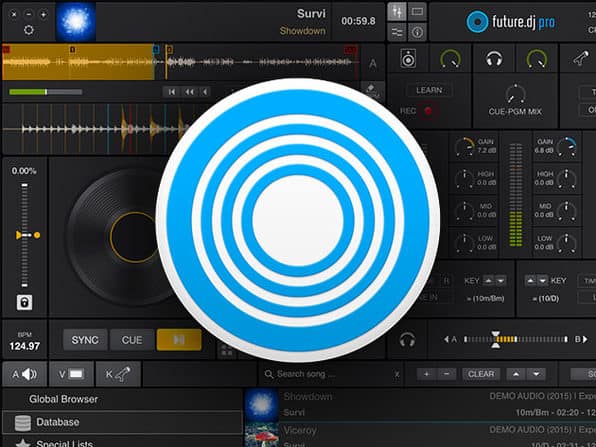
Future.dj Pro Music Mixer: $19
We have a deal on Future.dj Pro, a software music mixer for the Mac and Windows. It features three vertical waveforms per deck for aligning your beats, and you can use up to 8 inputs and outputs. There is a comprehensive list of features in the deal listing, as well as a tutorial video that gives you a good idea of this software works. It’s $19 through our deal.
Online Voting, the Corporate Public Square, Picard’s Return to Star Trek - ACM 474
What will it take to make online or app-based voting safe, secure, and reliable? Bryan Chaffin and Jeff Gamet are joined by John Kheit to discuss the future of voting. They also explore the idea of corporate platforms (i.e. private platforms) becoming so big that they become synonymous with the public square and subject to the First Amendment. Then Bryan goes off on a weird tangent about how cool Patrick Stewart’s new episode of Star Trek could be if Jean-Luc Picard was a broken and bitter man. Good times!


