

Apple plans to drop Face ID on the iPhone Fold, and the reason comes down to design limits and cost. Reports say the foldable structure makes the TrueDepth camera hard to fit without adding thickness. That decision matters more when buyers expect a premium device that costs around $2,399.
Instead, Apple plans to use a side-mounted Touch ID sensor built into the power button. This change focuses on usability. On foldable phones, a side fingerprint reader stays easy to reach whether the device is open or closed. It also avoids the complexity of fitting Face ID parts into two displays.
There is also a clear cost angle. Face ID hardware remains expensive, especially when paired with foldable screens. By switching to Touch ID, Apple reduces internal complexity and keeps the device thinner at the same time.
Don’t miss the best of The Mac Observer
Set us as a preferred source and our Apple reporting ranks higher in your Google Search results and Discover feed — one tap, no account changes.
A Weibo leaker known as Instant Digital explains that this approach works better for foldable phones. According to the post, the “power button integrated fingerprint module is the most suitable solution for folding screens” because it balances cost and ease of use. The tipster also says side fingerprint sensors are “really easy to use,” even if they sound less advanced than under-screen solutions.
Punch hole cameras replace Face ID hardware
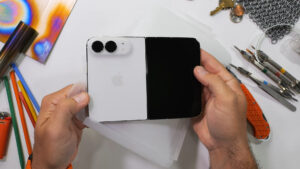
The same report says the iPhone Fold will not use an under-display camera. Instead, Apple plans to use punch hole cutouts on both the inner and outer screens. The outer display camera sits in the center, while the inner display camera appears on the right side. This setup removes the need for a notch or pill-shaped cutout.
That change signals a bigger shift. For the first time, Apple moves away from its familiar Face ID cutout style. It pushes the iPhone closer to a clean, full-screen look.
Apple is still testing display materials, including ultra-thin flexible glass, as it works to reduce the visible crease. Those tests explain why some design details remain in flux.
If these reports hold, the iPhone Fold will trade Face ID for practicality. Apple seems willing to rethink long-standing design choices to make its first foldable work better in daily use.


Discussion