Agatha Christie’s Tommy & Tuppence Episode 5 Ending Explained: What the Mysterious Painting Reveals About the Cold Case

Agatha Christie’s Tommy & Tuppence Episode 4: How a Decades-Old Mystery Connects to the Second Murder
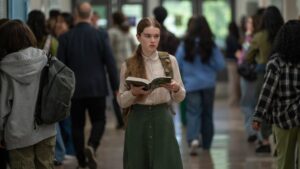
Image courtesy of BritBox

Spoiler warning: This article discusses events through S01E05.

The mysterious painting reveals that Mrs. Lancaster’s memories are tied to a real house and a cold case involving three children who disappeared in 1989. It also directs Tommy and Tuppence toward Sir Philip Starke.

Episode 5 stops short of solving the case, but it establishes that Ada’s final concern was justified. Mrs. Lancaster is missing, the painting she always carried has been left behind and someone is trying to keep the past closed.

Don’t miss the best of The Mac Observer

Set us as a preferred source and our Apple reporting ranks higher in your Google Search results and Discover feed — one tap, no account changes.

Or get it by email

Ada’s code points back to the painting

After Ada’s funeral, Tommy searches for a final message. Tuppence helps him decode MCMV carved into the desk as 1905, leading to an almanac and a hidden compartment containing Ada’s notes.

Ada wrote that Mrs. Lancaster was unsafe and asked Tommy and Tuppence to investigate the painting. Her message turns their grief into a last assignment rather than a random new mystery.

The Red House leads to three missing children

The painting depicts The Red House, which exists outside the care home. Near it, the pair find a memorial to Susan Copleigh, Helen Loughty and Nicolas Neston, three children who vanished in the woods.

Susan is the girl in the red cloak seen at the start. Local suspicion once fell on Boscowan, the artist who painted the house, but the episode gives the accusation the shape of an old community story rather than proof.

Sir Philip becomes the center of the mystery

Boscowan says Julia Starke was his muse and lover. Julia lived at the house with Sir Philip, who discovered their affair. A grave appears to rule out the theory that Mrs. Lancaster is secretly Julia.

Every remaining path leads back to Sir Philip. His Rolls-Royce Phantom may explain the witness who says a phantom collected Mrs. Lancaster, and his final phone call confirms he knows Tommy and Tuppence are approaching.

That distinction matters because a headline can flatten a complicated episode into one revelation. Here, the surrounding choices are as important as the answer itself. The story repeatedly shows people acting with partial information, then discovering that a decision made for protection, loyalty or survival has created a different risk for somebody else.

It also keeps the next chapter from feeling predetermined for everyone. The immediate event has a clear meaning, but it does not settle every motive or repair every damaged relationship. Any follow-up has to deal with what the characters now know, what they still misunderstand and whether they are prepared to change their behavior.

The episode’s strongest idea is that information changes relationships only when characters decide what to do with it. The facts answer the immediate question, but the consequences remain active beyond the final scene.

What did you make of this development, and where do you think the story goes next? Share your view in the comments.
Discussion

Join the discussionCommenting as a guest — your email is never published · Log in

Protected by Akismet — be kind, stay on topic.

This site uses Akismet to reduce spam. Learn how your comment data is processed.

Agatha Christie’s Tommy & Tuppence Episode 5 Ending Explained: What the Mysterious Painting Reveals About the Cold Case

Agatha Christie’s Tommy & Tuppence Episode 4: How a Decades-Old Mystery Connects to the Second Murder
Image courtesy of BritBox

Spoiler warning: This article discusses events through S01E05.

The mysterious painting reveals that Mrs. Lancaster’s memories are tied to a real house and a cold case involving three children who disappeared in 1989. It also directs Tommy and Tuppence toward Sir Philip Starke.

Episode 5 stops short of solving the case, but it establishes that Ada’s final concern was justified. Mrs. Lancaster is missing, the painting she always carried has been left behind and someone is trying to keep the past closed.

Don’t miss the best of The Mac Observer

Set us as a preferred source and our Apple reporting ranks higher in your Google Search results and Discover feed — one tap, no account changes.

Or get it by email

Ada’s code points back to the painting

After Ada’s funeral, Tommy searches for a final message. Tuppence helps him decode MCMV carved into the desk as 1905, leading to an almanac and a hidden compartment containing Ada’s notes.

Ada wrote that Mrs. Lancaster was unsafe and asked Tommy and Tuppence to investigate the painting. Her message turns their grief into a last assignment rather than a random new mystery.

The Red House leads to three missing children

The painting depicts The Red House, which exists outside the care home. Near it, the pair find a memorial to Susan Copleigh, Helen Loughty and Nicolas Neston, three children who vanished in the woods.

Susan is the girl in the red cloak seen at the start. Local suspicion once fell on Boscowan, the artist who painted the house, but the episode gives the accusation the shape of an old community story rather than proof.

Sir Philip becomes the center of the mystery

Boscowan says Julia Starke was his muse and lover. Julia lived at the house with Sir Philip, who discovered their affair. A grave appears to rule out the theory that Mrs. Lancaster is secretly Julia.

Every remaining path leads back to Sir Philip. His Rolls-Royce Phantom may explain the witness who says a phantom collected Mrs. Lancaster, and his final phone call confirms he knows Tommy and Tuppence are approaching.

That distinction matters because a headline can flatten a complicated episode into one revelation. Here, the surrounding choices are as important as the answer itself. The story repeatedly shows people acting with partial information, then discovering that a decision made for protection, loyalty or survival has created a different risk for somebody else.

It also keeps the next chapter from feeling predetermined for everyone. The immediate event has a clear meaning, but it does not settle every motive or repair every damaged relationship. Any follow-up has to deal with what the characters now know, what they still misunderstand and whether they are prepared to change their behavior.

The episode’s strongest idea is that information changes relationships only when characters decide what to do with it. The facts answer the immediate question, but the consequences remain active beyond the final scene.

What did you make of this development, and where do you think the story goes next? Share your view in the comments.

Discussion

Join the discussionCommenting as a guest — your email is never published · Log in

Protected by Akismet — be kind, stay on topic.

This site uses Akismet to reduce spam. Learn how your comment data is processed.