It's Not Just Amazon - Lots of Residents Don't Want a Tech Giant as Their Neighbour

This week, Amazon scrapped plans for a New York headquarters. However, it is not just in Queens where local residents don’t want a tech giant setting up a campus. As Rick Noak pointed out in the Washington Post, there is growing opposition from people in Berlin, Melbourne, and Dublin to tech firms expanding in their cities.  In Melbourne, the opposition is to an Apple flagship store. They may be thousands of miles apart, but residents in these cities share some coming concerns.

Tech companies bring in small armies of workers but these are rarely recruited from the neighborhoods in question and the new arrivals drive up prices for locals. There is also often opposition to the companies on ideological grounds or simply the fact that a global corporation is taking over key parts of beloved neighborhoods. While city leaders may love the new additions, residents don’t.

Do You Cover Your Webcam Lens With a Sticky Note?

There is a certain practice, born, perhaps, of obsolete data and just plain paranoia. People place a sticky note over their Mac’s webcam when not in use. Is this a valid, efficacious practice? There are even commercial products that have a nicer look to them. John Gruber digs into the practice and the technology both old and new. There’s a lot to learn in this column by John. Check it out.

Apple Infrastructure, Attention to Details, Apple Car/AR/Glasses, with John Martellaro - ACM 501

Does Apple have the infrastructure it needs for a cohesive future? Once that seemed clear, but Bryan Chaffin and guest-host John Martellaro say it’s become harder to see, if so. They then pivot to how augmented reality will figure into Apple’s future plans and products. They cap the show by weighing Apple’s ability to pay attention to details as the company grows.

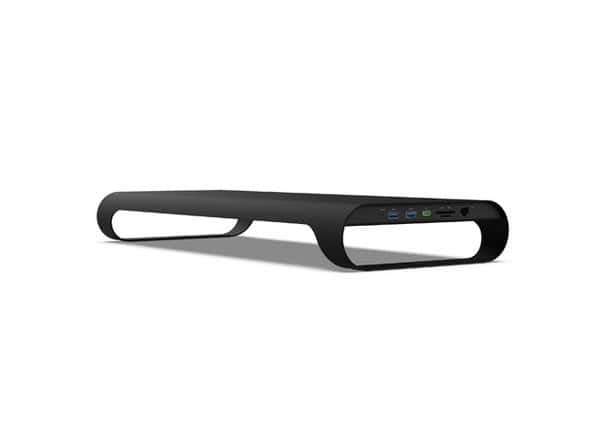
ProBASE X Laptop/Monitor/iMac Stand Features Drawer, Hub with 6 Ports: $144.99

We have a deal on the ProBASE X Laptop/Monitor/iMac stand. This jet black stand features a storage drawer on the left and a 6-port hub on the right. It connects to your computer via USB 3.0, and for output, it has two USB 3.0 ports, an SD card slot, a MicroSD card slot, an ethernet port (10/100/1000Mbps), and a QuickCharge port. This device is $144.99 through our deal, 8% off retail. 

What Happens When U.S. Personnel Serve a Foreign Intelligence Agency?

Remember that story about the iPhone hacking tool called Karma? Lawfare published a good piece detailing the consequences of U.S. spies working for a foreign intelligence agency.

Along the way, the Americans came to appreciate that their efforts at times did indeed include surveillance of political opponents of UAE authorities, and further that the UAE service at times targeted Americans despite assurances that this would not occur (or at least that the operations Project Raven in particular conducted or supported would not be directed at Americans).

That’s probably the biggest point of the story. Americans spying on Americans on behalf of another country.

Software Pirates Violating Apple's Developer Program Rules, Distributing Hacked Apps

Software pirates are using enterprise developer certificates to put hacked versions of popular apps on iPhones. An investigation by Reuters found illegitimate versions of apps such as Spotify, Angry Birds, Pokemon Go, and Minecraft have been distributed away from the App Store. The modified versions of the apps allow iPhone users to avoid adverts, fees, and game rules. However, they are in violation of Apple’s developer program which stipulates the apps can only be distributed via the App Store.

Illicit software distributors such as TutuApp, Panda Helper, AppValley and TweakBox have found ways to use digital certificates to get access to a program Apple introduced to let corporations distribute business apps to their employees without going through Apple’s tightly controlled App Store. Using so-called enterprise developer certificates, these pirate operations are providing modified versions of popular apps to consumers, enabling them to stream music without ads and to circumvent fees and rules in games, depriving Apple and legitimate app makers of revenue.

Amazon Cancels Plans for New York Campus

Amazon announced Thursday it has canceled its plans to build a corporate campus in New York City. The proposal had faced opposition from some unions and lawmakers, such as Representative Alexandria Ocasio-Cortez, the New York Times reported. In particular, opponents were aggrieved by a proposal from city and state officials to give the company $3 billion incentives package.

It was a remarkable win for insurgent progressive politicians led by Representative Alexandria Ocasio-Cortez, whose upset victory last year happened to occur in the district where Amazon had planned its site. Her win galvanized the party’s left flank, which mobilized against the deal. As recently as Wednesday, the governor had brokered a meeting between Amazon executives and the union leaders who had been resistant to the deal, according to two people briefed on the sit-down. The meeting ended without any compromise on the part of Amazon, according to the people.

How Apple News Affects Publishers

Great analysis as usual by Ben Thompson. He writes how the Apple News subscription might be good for certain publishers, and bad for others.

To that end, I am sure that a significant number of publications will sign up for Apple’s offering; clearly the company is confident enough to leak a date. And, frankly, many publications should: most publishers are already locked into the volume game when it comes to their editorial direction, and Apple News subscription payouts will be additive to the bottom line.

The main thing that concerns me is how revenue will be driven by clicks. I hope that Apple News doesn’t become a flood of yellow journalism.

5G Security Concerns and Huawei

As the rollout of 5G comes ever closer, there has been an increased focus on Chinese firm Huawei’s role in the network. Many Western countries have raised concerns that the company is an arm of the Chinese state and used for spying. This something Huawei has repeatedly denied. Late in 2018, U.S. President Donald Trump was reportedly even considering an executive order that would have banned the use of Huawei equipment, Bloomberg News has a nice roundup of the current state-of-play.

5G isn’t easier to hack than its predecessors, but it will eventually connect many more devices than in the past, so protection from outside malign forces becomes a larger concern. Some nations are worried that Chinese 5G equipment, chips and software could be outfitted to spy on other nations.