MacBook Air vs. iPad Pro Is a Choice Between the Past and the Future

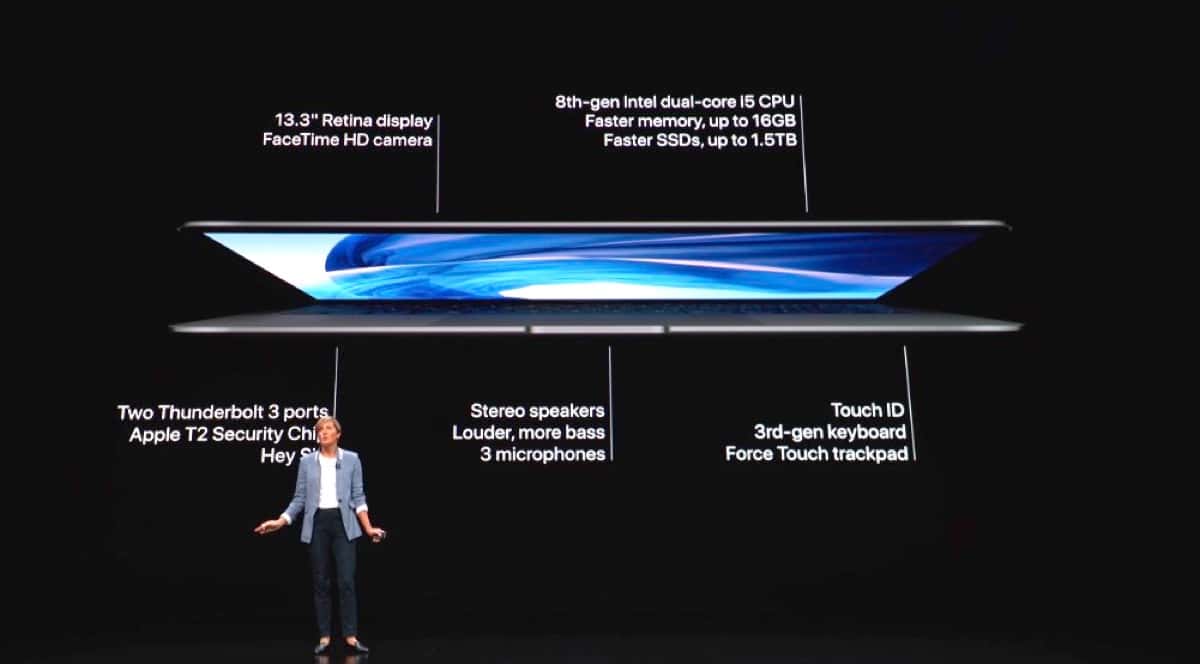
The new, more powerful, MacBook Airs and iPad Pros launched at Apple’s “There’s More in the Making” event in Brooklyn on Tuesday gave users a compelling choice – could these be our main machines instead of something we just throw in a backpack?  Vlad Savov outlines the argument well over at The Verge:

In crafting its most compelling iPad and MacBook Air to date, Apple also created a major headache for people like me. I’m a member of that classic Intel ultrabook demographic whose computing needs are light but constant. You won’t catch me doing 3D modeling or 4K video production on my laptop, but I do a litany of small tasks online, in a word processor, or in Adobe’s Lightroom. I’ve been using a MacBook Pro for two years that does most of what I want, but it really doesn’t last long enough. Now, Apple is offering me the much better battery life I need with the high-quality display I desire, but it’s fragmented the choice. Both the new MacBook Air and new iPad Pro could be the ideal computer for me.

A not dissimilar conversation was on TMO Daily Observations in the wake of the event.
Apple May Buy Into iHeartMedia to Boost Apple Music Visibility

Apple is reportedly in talks to buy a stake in iHeartMedia. The radio broadcast company is currently US$20 billion in debt and desperately in need of a big cash infusion, which an Apple deal could provide. For Apple, it could bring Apple Music’s Beats 1 streaming radio station to a much wider audience. The Financial Times (subscription required) says,

A partnership could see Apple Music’s Beats 1 radio station, which is only available through its apps, make its debut on broadcast radio. Extra distribution would give Beats 1 and Apple Music greater awareness among older audiences who are later adopters of streaming services. A deal would also put the Apple station into more cars or kitchens.

The bigger benefit for Apple could be negotiating power. iHeartMedia is the largest radio broadcast company in the U.S., and owning part of that could help Apple to convince artists and labels to release first on Apple Music instead of Spotify.

Here's How Apple Watch Changed The World

John Biggs writes how the Apple Watch changed the world. Not just the watch industry, but people in general.

Watch analysts believe that Apple created a halo effect. Of the millions of people who bought and wore an Apple Watch, a majority had never worn or thought about wearing a watch. Once they tried the Apple Watch, however, and outfitted it with leather bands, fancy Milanese loops and outfit-matching colors, the attitude changed. If wearing watches is so fun and expressive, why not try other, more storied pieces?

China Wants Other Countries to use Great Firewall Tech

China is exporting its Great Firewall tech to other authoritarian countries, like Russia and Uganda, so they can censor their citizens better.

A new report from Freedom House — a US government-funded NGO — supports this. During 2018, the authors found, «internet freedom declined for the eighth consecutive year.»

«A cohort of countries is moving toward digital authoritarianism by embracing the Chinese model of extensive censorship and automated surveillance systems,» Freedom House said.

Publishers are Drooling Over These Tiny Books

Book publishers want to breathe new life into the industry by making tiny books the size of a smartphone.

This month, Dutton, which is part of Penguin Random House, began releasing its first batch of mini books, with four reissued novels by the best-selling young-adult novelist John Green. The tiny editions are the size of a cellphone and no thicker than your thumb, with paper as thin as onion skin. They can be read with one hand — the text flows horizontally, and you can flip the pages upward, like swiping a smartphone.

I know this is a moot point but I already have smartphone-sized books inside my smartphone. Still though, I’m sure these will be popular among commuters and travelers.

UK Wants Apple to Open NFC Chip for Passports

The U.K. government wants Apple to open up the NFC chip so citizens can scan their passports. It will help EU citizens apply for residency after Brexit.

Home secretary Sajid Javid visited Apple in Cupertino to discuss the matter. Apple is said to be resistant and has not promised yet that it will change its NFC policy. The report says the government is “continuing to engage with Apple at the highest level”.

The Dutch government is also pressuring Apple to adapt its NFC policy, as it also wants to offer apps for its citizens with integrated passport scanning.

I think Apple will eventually add this capability as things slowly start to shift digitally. Imagine keeping not only your credit cards and boarding passes in the Wallet app, but your passport and driver’s license as well.

Kids Apps Are Full of Inappropriate Advertising

Kids apps have a lot more ads than you might think, and they could contain inappropriate advertising.

A stunning 95 percent of commonly downloaded apps that are marketed to or played by children age five and under contain at least one type of advertising…Often the ads are intrusive, spread across in a banner or even interrupting play…One app geared to young children had a popup that linked to a political game showing a cartoon version of Trump trying not to push the red button that will send nukes…