
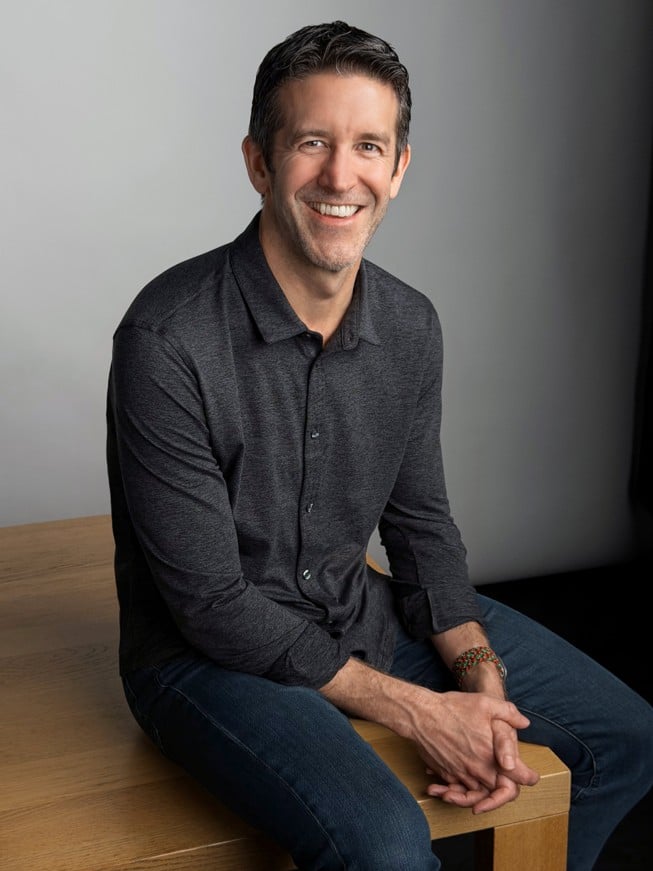
John Ternus wants Apple’s software team to move faster on AI, and he has told Craig Federighi so directly. Bloomberg’s Mark Gurman reports in his Power On newsletter that the new CEO pressed his software chief in a closed-door meeting in recent weeks to “accelerate” the company’s road map.
Ternus, according to Gurman, wants Apple to “move quickly beyond merely making necessary improvements to Siri.” Gurman describes a CEO who is frustrated by what he sees as a reluctance to embrace AI with the same urgency as competitors. Apple has not commented on the report.
Why a hardware CEO is leaning on Apple’s software chief to speed up AI
Ternus spent his career in hardware. Apple named him CEO in an April announcement, when he was senior vice president of Hardware Engineering, and he took over from Tim Cook on Sept. 1. Federighi now reports to him.
Don’t miss the best of The Mac Observer
Set us as a preferred source and our Apple reporting ranks higher in your Google Search results and Discover feed — one tap, no account changes.
Federighi’s job is huge. Apple’s leadership page says he runs iOS, iPadOS, macOS, watchOS and visionOS, and also leads Apple’s core AI work, including foundation models, applied AI and the research behind Apple Intelligence and Siri. So any push to speed up AI at Apple runs straight through him.
That is where the tension starts. Gurman says Federighi has long been seen as an AI skeptic, with concerns about the technology’s privacy, security, societal and employment implications. Those are reasonable worries. But they also slow things down at a company racing OpenAI, Google and Meta.
Gurman says Federighi plans 12 to 18 months ahead while hardware plans years out
The report also points to a clash in how the two sides of Apple plan. Hardware teams work on multiyear road maps. Federighi’s software group, per Gurman, plans only about 12 to 18 months ahead. For a CEO who grew up planning chips and enclosures years in advance, that window looks short for a technology moving as fast as AI.
Gurman also describes Federighi’s management style:
- He takes an especially hands-on role in meetings and major decisions.
- He uses his technical depth to argue against views he disagrees with.
- Some people in software and design feel they have limited influence over product direction.
- He has made succession planning a low priority, and there is no sign he plans to leave.
Pressure on the Siri team adds to it. Gurman reports that Mike Rockwell, the Vision Pro creator who now leads Siri engineering, continues to seriously consider stepping down, possibly next year. Apple shipped Siri AI only this fall, after a long delay, and the person running it may not stay to finish the next phase.
Apple’s 10-K shows research and development spending rose 32% to $45.8 billion as AI costs climbed
Ternus is not asking for speed on a tight budget. Apple’s annual 10-K filing for fiscal 2026, filed with the SEC on Nov. 3, shows research and development spending of $45.765 billion, up 32% from $34.55 billion a year earlier. Apple says the increase came mainly from “higher infrastructure-related costs, including investments in artificial intelligence,” plus higher headcount costs.
| Fiscal year | Research spending | Change | Share of net sales |
|---|---|---|---|
| 2024 | $31.37 billion | 8% | |
| 2025 | $34.55 billion | +10% | 8% |
| 2026 | $45.765 billion | +32% | 10% |
Put another way, research spending grew by about $11.2 billion in fiscal 2026, compared with about $3.2 billion the year before. Apple now spends 10% of its $478.8 billion in net sales on research and development. We broke down the filing in our report on Apple spending a record $45.77 billion on research.
What faster AI work at Apple could mean for your iPhone and Mac next year
Gurman separately reports that Apple could make Siri work more like an agent as early as next year, one that keeps track of a goal and works through the steps on its own. That is the kind of leap Ternus seems to want, rather than another round of fixes.
Bloomberg also says Apple is giving engineers more time to code and explore early in the iOS 28 and macOS 28 cycle. If you want the AI payoff, the first place to look is WWDC in June, where Apple shows the next iOS and macOS.
There is a trade-off. Apple’s caution is part of why it can promise that when Private Cloud Compute handles your Siri AI requests, your personal data is not stored or made accessible to Apple. A faster pace could bring the features you see in rival assistants sooner, but it also tests whether Apple can keep its privacy promises while doing it. Ternus has already talked up AI publicly, as we noted in our takeaways from his first earnings call. Now the pressure is on Federighi to deliver.

Discussion