
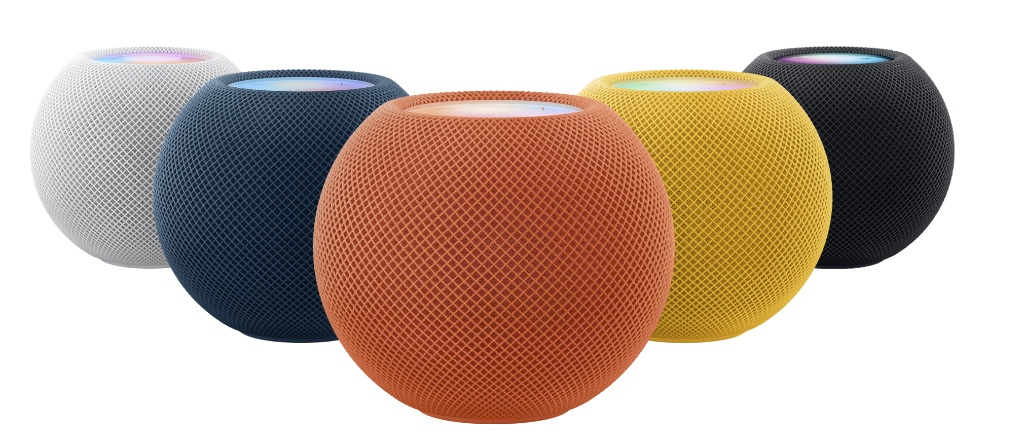
Despite being a popular and relatively affordable entry point into Apple’s smart home ecosystem, the HomePod mini 2 was notably absent from yesterday’s keynote. For those hoping for an updated version of the compact smart speaker, its continued absence reflects Apple’s strategic timing, which prioritizes significant software advancements over incremental hardware refreshes.
The current HomePod mini, launched in late 2020, remains a highly capable device.1 From a hardware perspective, there are no glaring deficiencies that demand an immediate successor. Its sound quality is excellent for its size, and its integration with Siri and HomeKit remains robust. The “if it ain’t broke, don’t fix it” principle is strongly at play here, allowing Apple to allocate precious keynote time to higher-impact product announcements.
The more significant reason for its delay likely lies in the evolution of Siri and Apple’s broader AI ambitions. Rumors have long suggested that a new HomePod mini would feature an updated S-series chip and improved wireless capabilities, but these hardware enhancements are intrinsically linked to software advancements.
Don’t miss the best of The Mac Observer
Set us as a preferred source and our Apple reporting ranks higher in your Google Search results and Discover feed — one tap, no account changes.
With Apple’s major AI and Siri enhancements widely reported to be delayed until next spring, launching new smart home hardware now would be putting the cart before the horse. Apple will almost certainly wait to introduce new HomePod mini hardware until the intelligent software that will truly define its next generation is ready for prime time.
This strategy is consistent with other anticipated but unannounced products. We saw a similar calculus with the absence of a new Apple TV, the delay of the AirTag 2, and the decision to hold off on a Vision Pro 2. Even the M5 iPad Pro was notably absent, adhering to a longer product refresh cycle. These products often await a more substantial technological or ecosystem-wide leap.
Just as the foldable iPhone release date isn’t this cycle, the HomePod mini 2’s time will come. When it does, expect it to be a more complete package, fully leveraging a smarter Siri and a more advanced smart home experience rather than just offering a spec bump.



Discussion