
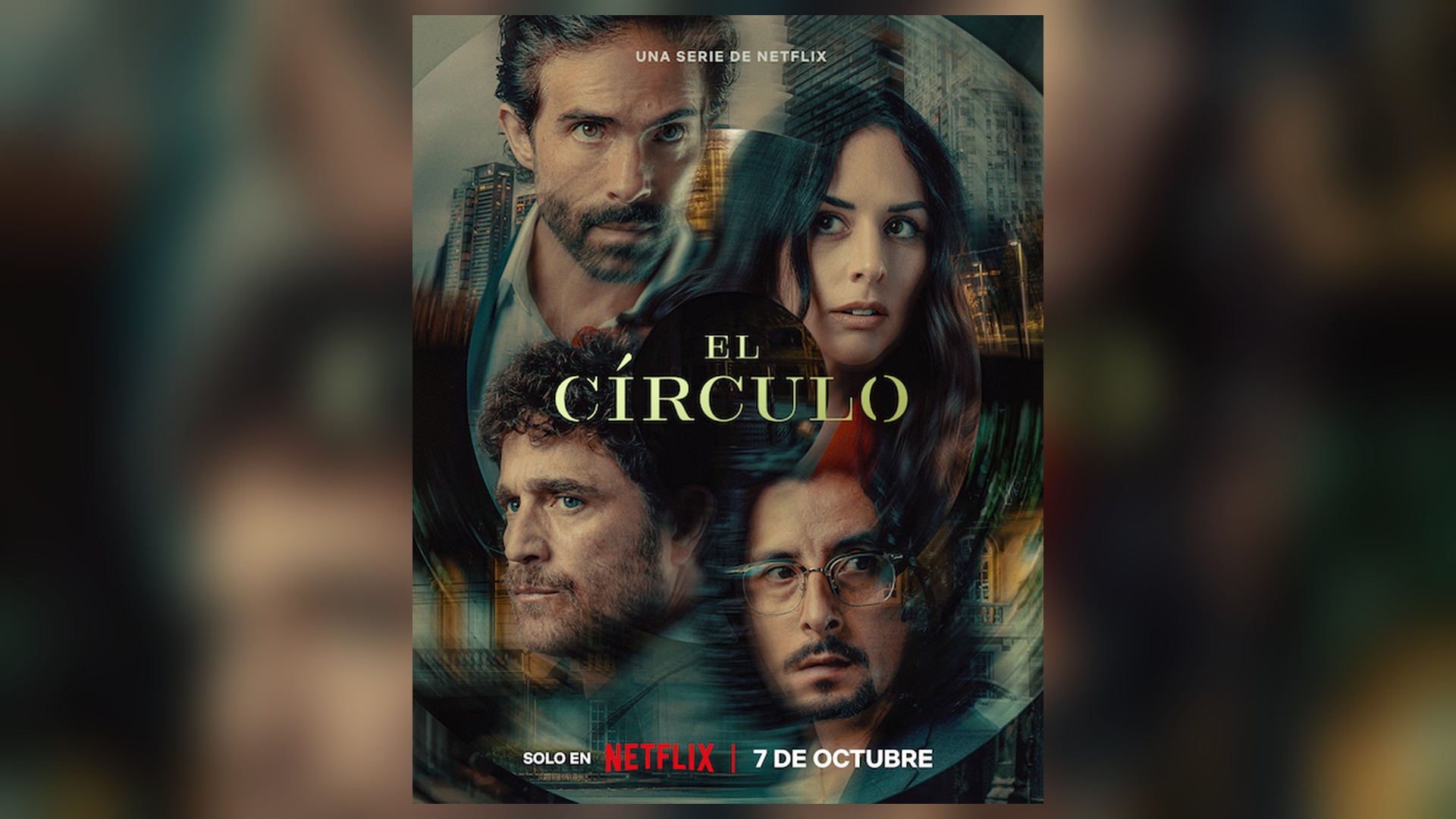
Netflix’s Inside the Circle keeps the four lifelong friends and murdered celebrity at the center of Jorge Zepeda Patterson’s Los Corruptores, but it updates the machinery of the scandal. The novel begins with a rushed newspaper column; the series makes a leaked video the trigger that puts Tomás and his circle in danger.
The change moves a 2013 political thriller into the social-media environment of 2026. It also shifts emphasis from Tomás’s journalistic investigation toward the way blackmail, paranoia and old secrets fracture the group of friends known as Los Azules.
A video replaces the newspaper detail that exposes power
In the novel, journalist Tomás publishes an apparently minor fact about actress Pamela Dosantos’s murder and unintentionally implicates a senior figure in the returning political regime. The series has Michel Brown’s Tomás share a disturbing final video, making the evidence visual, immediate and easier to spread beyond one newspaper’s readership.
Don’t miss the best of The Mac Observer
Set us as a preferred source and our Apple reporting ranks higher in your Google Search results and Discover feed — one tap, no account changes.
The political setting moves from 2013 to 2026
Los Corruptores was shaped by anxiety around the PRI’s return to Mexico’s presidency after 12 years out of power. The adaptation uses contemporary institutions and a woman in the presidency, reflecting how public communication and political influence have changed while keeping the book’s concern with informal networks of corruption.
Friendship and gender move closer to the center
Director Alejandro Lozano has described the adaptation as more a story about friends caught in a political scandal than a political story containing friends. The series also gives Amelia greater depth and frames Pamela’s murder through a contemporary discussion of femicide, changing whose vulnerability receives attention inside the conspiracy.
The most useful way to read the available information is to separate a confirmed detail from an inference. A distributor can verify a date, cast member, episode order or basic premise. It cannot, by itself, prove a future renewal, an unannounced casting choice or an interpretation of events that the finished story leaves deliberately open.
That distinction is especially important for streaming coverage, where schedules and catalog pages can change without warning. The details here reflect US availability and sources checked on October 8, 2026. Any missing date, role or production detail remains unconfirmed rather than being filled from expectation.
For viewers, the practical takeaway is to follow the named platform and treat the cited release status as current, not permanent. Official pages remain the best place to confirm last-minute timing changes, while interviews and attributable reporting provide context that a short synopsis cannot.
The story also works best when its central promise stays narrow. A release guide should answer when and where, a cast guide should connect performers to verified roles, and an explanation should distinguish what the episode shows from what viewers may reasonably infer.
What do you think of this development? Share your view in the comments.


Discussion