
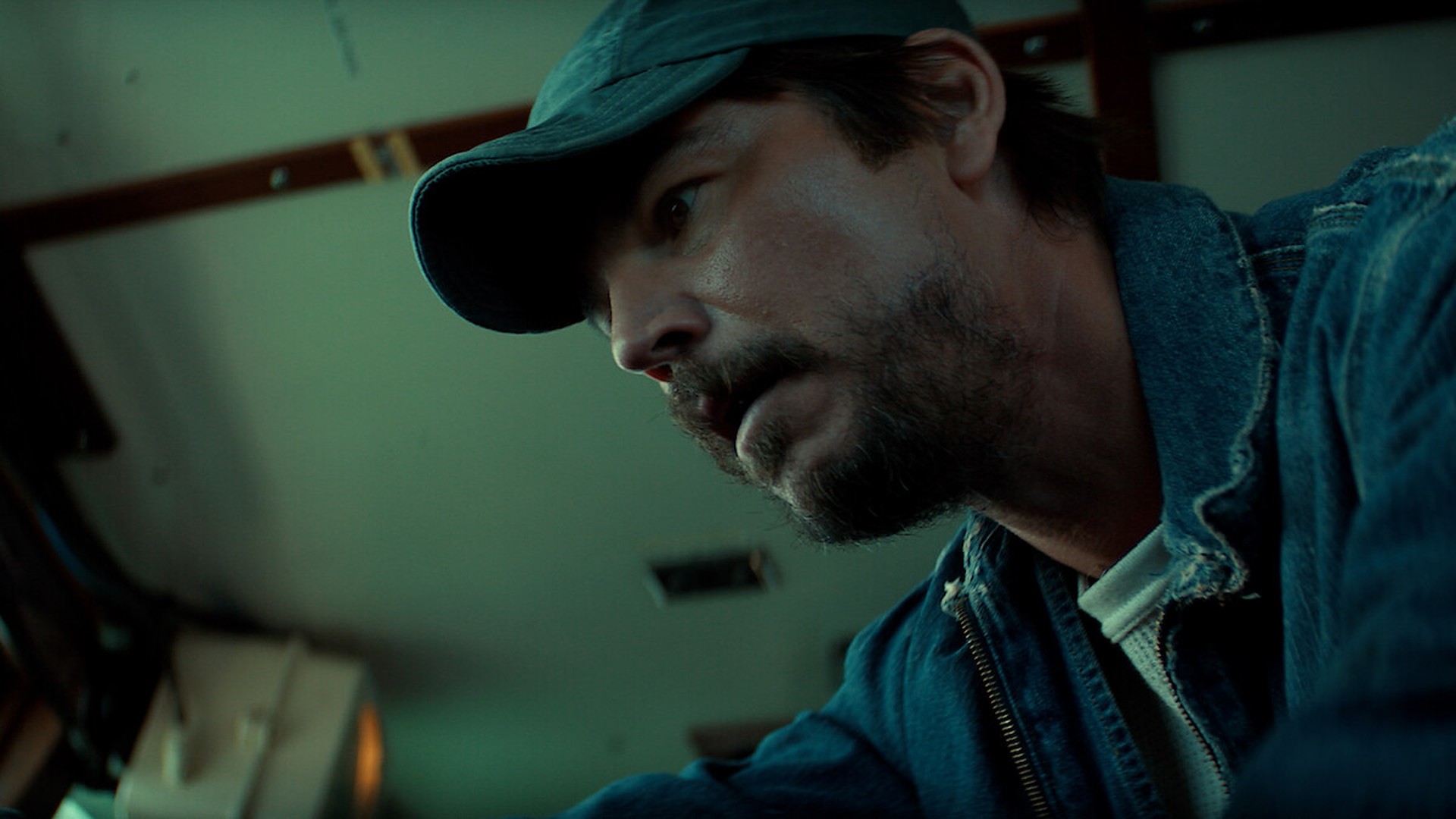
Spoiler warning: This article discusses major story details.
The creature in Below is a giant prehistoric squid drawn to Snook’s Arm by an iceberg that serves as its nest. Fonda’s research shows it is not hunting the town out of simple malice. It is protecting eggs while environmental change pushes the animal into warmer, shallower water.
The squid has haunted Calvin since childhood because evidence points to the same creature being involved in his father Leo’s death. Calvin carried that loss as a personal failure for roughly 40 years, and the new attacks force him to confront what really happened rather than repeating the fear with his own son Wade.
Don’t miss the best of The Mac Observer
Set us as a preferred source and our Apple reporting ranks higher in your Google Search results and Discover feed — one tap, no account changes.
The frozen membrane gives Fonda the first clue
Calvin hauls up foul-smelling ice that marine biologist Fonda identifies as a mucus membrane with toxic properties. Later attacks and the creature’s anatomy point to a massive cephalopod, not a shark or supernatural monster. The iceberg becomes central because it carries the eggs the squid is trying to keep alive.
Leo’s death shaped Calvin’s need to control Wade
Calvin’s protectiveness is rooted in the day his father died on the water. He responds by keeping Wade away from fishing, even as the younger man wants independence and a future in the village. Learning that an animal and larger forces caused the tragedy weakens the guilt Calvin used to justify that control.
Saving the nest changes the meaning of the monster
The finale makes the squid a threatened parent as well as a danger. Calvin ultimately helps move or protect the nest instead of treating extermination as the only answer. The final sight of more icebergs keeps the ecological threat open and suggests the conditions that brought the creature may not be over.
The most useful way to read the available information is to separate a confirmed detail from an inference. A distributor can verify a date, cast member, episode order or basic premise. It cannot, by itself, prove a future renewal, an unannounced casting choice or an interpretation of events that the finished story leaves deliberately open.
That distinction is especially important for streaming coverage, where schedules and catalog pages can change without warning. The details here reflect US availability and sources checked on October 8, 2026. Any missing date, role or production detail remains unconfirmed rather than being filled from expectation.
For viewers, the practical takeaway is to follow the named platform and treat the cited release status as current, not permanent. Official pages remain the best place to confirm last-minute timing changes, while interviews and attributable reporting provide context that a short synopsis cannot.
The story also works best when its central promise stays narrow. A release guide should answer when and where, a cast guide should connect performers to verified roles, and an explanation should distinguish what the episode shows from what viewers may reasonably infer.
What do you think of this development? Share your view in the comments.




Discussion