
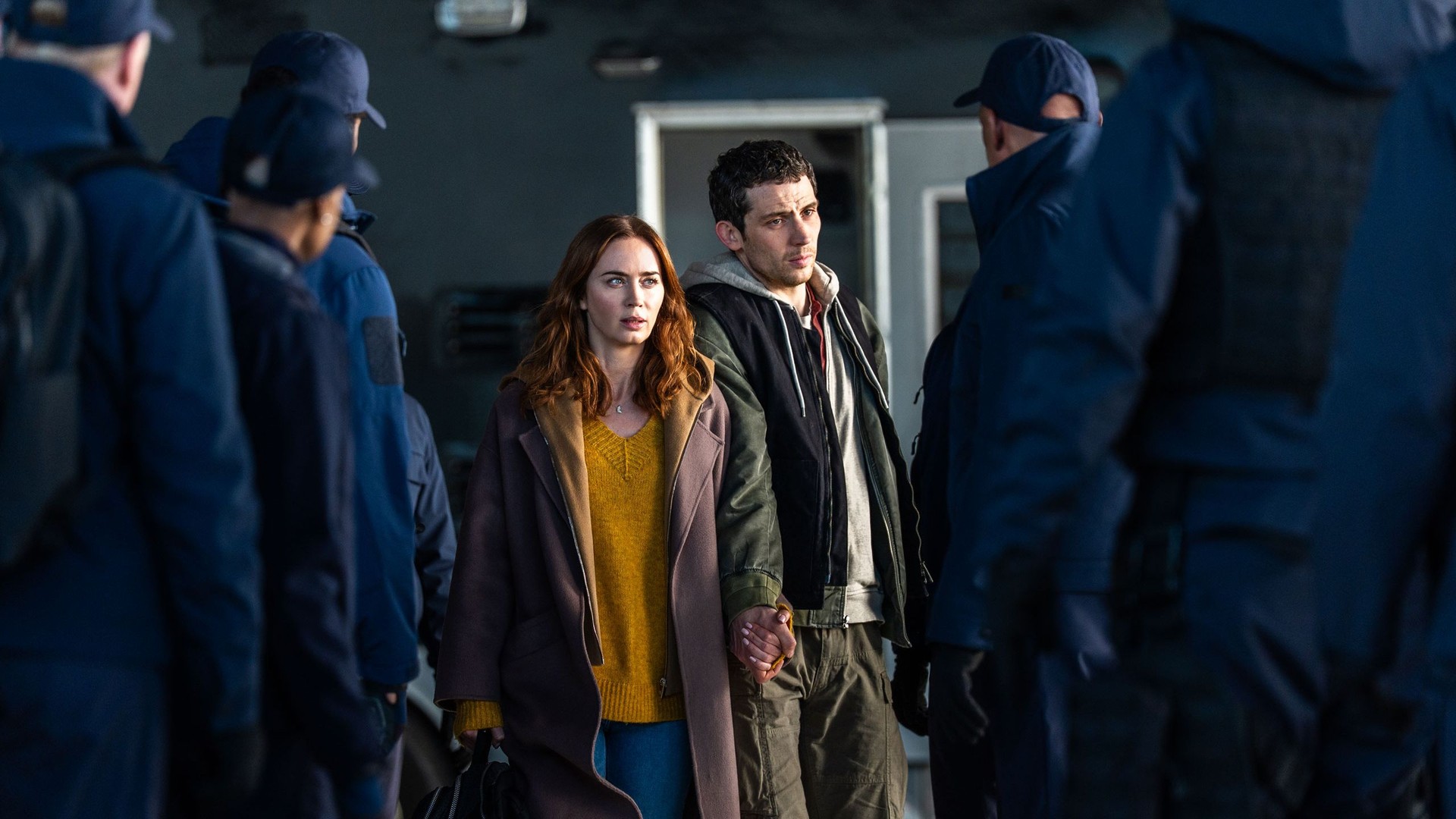
Disclosure Day is a science-fiction mystery about two ordinary experts uncovering a decades-long conspiracy around extraterrestrial life. Emily Blunt plays Kansas City meteorologist Margaret Fairchild, whose strange experience during a live broadcast pulls her into the search led by Josh O’Connor’s cybersecurity specialist Dr. Daniel Kellner.
Steven Spielberg’s film begins streaming exclusively on Peacock on Friday, October 9, after opening in US theaters on June 12. The 145-minute movie treats alien disclosure as a public, global event rather than a secret encounter that only a handful of characters understand.
A live broadcast changes Margaret’s life
Margaret is a local reporter accustomed to explaining weather, not becoming the center of a national mystery. An unexplained event during her broadcast makes her both evidence and target. That perspective lets the film approach enormous questions through someone credible enough to communicate the truth but unprepared for the forces hiding it.
Don’t miss the best of The Mac Observer
Set us as a preferred source and our Apple reporting ranks higher in your Google Search results and Discover feed — one tap, no account changes.
Daniel follows the digital trail behind the cover-up
O’Connor’s Daniel is described as a government cybersecurity whistleblower. His skills connect the physical UFO mystery to records, systems and institutions capable of suppressing information. Teaming him with Margaret gives the investigation both a public face and a technical route into the conspiracy.
Spielberg returns to aliens with a different question
The director developed the original story and reunited with Jurassic Park screenwriter David Koepp. Peacock says the film explores belief, faith and empathy alongside UFO mythology. Its central question is no longer whether one person can make contact, but what happens when proof belongs to seven billion people.
The most useful way to read the available information is to separate a confirmed detail from an inference. A distributor can verify a date, cast member, episode order or basic premise. It cannot, by itself, prove a future renewal, an unannounced casting choice or an interpretation of events that the finished story leaves deliberately open.
That distinction is especially important for streaming coverage, where schedules and catalog pages can change without warning. The details here reflect US availability and sources checked on October 8, 2026. Any missing date, role or production detail remains unconfirmed rather than being filled from expectation.
For viewers, the practical takeaway is to follow the named platform and treat the cited release status as current, not permanent. Official pages remain the best place to confirm last-minute timing changes, while interviews and attributable reporting provide context that a short synopsis cannot.
The story also works best when its central promise stays narrow. A release guide should answer when and where, a cast guide should connect performers to verified roles, and an explanation should distinguish what the episode shows from what viewers may reasonably infer.
What do you think of this development? Share your view in the comments.




Discussion