
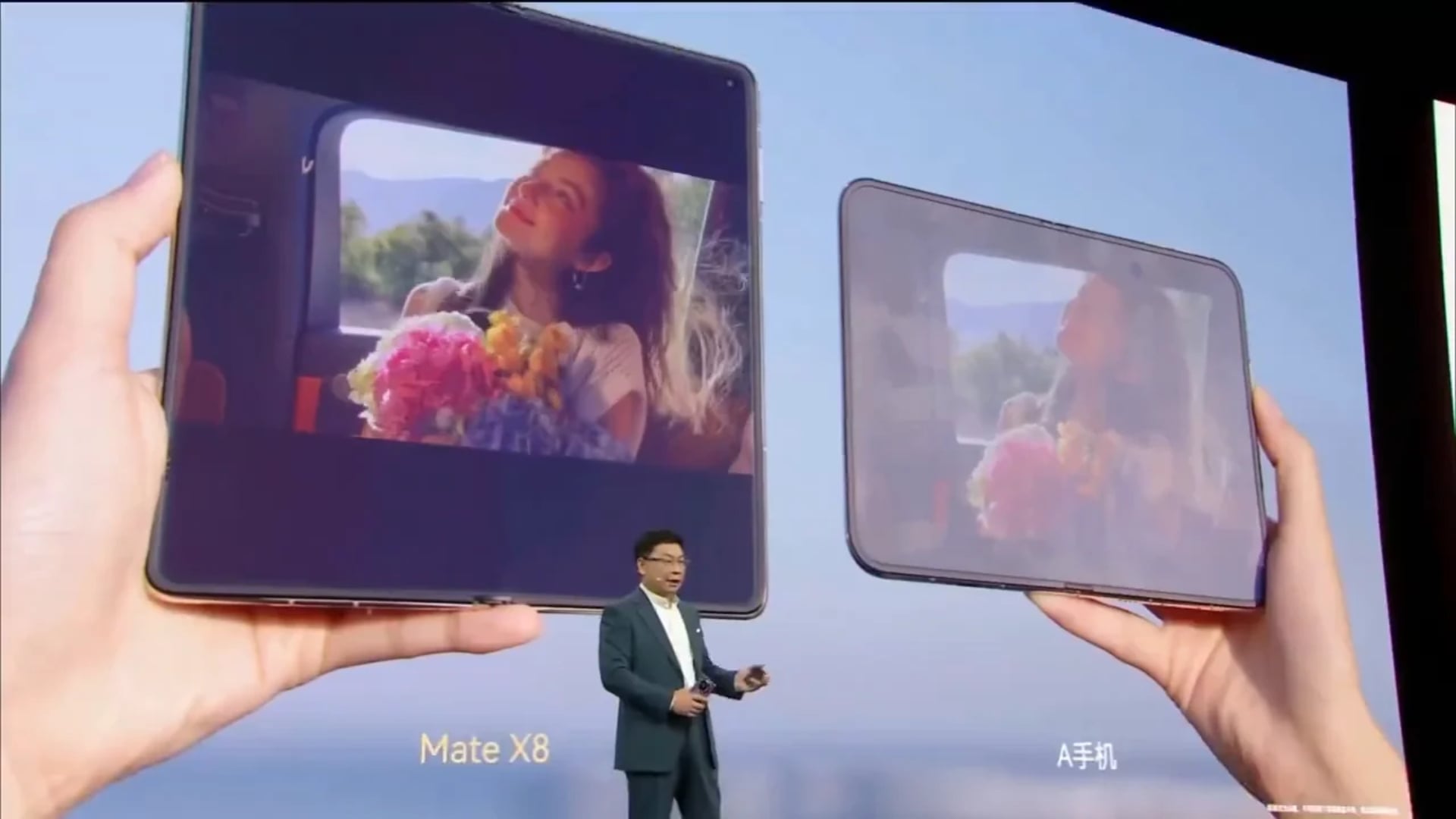
Apple’s iPhone Duo is facing fresh criticism over its foldable display after a side-by-side sunlight comparison with the newly launched Huawei Mate X8 surfaced online. While Huawei’s display appears bright, sharp, and rich in color, the iPhone Duo’s inner screen looks noticeably washed out under direct sunlight, despite Apple’s custom nano-texture finish designed to minimize glare and reflections.
The comparison also raises questions about Apple’s decision to use a matte display surface to reduce the visibility of the folding crease and its impact on outdoor visibility.
iPhone Duo’s Matte Display Struggles Under Direct Sunlight
According to Apple’s official specifications, the iPhone Duo features a 7.6-inch Super Retina XDR OLED folding display with an adaptive 120Hz refresh rate and up to 3,000 nits of peak outdoor brightness.
Don’t miss the best of The Mac Observer
Set us as a preferred source and our Apple reporting ranks higher in your Google Search results and Discover feed — one tap, no account changes.
Apple uses a custom nano-texture finish on the iPhone Duo to scatter incoming light, reduce reflections, and make the display crease less noticeable during everyday use.
However, matte surfaces can also scatter ambient light across a wider area, reducing perceived contrast and making darker colors appear grayish under intense lighting. This could partly explain the washed-out appearance of Apple’s foldable display in the outdoor comparison.
How Huawei Mate X8 Achieves Better Display Visibility
Huawei launched the Mate X8 on November 24 with an 8.2-inch foldable LTPO OLED display, a resolution of 2424 × 2340 pixels, and an adaptive refresh rate of up to 120Hz.
The company has taken a different approach to improving outdoor visibility and reducing the display crease:
- Up to 8,000 nits of localized peak brightness at 1% average picture level.
- Up to 4,500 nits of brightness at 20% average picture level.
- Nine-layer anti-reflective coating with a claimed 0.9% reflectance.
- Redesigned magnetic hinge system that reduces the crease depth to as little as 15 micrometers.
Huawei retains a glossy inner display as standard, while its redesigned hinge and display structure help minimize the physical crease. The company claims a 90% improvement in screen flatness.
Apple Has Room to Improve Its Foldable Display
Although the iPhone Duo’s folding display offers several engineering improvements, Huawei’s approach demonstrates how display brightness, anti-reflective coatings, and hinge design can work together to improve outdoor readability.
However, the side-by-side comparison does not establish whether both devices were operating at their maximum brightness under identical settings and temperatures. Additionally, Huawei and Apple use different conditions to advertise peak brightness, making their figures difficult to compare directly.
Independent laboratory testing will provide a clearer picture, but the early comparison suggests that Apple has considerable room to improve outdoor visibility and contrast retention with its next-generation foldable iPhone.



Discussion