
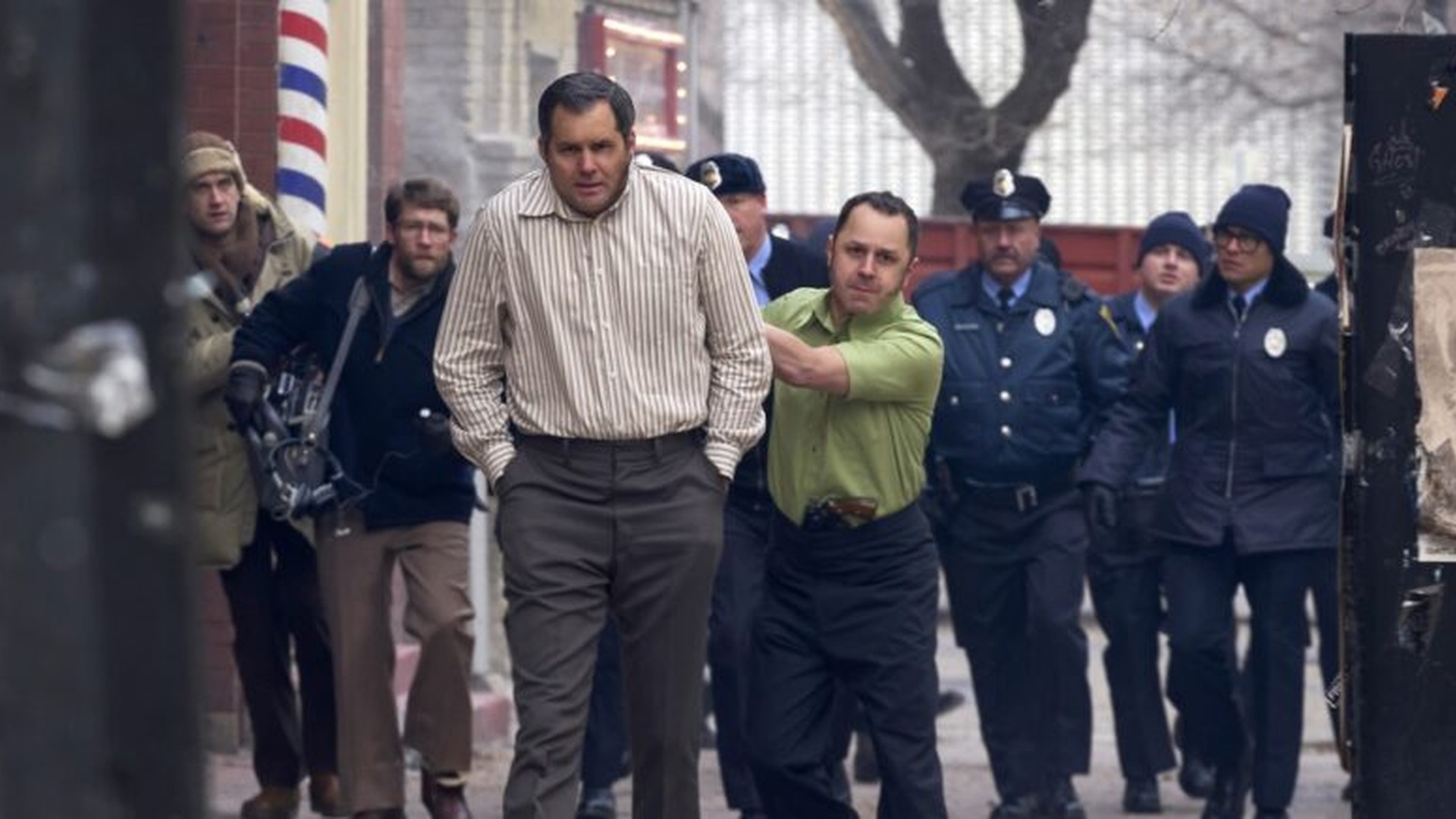
Tony Kiritsis really did kidnap mortgage executive Richard “Dick” Hall in Indianapolis in February 1977 and attach a sawed-off shotgun to his neck with a wire linked to the trigger. The device was designed to fire if Tony released pressure, turning every movement during the standoff into a threat.
The crisis lasted roughly 63 hours and unfolded partly through live radio calls. That unusual access is why Fred Heckman is so important to the dramatization: Tony trusted the WIBC newsman enough to use him as a public channel while police tried to secure Dick’s release.
- Date: February 1977
- Location: Indianapolis, Indiana
- Duration: About 63 hours
- Genre: True-crime drama
- Streaming on: MGM+ in the US
The dead man’s wire made every movement dangerous
Tony blamed the Hall family and their company for the collapse of a land-development plan. He believed foreclosure would cost him the property and that powerful local businessmen had treated him unfairly. Those beliefs drove the abduction, though they did not excuse the violence used to force attention.
Don’t miss the best of The Mac Observer
Set us as a preferred source and our Apple reporting ranks higher in your Google Search results and Discover feed — one tap, no account changes.
He seized Dick after arranging a meeting and then moved him through the city at gunpoint. The weapon remained close to Dick’s head, with the wire making a struggle or accidental release especially dangerous. Police had to treat Tony’s emotional state and physical grip as immediate safety factors.
Radio turned the standoff into a public event
Radio coverage made the siege different from a closed negotiation. Tony could address residents directly, repeat his accusations and demand that his grievance be heard. Fred’s voice helped sustain contact, but it also raised difficult questions about when reporting becomes participation in an active emergency.
Tony eventually brought the confrontation to an end and Dick survived. The resolution did not erase the fear created by the wire, nor did it settle whether public attention had helped calm Tony or rewarded the method he used to obtain it.
The surrender did not end the legal argument
The case then produced a legal outcome as unusual as the broadcast. Questions about Tony’s mental condition shaped the proceedings and public reaction, keeping debate focused on responsibility, illness and the limits of criminal punishment.
The series changes conversations and compresses events for drama, so individual scenes should not be treated as a transcript. Its central mechanism, however, is real: a hostage, a shotgun, a wire and a radio journalist placed in an impossible role. The ordeal also unfolded under intense local attention that magnified every decision.
That combination explains why the case still feels modern. It asks what happens when a violent act is also designed as media. Does the public need to hear the perpetrator live, or does airtime deepen the danger? Tell us what you think in the comments.




Discussion