

Apple plans another tweak to the Liquid Glass interface in iOS 27, and the company wants to give users more control over how transparent the system looks across the entire operating system. Apple already introduced Liquid Glass with iOS 26 as part of a broader visual redesign, and the effect applies a glass-like layer to buttons, navigation bars, icons, and widgets throughout the interface.
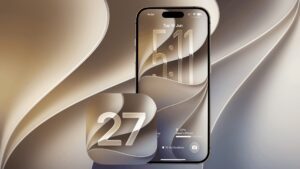
Right now, users only get limited control over that effect. iOS 26.1 lets users choose between “Clear” and “Tinted” interface styles, which slightly changes the opacity of the glass look across menus and controls. Apple later added a slider in iOS 26.2 that allows manual adjustment of opacity for the Lock Screen clock, but the rest of the system still uses fixed settings.
Bloomberg’s Mark Gurman says Apple wants to expand that control in iOS 27.
Don’t miss the best of The Mac Observer
Set us as a preferred source and our Apple reporting ranks higher in your Google Search results and Discover feed — one tap, no account changes.
“Apple is trying again now for iOS 27. TBD if it lands.”
That comment refers to a system-wide slider that would allow users to adjust Liquid Glass opacity across the entire interface rather than just one element like the Lock Screen clock.
Apple’s Earlier Attempt Hit Engineering Problems
Apple originally worked on this system-wide slider during iOS 26 development, but engineers struggled to apply the adjustment consistently across every interface layer, including folders, navigation bars, and home screen elements. Those engineering challenges forced Apple to limit the feature to the Lock Screen clock in iOS 26.2.
The company now appears to be revisiting the idea for iOS 27, though the feature remains under development and Apple has not confirmed whether it will ship in the final release.
Apple will begin iOS 27 beta testing in June during WWDC, and the company typically releases the final version in September alongside the next iPhone lineup. If the slider arrives, it would give users a simple way to fine-tune the Liquid Glass look instead of relying on preset visual modes.


This is still a half measure because turning off liquid glass leaves you with random gray ovals scattered all over the edges of the screen. I’m not sure which is worse.