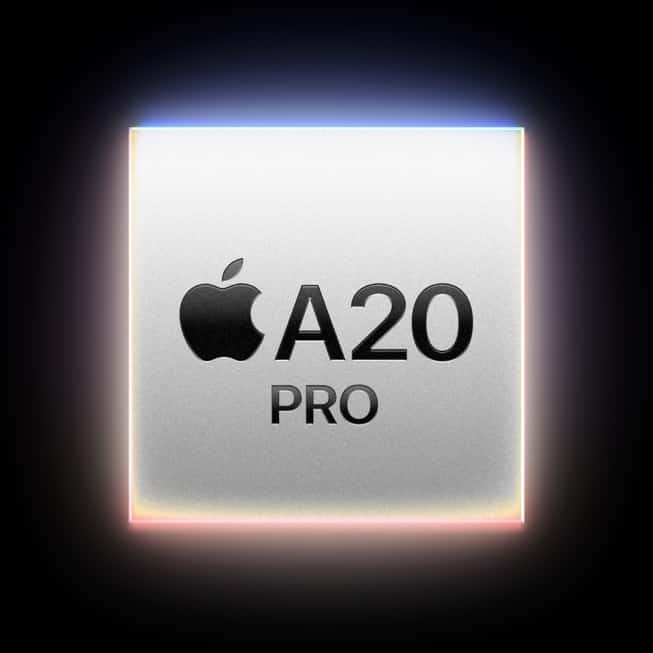
If you are choosing between the iPhone 18 Pro and the iPhone 18 Pro Max because you want the one that holds its speed longest in a long game or a long take, Apple’s published numbers won’t settle it. Apple describes one cooling design for the generation: a next-generation vapor chamber with three times the surface area of the one in iPhone 17 Pro, which A20 Pro attaches to directly. It says that design delivers up to 40 percent better sustained performance than iPhone 17 Pro, and it states both claims for the iPhone 18 Pro line as a whole rather than for either size.
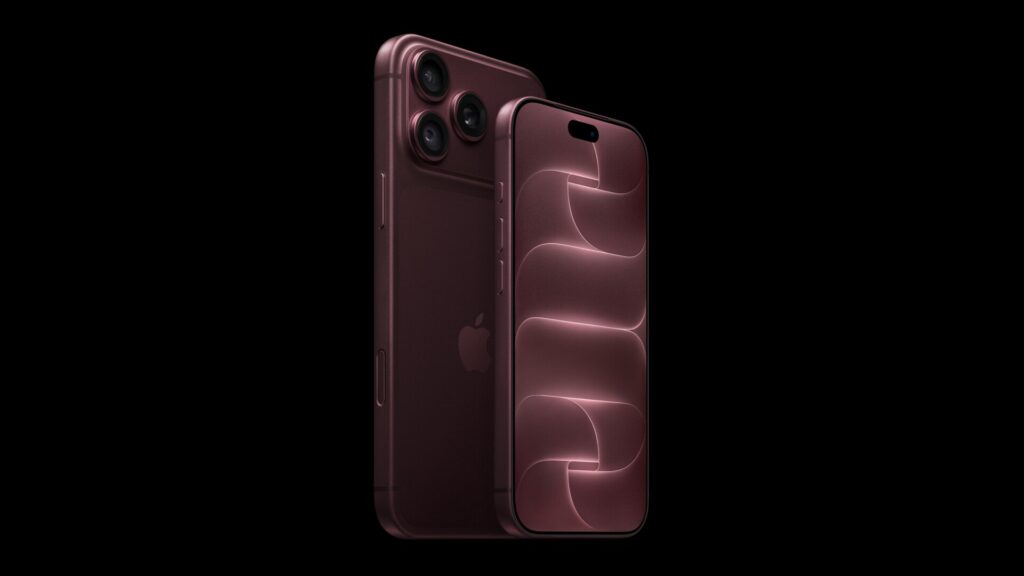
That matters because the two bodies are not the same. The Pro Max is a larger phone at the same 8.75 mm thickness, 163.4 x 78.0 mm against 150.0 x 71.9 mm and 249 g against 211 g, so there is more of it to move heat into. Apple has not said whether that changes anything, and the only performance-adjacent numbers it splits by size are the battery ratings.
Key facts: what Apple publishes, and whether it varies by size
| Item | What Apple publishes | Varies by size? |
|---|---|---|
| Cooling hardware | Next-generation vapor chamber, with A20 Pro attached directly to it | Not stated |
| Vapor chamber claim | Three times the surface area of the previous generation on iPhone 17 Pro | Not stated |
| Sustained performance claim | Up to 40 percent better than iPhone 17 Pro | Not stated |
| Chip | A20 Pro, 6-core CPU, 7-core GPU, dual 16-core Neural Engine | No |
| GPU claim | Up to 40 percent faster than iPhone 17 Pro | No |
| Memory bandwidth | 50 percent more than A19 Pro | No |
| Thermal throttling behavior | Not published for either model | Not published |
| Body and weight | 150.0 x 71.9 x 8.75 mm, 211 g; 163.4 x 78.0 x 8.75 mm, 249 g | Yes |
| Battery ratings | 36 hours video and 24 typical; 45 hours video and 30 typical | Yes |
| Charging claims | 50 percent in around 15 minutes with a 60W adapter | No |
One set of cooling claims, two different volumes
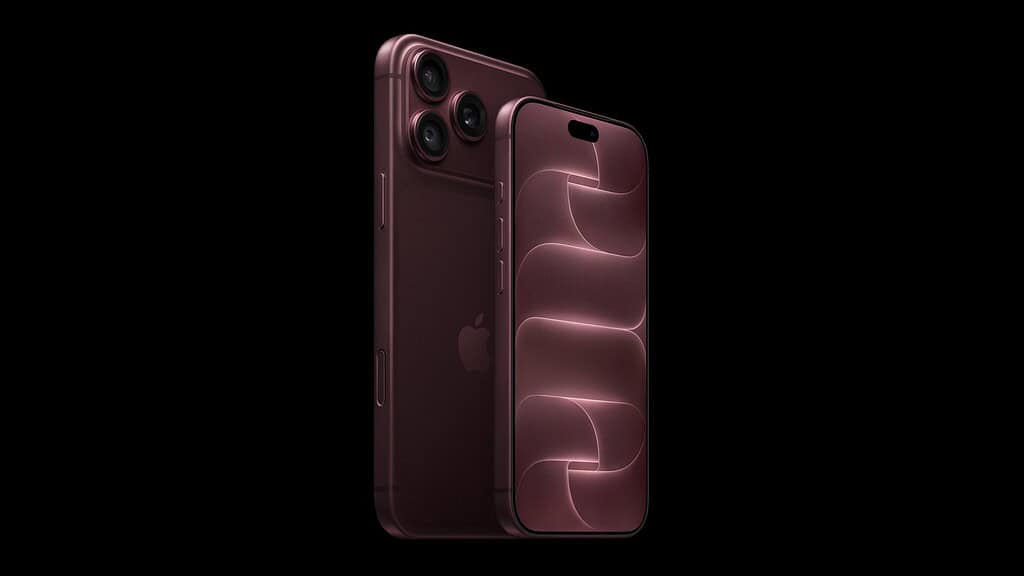
Apple’s comparisons for the vapor chamber are against the previous generation, not against the other size. The surface-area figure and the 40 percent sustained-performance figure are each quoted once for the generation, and nothing in the announcement or on the product page distinguishes the thermal design of the 6.3-inch phone from the 6.9-inch one.
Don’t miss the best of The Mac Observer
Set us as a preferred source and our Apple reporting ranks higher in your Google Search results and Discover feed — one tap, no account changes.
Keep the two 40 percent figures apart. One is the sustained-performance claim, which Apple credits to the vapor chamber working with the A20 Pro chip design. The other is a separate claim that the 7-core GPU is up to 40 percent faster than iPhone 17 Pro. Neither is stated per model.
Both phones also list the same chip down to the core counts, the same aluminum unibody, the same Ceramic Shield 2 front and Ceramic Shield back, and the same IP68 rating to 6 meters for 30 minutes. Our A20 Pro explainer goes through every performance claim Apple attached to the chip, none of which is stated per model.

The only split Apple does publish
| Line | iPhone 18 Pro | iPhone 18 Pro Max |
|---|---|---|
| Typical use | Up to 24 hours | Up to 30 hours |
| Video playback | Up to 36 hours | Up to 45 hours |
| Streamed video | Up to 33 hours | Up to 40 hours |
| Five-minute charge | Not published | About seven hours of video playback |
| Weight | 211 g | 249 g |
| US price, 256GB | $1,199 | $1,299 |
Longer battery ratings are not a thermal claim. They describe playback, which is a light and steady load, not the sustained load that makes a phone warm. Our battery and charging explainer sets out what each rating measures.
Where it would show up if it mattered
- Long recordings. Both models list 4K Dolby Vision at up to 120 fps and ProRes at 4K120 with external recording, with no rated recording time for either.
- Games with hardware-accelerated ray tracing, where Apple’s figures are the up to 40 percent sustained-performance gain and the up to 40 percent faster GPU, both against iPhone 17 Pro and neither split by size.
- Fast charging, where both are rated for 50 percent in around 15 minutes with a 60W adapter, an adapter Apple has not priced.
Apple hasn’t answered the thermal version of the size question. Our Pro against Pro Max comparison and the launch-day specification rundown set out the differences it did publish.
What Apple has not said
- Whether the up to 40 percent sustained-performance gain applies equally to the iPhone 18 Pro and the iPhone 18 Pro Max, or differs between them.
- Whether the vapor chamber is the same size in both phones, or scaled with the body.
- Any operating temperature range, throttling threshold or thermal test condition for either model.
- How long either phone can record 4K at 120 fps or ProRes before anything changes.
- Any benchmark. Every A20 Pro claim is relative to iPhone 17 Pro and its A19 Pro, with no test conditions attached.
Pre-orders opened on September 12, and both sizes reach stores on September 18, when independent testing can begin. Until then, anyone choosing a size on thermal grounds is choosing on inference: Apple’s cooling and sustained-performance claims cover the generation, and the only published physical difference between the two bodies is 38 g, 6.1 mm of width and 13.4 mm of height.