

Apple has finally brought touchscreen support to the MacBook Pro, reversing a position the company defended for more than a decade. In a new interview, Apple executives explained why the company waited so long and how advances in display technology, custom silicon, and hardware design made the change possible.
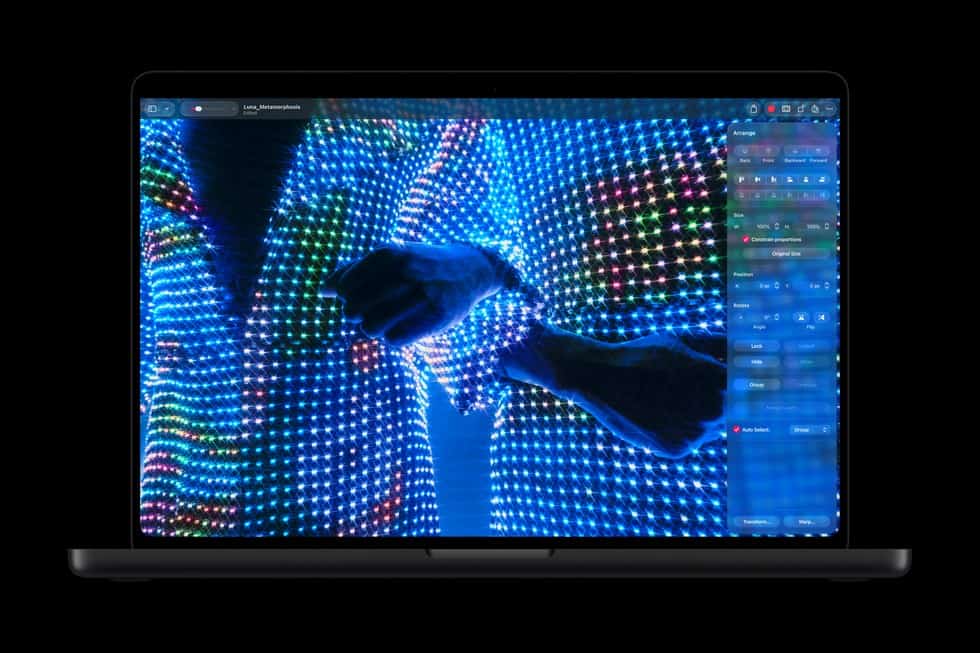
The new 14-inch and 16-inch MacBook Pro models feature a PROLED XDR Display with touchscreen support, allowing users to interact directly with macOS while continuing to use the keyboard and trackpad.
In an interview with WIRED, Apple CEO John Ternus acknowledged that touch has its place on the Mac, although the company still considers the keyboard and trackpad essential to the experience.
Don’t miss the best of The Mac Observer
Set us as a preferred source and our Apple reporting ranks higher in your Google Search results and Discover feed — one tap, no account changes.
“The Mac is first and foremost an indirect input device, built around the trackpad and keyboard. But I think there’s times when it’s comfortable and handy to have touch.”
Ternus also explained that Apple wanted to introduce touchscreen support without increasing the MacBook Pro’s thickness or weight.
“We needed to get to a point where adding touch didn’t make the product lesser in any way. It didn’t make it heavier. It didn’t make it thicker. That came together with the OLED screen, the best display we’ve ever put into a Mac.”
Apple Explains What Changed After Years of Resistance
Apple previously argued that touchscreen laptops created ergonomic problems and required software changes that would interfere with traditional mouse and trackpad interactions.
However, Apple’s hardware chief Johny Srouji explained that improvements in display technology, custom silicon, and software architecture eventually allowed the company to meet its standards.
“Ten years is a very, very long time. Many things have changed, whether it’s the display technology, the custom silicon, et cetera.”
Apple also redesigned the MacBook Pro’s thermal system to prevent the display from becoming uncomfortable to touch, while a reworked hinge helps reduce screen movement when users tap or swipe.
Meanwhile, macOS now adjusts certain interface elements for touch input, including menus and window controls that expand when users interact with them directly. Apple has also introduced touch gestures for Dynamic Island, along with support for precise adjustments in professional applications such as Logic Pro and DaVinci Resolve.
Apple marketing chief Greg Joswiak said growing demand from professional users and younger customers also influenced the decision.
“Most pros own an iPad, and almost every pro owns an iPhone. So this is something that they’re natural with. There’s a generation of young creators and young people using our MacBook Pros that expect to touch.”
For now, touchscreen support remains exclusive to the new MacBook Pro models, which start at $2,899 for the 14-inch version and $3,399 for the 16-inch model.
When asked whether Apple plans to bring touchscreens to the MacBook Air or iMac, Ternus declined to discuss future products.


Discussion