
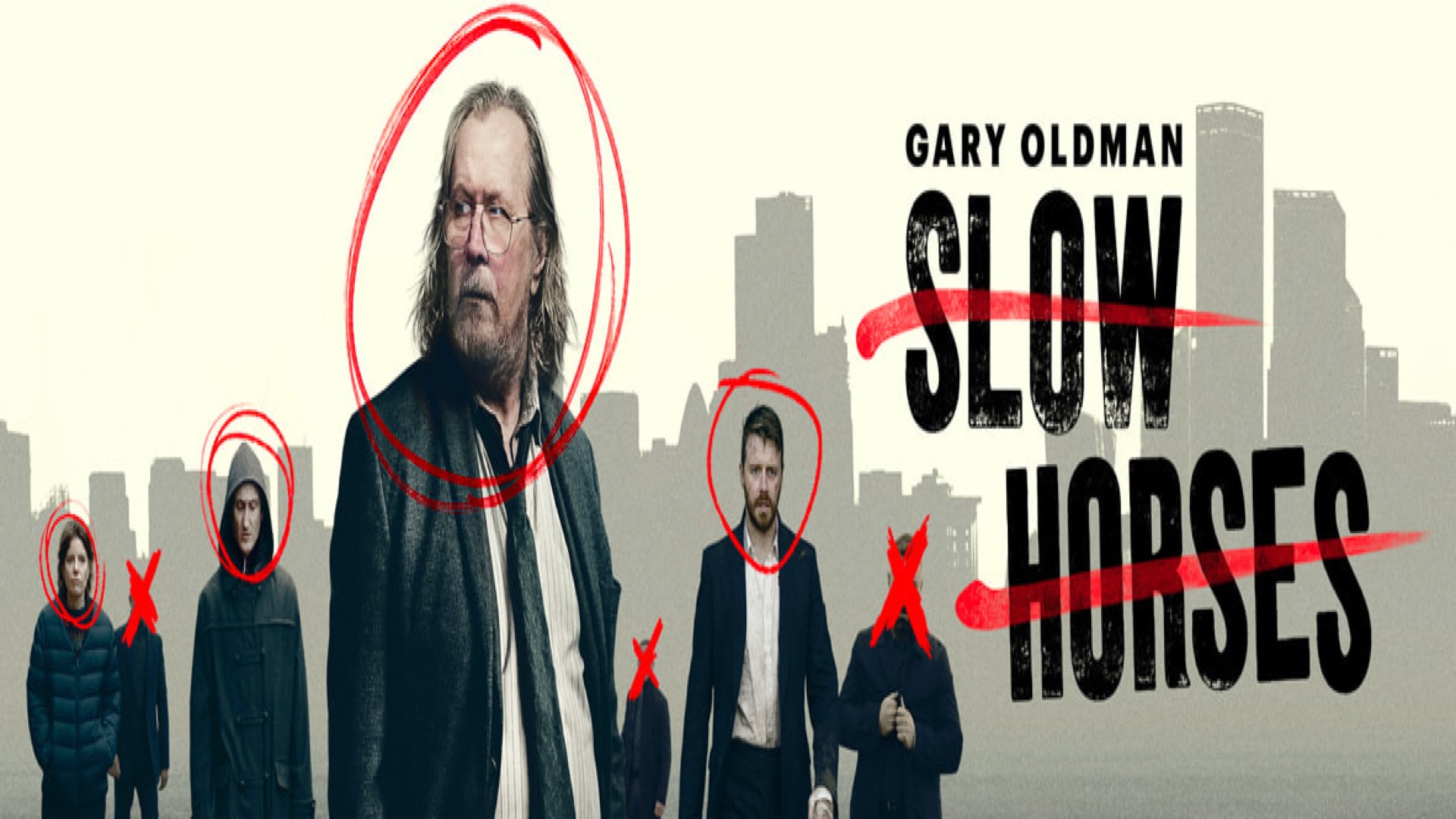
Slough House has been erased from MI5’s database because someone is preparing to hunt its past and present members without leaving an official trail. The ending of “Circle of Life” turns an administrative disappearance into a survival warning: if the Service cannot acknowledge that the unit exists, its discarded agents are easier to isolate, discredit and kill.
That is why the final reveal matters more than a bureaucratic insult. Lamb’s people have always occupied an awkward place inside MI5, but erasing the office is different from sidelining it. It removes the institutional record that connects former Slow Horses to one another just as Lamb’s investigation into a former Slow Horse’s death proves that former membership has become dangerous.
- Release date: September 16, 2026
- Episode: Season 6, Episode 1, “Circle of Life”
- Genre: Spy thriller
- Streaming on: Apple TV
An erased office makes every former agent vulnerable
Episode 1 begins with the killing of Struan Loy, a former Slow Horse. The episode then reveals that Slough House itself has been removed from MI5’s database. Those developments belong together because the deleted record makes it harder to see the group as a network. Former agents become isolated names, and current agents lose the official protection that even a hated department normally provides.
Don’t miss the best of The Mac Observer
Set us as a preferred source and our Apple reporting ranks higher in your Google Search results and Discover feed — one tap, no account changes.
That does not prove the person who deleted the database entry also ordered the murders. The episode keeps that larger chain of command unresolved. It does establish that the victims are being targeted with knowledge of an old personnel list, which makes the missing record a practical advantage for whoever wants the pattern concealed.
The Park has lost control of its own history
MI5’s problems are not limited to an outside attack. A database should be the place where the Service preserves institutional memory: who served, who was moved, and what past operations left behind. Removing Slough House means someone can control the story by removing the filing system that verifies it.
That turns the episode’s ending into a test for Diana Taverner as well as Lamb. If the Park’s records can be rewritten, she cannot confidently distinguish an enemy operation from an internal cover-up. The slow horses are used to being ignored, but this time their invisibility is being weaponized.
Lamb’s people must become their own evidence
Lamb cannot rely on the official system to confirm that his team has been threatened. He has to use the things the database cannot erase: shared memory, old contacts and the stubborn habits of agents who know how MI5 hides its mistakes. That is the dark joke at the center of Slough House. The people regarded as expendable may be the only witnesses left who can reconstruct what the institution has removed.
The ending also explains why the season’s danger feels more intimate than a conventional attack on headquarters. The target is not simply an office building. It is the group’s ability to recognize one another, find one another and prove that they were ever part of the Service.
Do you think the erased database points to an insider, or to an enemy who knows MI5 better than MI5 knows itself? Share your view in the comments.


Discussion