
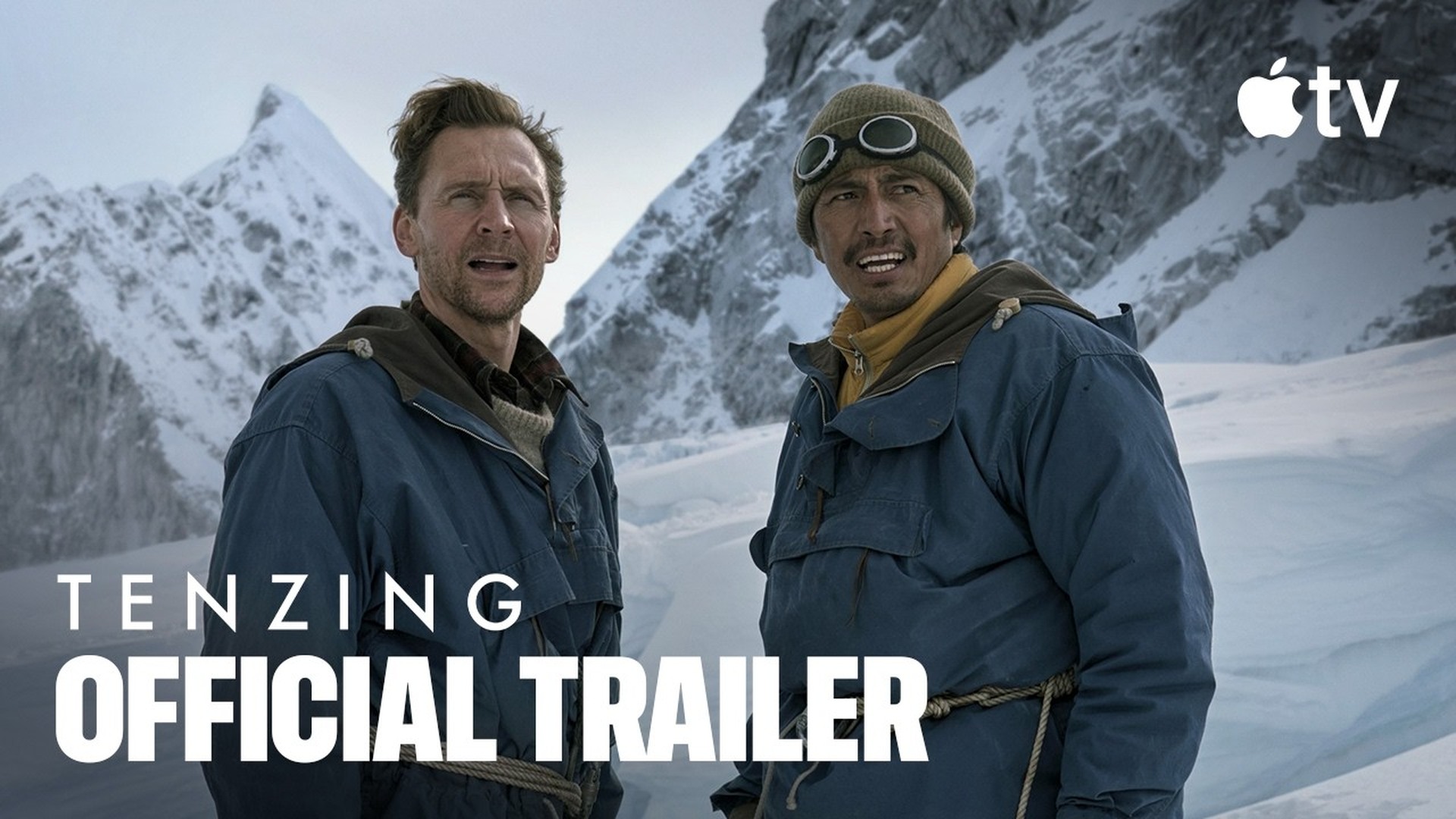
Tenzing Norgay reached Everest before becoming a global celebrity because his reputation was built first inside the specialized world of Himalayan expeditions. By 1953 he had years of high-altitude experience and had already taken part in several Everest attempts. The successful summit transformed expertise known to climbers into worldwide fame.
Apple’s Tenzing dramatizes that transition. Genden Phuntsok plays Norgay, Tom Hiddleston plays Edmund Hillary and Willem Dafoe plays expedition leader John Hunt. The film emphasizes that Tenzing had to persuade a British-led team to treat him as a full climbing partner rather than someone present only to serve Western mountaineers.
- Theatrical release: October 9, 2026
- Apple TV release: October 16, 2026
- Title: Tenzing
- Genre: Biographical drama and adventure
- Streaming on: Apple TV
Years of experience came before the famous photograph
The May 29, 1953 summit was not Tenzing’s first encounter with Everest. He had joined previous expeditions and developed the endurance, route knowledge and judgment required at extreme altitude. That experience made him an obvious strength on Hunt’s British expedition even within a system shaped by class and empire.
Don’t miss the best of The Mac Observer
Set us as a preferred source and our Apple reporting ranks higher in your Google Search results and Discover feed — one tap, no account changes.
Hillary and Tenzing formed the final summit pair after an earlier team turned back. They reached the top together, and both consistently rejected attempts to turn the last steps into a competition. Their partnership became central to the achievement’s meaning.
The summit changed who the world was willing to see
News of the ascent reached Britain near Queen Elizabeth II’s coronation and became an international sensation. Celebrations followed the climbers through Nepal, India and Europe. For audiences outside mountaineering, Tenzing appeared suddenly, even though the skill behind that moment had taken years to build.
His fame also carried political expectations. Different countries and communities claimed him as a symbol, while reporters focused intensely on who stepped onto the summit first. That question could obscure the shared work of the expedition and the unequal way Himalayan climbers had historically been credited.
Apple’s film centers the person before the icon
The official synopsis contrasts Western ideas of conquering Everest with Tenzing’s reverence for Chomolungma as a sacred mother goddess. It also highlights his wife Dawa and expedition secretary Jill Henderson, placing the climb within relationships and cultural tensions rather than presenting it as a simple victory story.
The film’s focus also corrects a familiar shorthand. Tenzing was often called a guide while Hillary was framed as the explorer, language that can understate their shared dependence on each other. On the upper mountain, status mattered less than judgment, rope work, stamina and trust. Celebrity arrived afterward, shaped by institutions that did not always describe those contributions equally.
Tenzing became famous because he stood on the world’s highest summit, but he reached it because of the life and knowledge he had built outside the spotlight. Which part of his story do you most want the film to explore? Share your answer below.




Discussion