
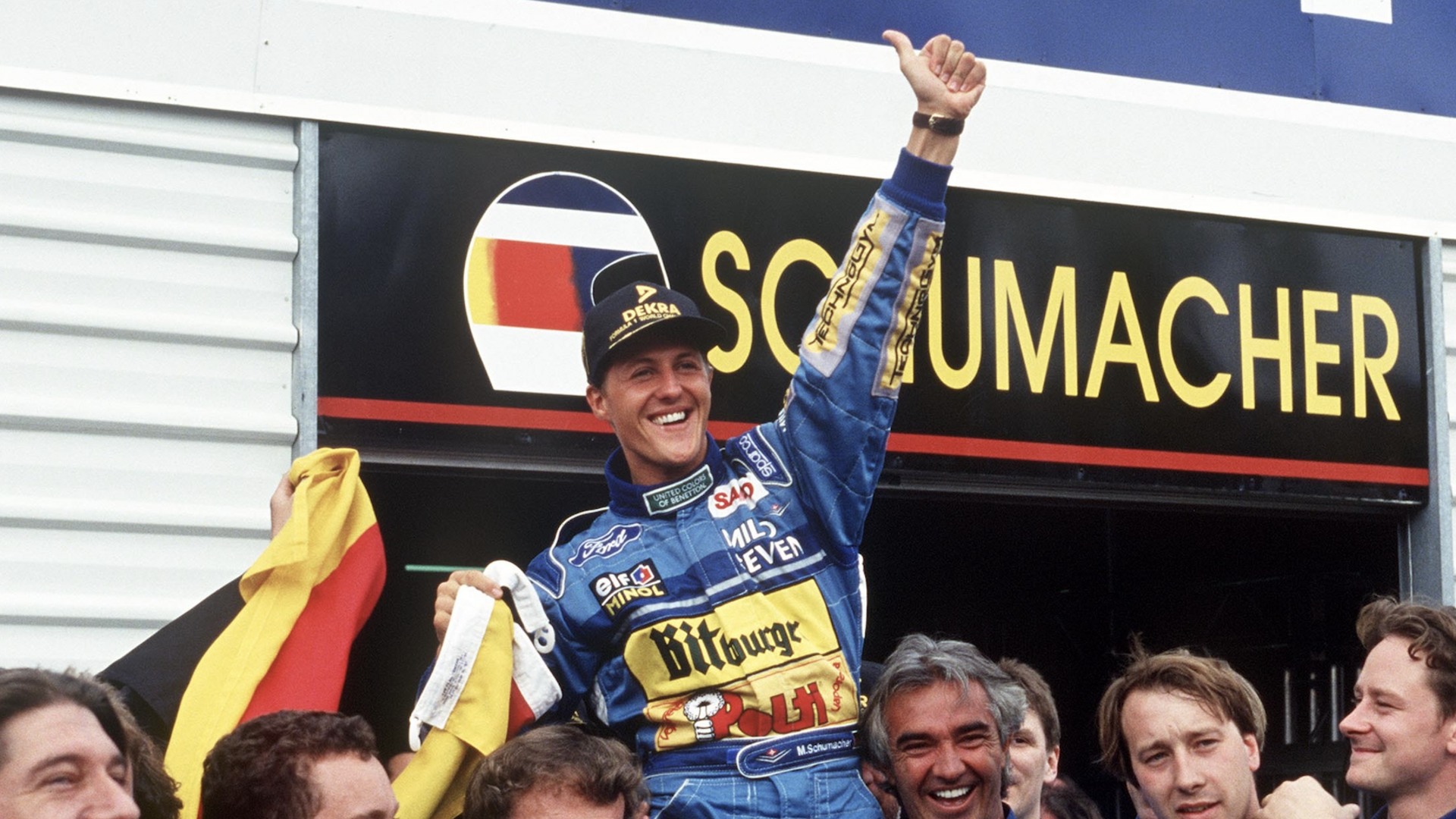
Spoilers for Schumacher ’94 and the 1994 Formula 1 season follow. Michael Schumacher wins his first drivers’ championship at the end of the documentary, but not by winning the final race. He and rival Damon Hill collide in Adelaide, both retire, and Schumacher’s one-point advantage survives. The result is official; the argument over the contact has never entirely gone away.
That collision is only the final reason the title feels contested. The film follows a season marked by the deaths of Ayrton Senna and Roland Ratzenberger, rule disputes and a championship chase that tightened as Hill kept winning. The closing credits return to the two drivers who died at Imola, making the triumph inseparable from the year’s loss.
- Film: Schumacher ’94 – The Birth of a Legend
- Year covered: 1994 Formula 1 season
- Outcome: Schumacher wins the drivers’ title by one point
- Streaming on: Netflix
- Genre: Sports documentary
Adelaide decides the title without a finish-line duel
Schumacher arrives at the last Grand Prix on 92 points, Hill on 91. If Hill can finish ahead and score enough, the championship can change hands. Instead, their cars come together. Neither completes the race, so neither adds to the tally. Schumacher becomes champion with the margin he brought to Australia.
Don’t miss the best of The Mac Observer
Set us as a preferred source and our Apple reporting ranks higher in your Google Search results and Discover feed — one tap, no account changes.
Formula 1’s own account calls the collision controversial and notes that some accused Schumacher of taking Hill out deliberately, while others thought Hill could have avoided the impact. Those are competing interpretations, not an established finding of intent. The documentary shows the incident as part of Schumacher’s breakthrough, but a viewer should not treat a dramatic edit as a final ruling on what he meant to do.
Earlier disputes made the final crash harder to separate
The 1994 campaign included allegations involving Benetton’s car and penalties involving Schumacher at Silverstone and Spa. A Motorsport.com review of the film notes that these controversies appear in the documentary, but argues that it largely presents them through Schumacher’s circle rather than testing rival perspectives in depth. Hill, the other man in the title fight, is heard only briefly through archive material.
That imbalance matters when explaining the ending. Schumacher’s speed and victories are not in doubt, and his championship remains part of the official record. But the film’s emotional portrait cannot settle every technical or sporting question from the season. Its subject is how a young driver and a nation experienced a pivotal year, not a fresh adjudication of the Adelaide crash.
The final dedication changes the meaning of victory
Director Christin Freitag’s film includes interviews with Corinna Schumacher, former team members and other witnesses. It spends substantial time on Imola, where Ratzenberger and Senna were killed on successive days. The dedication to them at the end makes clear that the birth of a sporting legend happened in a season that permanently changed the people inside the sport.
So the answer is two-part: Schumacher took the 1994 title because the Adelaide collision left both contenders scoreless, and it remains controversial because viewers still disagree about responsibility while other disputes colored the campaign. Does the documentary give enough room to Hill’s side of that history? Share your view in the comments.




Discussion