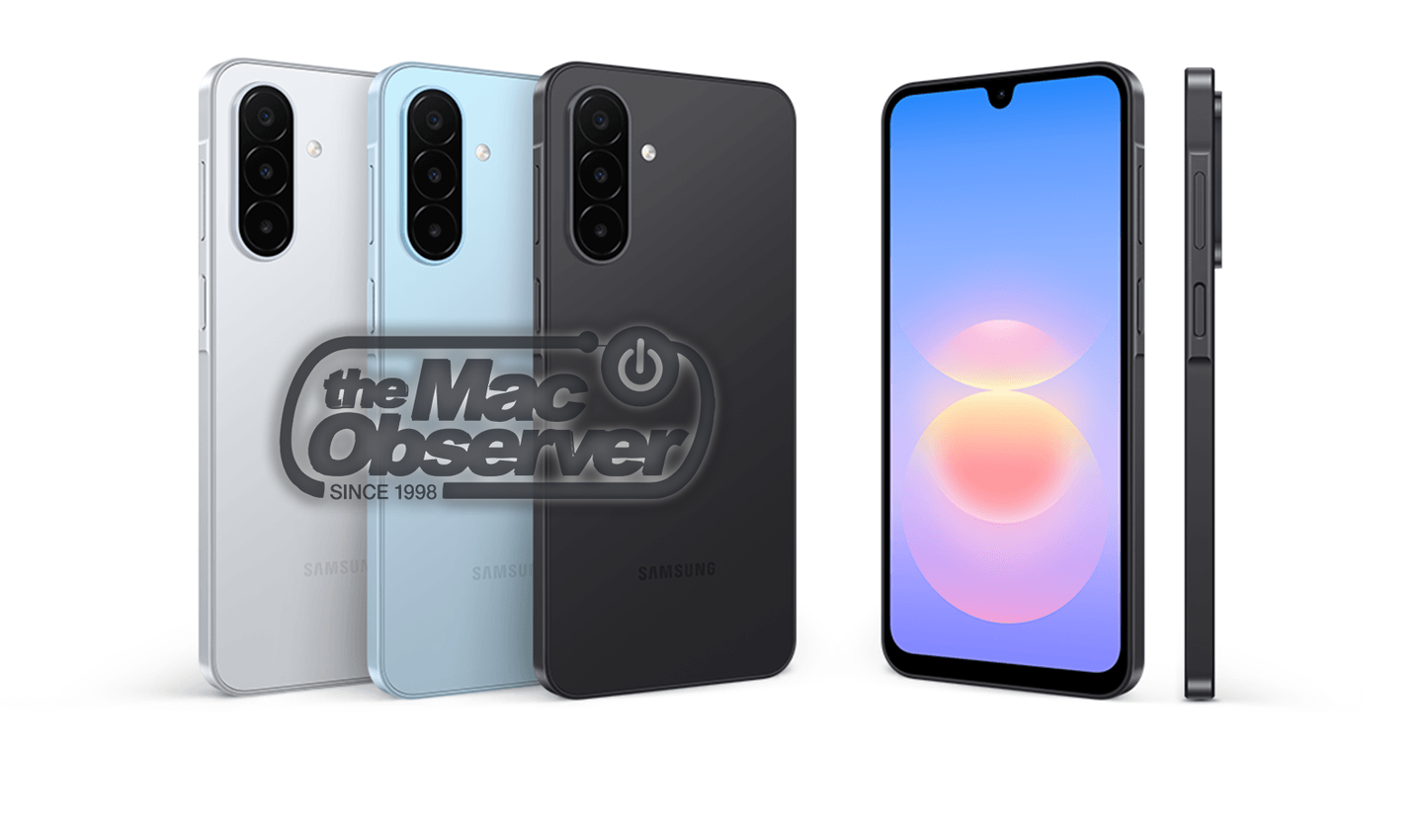
Samsung’s unreleased Galaxy A18 will feature a 50MP main camera, IP64 dust and splash resistance, and six generations of OS upgrades, according to marketing materials exclusively obtained by The Mac Observer. The images also reveal the phone’s design and three colour options ahead of its launch.
We’ve obtained a set of 24 product-page assets that show the Galaxy A18 from multiple angles, along with camera specifications and some of the features Samsung plans to promote. There are also comparisons with older Galaxy A-series phones and a Smart Switch image aimed at people moving from an iPhone.
The materials give us an early look at the Galaxy A18, although they don’t reveal its processor, battery capacity or price.
Don’t miss the best of The Mac Observer
Set us as a preferred source and our Apple reporting ranks higher in your Google Search results and Discover feed — one tap, no account changes.
Samsung Galaxy A18 appears in three colours with a triple-camera design
The Galaxy A18 is shown in silver or light grey, light blue, and black or graphite. These are descriptions of the colours visible in the images, as Samsung’s official colour names aren’t included in the materials.
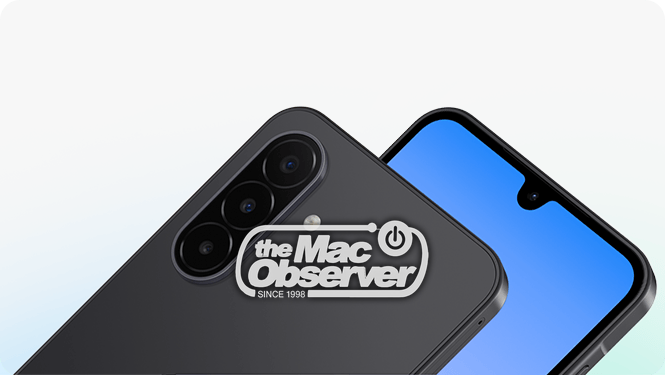
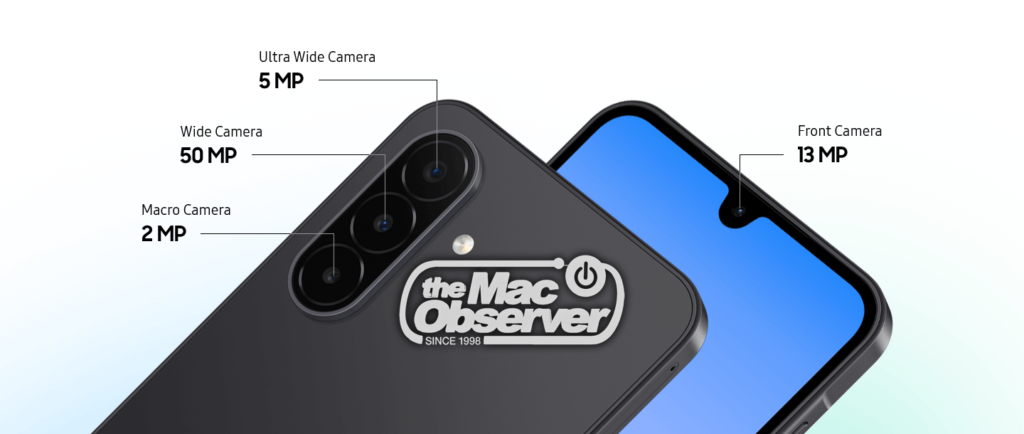
On the back, the three cameras sit vertically inside a single pill-shaped camera island, with an LED flash to the right. The phone has a flat frame, while the front still uses a waterdrop-style notch for the selfie camera. There’s also a noticeable bottom chin.
Samsung describes the phone as “Strikingly sleek and 8% thinner” in one comparison card. Another advertises “A 3% larger display.” Both claims carry asterisks, but the accompanying footnotes aren’t visible in the assets we obtained.
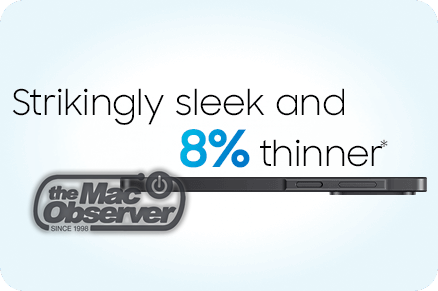
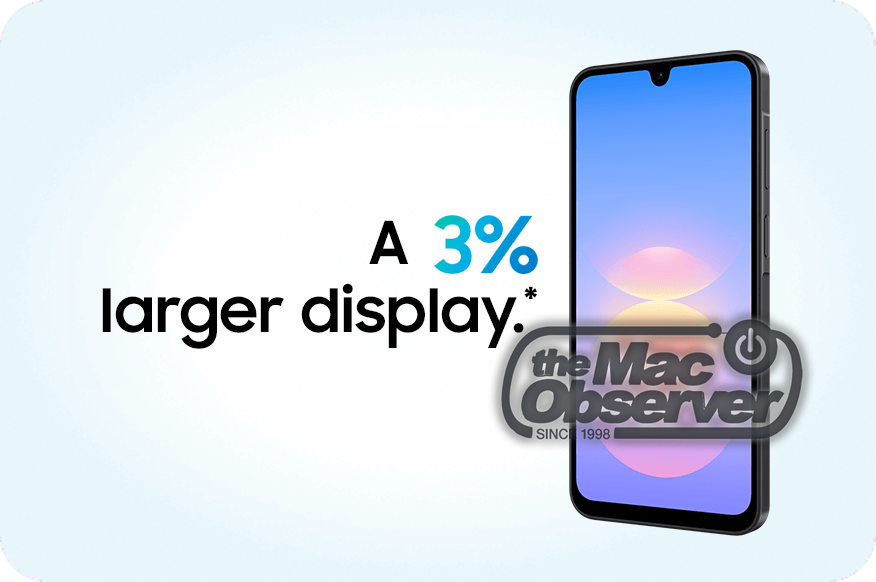
That leaves an important detail unclear: which older phone Samsung is comparing it with. Separate camera comparison assets reference the Galaxy A14, A15 and A16, so we can’t assume the thickness and display figures are both comparisons with the immediate predecessor.
The images don’t list the Galaxy A18’s screen size, panel type or refresh rate, either.
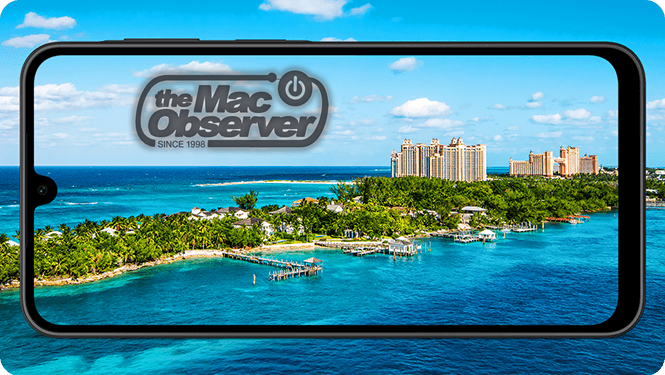
Galaxy A18 has a 50MP main camera and six generations of OS upgrades
The camera specifications are clearly labelled in the materials. Samsung is using a 50MP wide camera, a 5MP ultra-wide camera and a 2MP macro camera on the back, alongside a 13MP front camera.
| Camera | Resolution |
|---|---|
| Main / wide | 50MP |
| Ultra-wide | 5MP |
| Macro | 2MP |
| Front | 13MP |
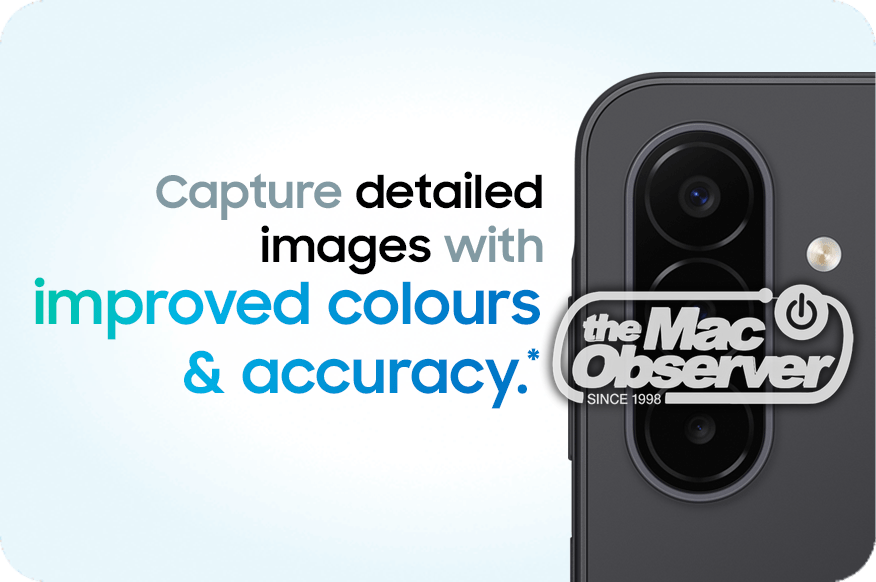
Samsung also promises more detailed images with improved colours and accuracy in its comparison graphics. However, those are marketing claims, and the assets don’t explain what changes to the sensors or image processing would deliver the improvement.
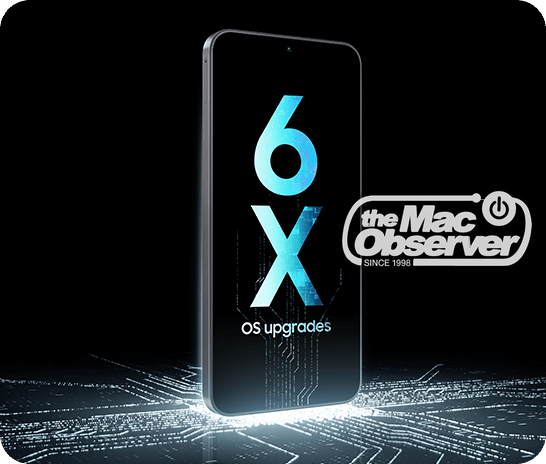
For software support, one image explicitly advertises “6× OS upgrades,” pointing to six generations of Android upgrades. It doesn’t identify the Android version the Galaxy A18 will ship with or separately state how long security updates will be provided.
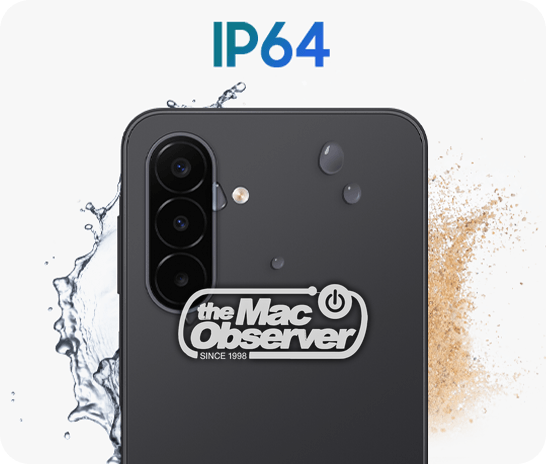
The materials also show an IP64 rating, illustrated with water splashes and dust. Samsung is promoting dust and splash resistance as another feature of the upcoming phone.
There are memory-themed chip graphics as well, but they don’t name a processor or list any RAM and storage configurations. We’ll need more information before we can say what powers the Galaxy A18.

Samsung is also showing iPhone users how to switch
One of the more interesting images for iPhone users is Samsung’s Smart Switch promotion. It shows a QR-code setup flow for moving apps, accounts and contacts from an old iPhone to a Galaxy device.
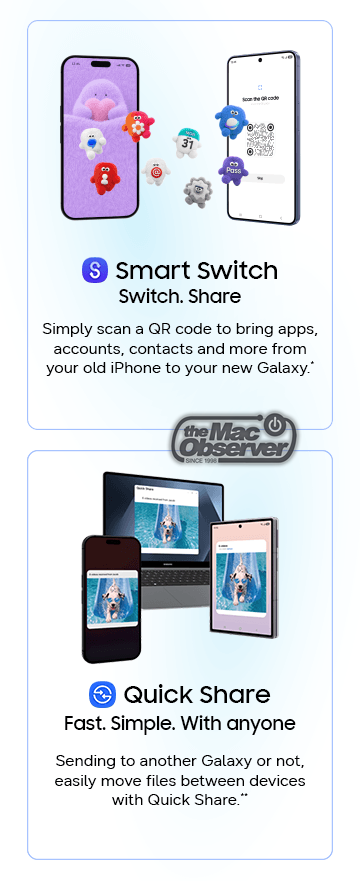
Samsung is also promoting Quick Share with the wording “Fast. Simple. With anyone,” showing file sharing across phones, a laptop and a tablet. The imagery includes Galaxy and non-Galaxy devices, although it doesn’t spell out the compatibility requirements.
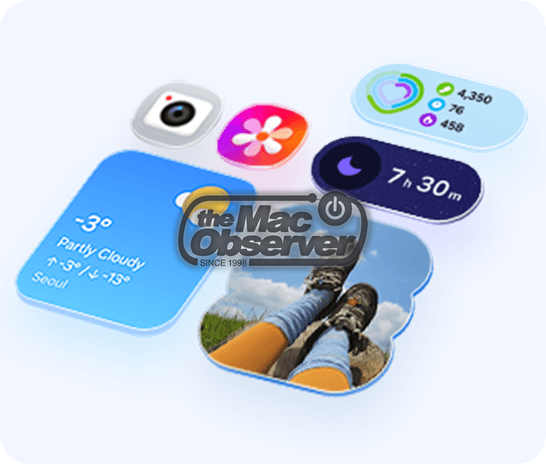
A separate personalisation image shows weather, activity and sleep widgets, camera and gallery icons, and a cloud-shaped photo widget.
For now, the materials leave several specifications unanswered, including battery capacity, charging speed, chipset, RAM, storage and the full display specifications. They also don’t give us a launch date, pricing or market availability.