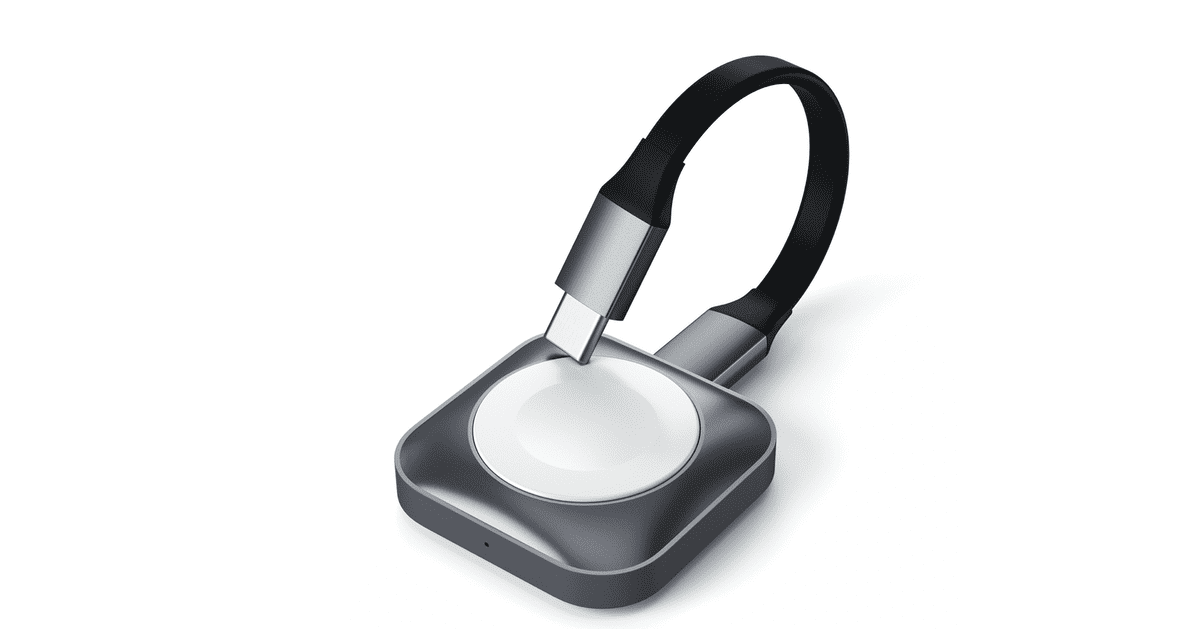
Satechi has a very smart looking USB-C Magnetic Charging Dock for the Apple Watch. It can neatly plug into your devices, saving the annoyance of having cables everywhere. The dock fits all sizes of Apple Watches and will charge when connected to any powered USB-C device. It costs $44.99 and is available from the firm’s website.

Today at Apple Sessions During 2019
2019 was a big year for Today at Apple sessions. 9to5Mac had a look back at the year that was.
Apple refocused its session offerings around three categories: Skills, Walks, and Labs. Skills sessions introduce essential knowledge in an approachable way for anyone. Walks extend beyond the store and invite customers to explore their surroundings. Labs are deep dives into a specific creative technique. Emphasis moved from rudimentary tutorials to more immersive content. Apple said that Walks were its most popular type of session because they offer experiences you can’t get online. To celebrate the session launches, Apple commissioned artwork for its stores around the world and updated the Apple Store app’s Sessions tab. Sessions were made more accessible to everyone, with iPhones and iPads readily available for customers without their own devices. In summer, the need to have an Apple ID to sign up for a session was dropped, and session passes in the Wallet app arrived in fall. For the iPhone 11 launch, Quick Tips sessions began offering brief, easy to understand skills without the need to sign up at all.

Netflix Put Out Average of One New Show or Movie a Day in 2019
Netflix released a total of 371 new TV shows and movies in the U.S. during 2019, Variety reported. That averages one new one every day.
The streaming giant released 371 new TV shows and movies on the service in the U.S. this year, according to data from Variety Insight. This is an increase of 54.6% over the 240 shows and movies Netflix released in 2018. For context, this figure is greater than the number of original series that the entire U.S. TV industry released in 2005 (the last year Netflix managed to exceed the TV industry’s total). That includes broadcast networks, cable networks and premium cable networks.

Xperi And TiVo to Combine in $3 Billion Deal
Xperi and TiVo have announced that they are to combine in a deal that is said to be worth around $3 billion.

Lawmakers Don't Think Facebook Needs to Constantly Track Your Location
Lawmakers were unimpressed with the reasons that Facebook gave for needing to constantly track users’ locations.

Former Apple Store Employee Robert Shaw Sues Company Over Disability Accommodations
Former Apple store employee Robert Shaw is suing Apple over his claim that the company fired him because of his disability.

FBI Shares 7 Tech Tips to Keep You Safe
The FBI’s Oregon office shared seven tech tips to keep people safe over the holidays, like not letting devices auto-connect to free Wi-Fi. It’s well worth the read.
The kids are getting out of school this week and you are packing your bags for the big trip to the in-laws. Now is not the time you want to talk about cyber security, but we do have a few travel tips to keep you safe while you are on the go.

CleanShot: Capture Your Screen in a Superior Way: $10.62
We have a deal on CleanShot, a screengrab and recording app for your Mac. It helps you swiftly capture Mac’s screen without desktop icons in the background, annotate or blur specific parts, set a custom wallpaper for your screenshots, and lots more. It’s $12.50 through our deal, but coupon code MERRYSAVE15 brings the checkout price down to $10.62.

An Interview With the COO of the Recently Acquired Private Internet Access VPN
Popular VPN Private Internet Access (PIA) was recently acquired by a company called KAPE, now called Private Internet. PIA COO did an interview.
Private Internet is positioned to lead the movement for a private and secure online experience for all. The internet as we now know it is a place where data is harvested and identities do not belong to the users but are traded by privileged few. Private Internet changes that. The new name also reflects the fact that we will now be offering four new privacy products to our product suite.
I’m interested, and wary, of the future of PIA. I’ve seen accusations of KAPE that include malware, but Mr. Sagi does say the app will be open-sourced. Although this quote sounds odd to me: “We’re building an internal roadmap to create a transparent and verifiable infrastructure, in which no one, including ourselves, is permitted access to the servers through which VPN traffic flows.” They had shown in court they can’t produce information regarding user data, so they already shouldn’t be able to access server traffic.

MusicBot is the Shortcuts Companion to Apple Music
Federico Viticci recently announced his shortcut called MusicBot, which he says is the all-in-one assistant to Apple Music.
I created MusicBot for two reasons: I wanted to speed up common interactions with the Music app by using custom actions in the Shortcuts app; and I also wanted to build a series of “utilities” for Apple Music that could be bundled in a single, all-in-one shortcut instead of dozens of smaller, standalone ones.
I haven’t used this yet but Mr. Viticci is a master of shortcuts so I’m confident it’s a great tool to use.