

Apple’s Vision Pro and the rumored Meta Quest 3S follow opposing philosophies. Both headsets serve the mixed reality (MR) market. The Vision Pro offers premium spatial computing. It integrates deeply with the Apple ecosystem. Furthermore, it targets professional productivity workflows. Conversely, the Quest 3S aims for the entry-level segment. It emphasizes affordable VR gaming and entertainment. Comparing them shows major differences in design and price.
Table of contents
Comparing Vision Pro to Meta Quest 3S
Design & Comfort


The Vision Pro uses premium aluminum and glass construction. This creates a sleek, futuristic aesthetic. Its modular design includes a Dual Knit Band. Customizable headbands support long productivity sessions. However, the sophisticated hardware feels heavier. This front-heavy device requires an external battery pack. The pack connects via a single cable.
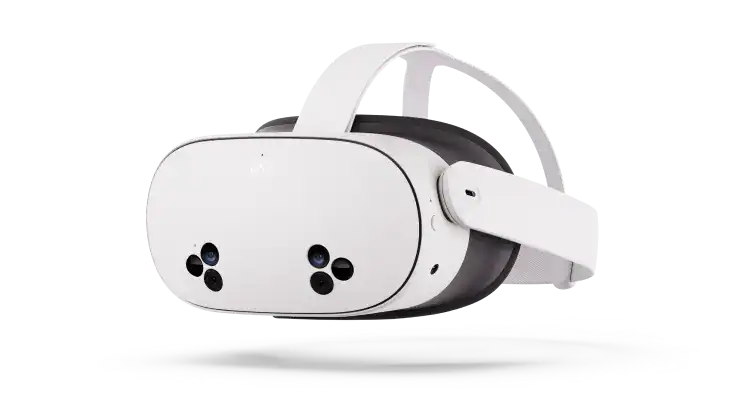
The Quest 3S is a budget-friendly alternative to Quest 3. It will use a lightweight plastic body. A simpler head strap prioritizes portability. Therefore, it suits extended gaming sessions better. The materials and design are less premium than Vision Pro. However, the Quest platform is cordless. Its lower weight makes it ideal for active VR entertainment.
Don’t miss the best of The Mac Observer
Set us as a preferred source and our Apple reporting ranks higher in your Google Search results and Discover feed — one tap, no account changes.
Display & Visual Quality
Apple equips the Vision Pro with micro-OLED displays. These offer ultra-high resolution. They provide impressive clarity and superior color accuracy. Its passthrough is remarkably lifelike. This technology delivers the most immersive visuals today. Therefore, it suits precision mixed reality tasks. Professionals find the visual experience better.
The Quest 3S uses a single Fast-Switch LCD panel. It employs older Fresnel lenses. This choice achieves a much lower price point. The resolution suits most VR gaming well. The device offers solid clarity and decent refresh rates. However, its passthrough is only functional for MR games. It does not achieve the lifelike quality of Vision Pro.
Performance & Processing Power
Apple Silicon powers the Vision Pro. Specifically, it uses the M5 chip and the R1 sensor chip. This delivers desktop-level responsiveness. This substantial power runs numerous apps smoothly. Users open many native and compatible spatial windows. Consequently, it supports intensive productivity workflows.
The Quest 3S retains the Snapdragon XR2 Gen 2 chip. This chip optimizes smooth, efficient VR gaming. It also controls heat well. The budget price allows access to a vast content library. Nevertheless, it cannot match Vision Pro’s processing capability. The Vision Pro handles demanding multitasking far better.
Tracking & Controls
The Vision Pro pioneered a precise input system. It relies entirely on eye and hand tracking. Apple eliminated the need for physical controllers here. This works well for navigation and media control. Users praise this approach for productivity. However, the lack of controllers affects certain VR games. Action games often require direct physical input.
The Quest 3S includes Touch Plus controllers. It also features reliable hand tracking. This dual system offers great versatility. Controllers provide precision for competitive gaming. They are best for action titles needing direct manipulation. Therefore, Quest 3S gains an advantage in dedicated VR gaming.
Apps, Software & Ecosystem
The visionOS ecosystem excels in productivity. It offers Mac Virtual Display and immersive video. Integration with other Apple devices is tight. Furthermore, it leverages over a million compatible iPad apps. This supports professional workspace setups. However, the Vision Pro offers limited gaming. For instance, Apple Vision Pro nowhere near Meta when it comes to sales volume. This extends to the dedicated VR gaming library size. The Quest platform succeeds with games and social VR. Consequently, the upcoming Meta Quest 3S as a Vision Lite rival appeals to users. They seek fun rather than professional applications.
Entertainment & Use Cases

Vision Pro offers an exceptional cinematic experience. It delivers powerful spatial video. High-quality immersive environments enhance movies. Its main strengths are high-end mixed-reality tasks. This includes professional collaboration and productivity.
The Quest 3S excels in VR gaming and fitness apps. It shines in casual entertainment. Its lower cost and strong content catalog are key. Therefore, it suits everyday household fun better. It targets wide-scale user adoption. It avoids high-fidelity, pro-level MR work.
Price & Value
The Vision Pro carries a premium $3,499 price tag. Apple positions it as a spatial computer for professionals. The price is justifiable by the micro-OLED display. M5 performance and ecosystem integration add value. It offers value for specialized users. However, it is overkill for casual VR seekers.
The Quest 3S expects to retail between $300 and $400. This provides outstanding, budget-friendly value. It is great for VR gaming and entertainment. It compromises premium features like micro-OLED displays. However, it delivers excellent accessibility. It serves as a great VR entry point for the mass market. Therefore, to determine which one should you buy, consider your budget and primary use case: work or play.
Vision Pro vs Meta Quest 3S: Comparison Table
| Feature | Apple Vision Pro (Premium MR) | Meta Quest 3S (Budget VR/MR) |
| Starting Price | ~$3,499 | ~$300–$400 (Expected) |
| Processor | Apple M5 + R1 Chip | Snapdragon XR2 Gen 2 |
| Display Technology | Micro-OLED | Single Fast-Switch LCD |
| Lenses | Custom Catadioptric / Pancake | Fresnel Lenses (Expected) |
| Primary Input | Eye & Hand Tracking (No controllers) | Hand Tracking & Touch Plus Controllers |
| Primary Purpose | Spatial Computing, Productivity, Cinematic Media | VR Gaming, Social VR, Entertainment |
FAQ
Vision Pro is primarily a device for work. It handles multitasking and high-fidelity mixed reality. Quest 3S focuses purely on accessible VR gaming. It provides mass-market entertainment.
Yes, Quest 3S features two 4MP RGB passthrough cameras. It offers functional mixed-reality experiences suitable for games. However, visual fidelity will not match Vision Pro’s premium passthrough.
Choosing Your Spatial Headset
The fundamental divergence separates Vision Pro and Quest 3S. The former is a professional tool. It prioritizes visual fidelity and power. Meanwhile, the latter is an accessible entertainment device. It successfully democratizes virtual reality. Understanding this core difference is crucial for purchase. Users must align their budget with their primary use case. This includes high-end work or casual play. For a detailed comparison, you can read more about the price, performance, and purpose comparison of Meta’s and Apple’s headsets.


Discussion