
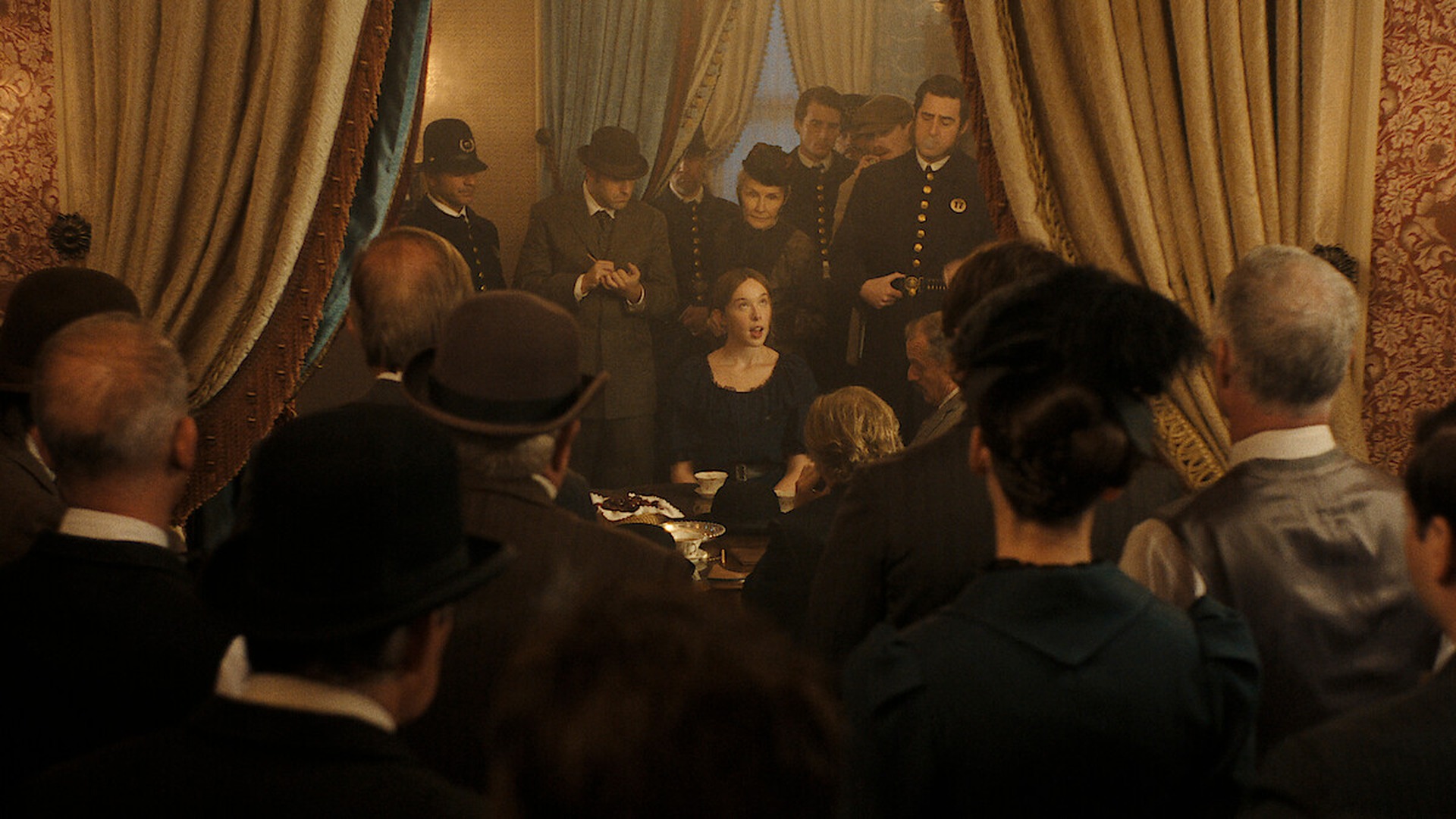
Major spoilers follow for Monster: The Lizzie Borden Story. Netflix’s drama gives the Borden murders a definite answer inside its own fictional world: Lizzie and Maggie Sullivan carry out the killings of Andrew and Abby Borden together. Lizzie is acquitted, but the ending treats that verdict as legal freedom, not a clean escape from what they did.
That distinction matters because the series is not a historical solution to the 1892 case. The real Lizzie Borden was acquitted in 1893, and nobody else was convicted. Our guide to what Netflix can and cannot know about the Borden murders separates that record from the drama’s inventions. Here, the series uses a dramatized relationship, invented scenes and its own theory of the crime to turn an unresolved case into a story about violence, power and the cost of getting away.
- Release: September 17, 2026
- Format: Eight-episode limited drama
- Genre: Historical crime drama
- Streaming on: Netflix
Lizzie and Maggie divide the murders
The show makes its central choice in Episodes 4 and 5. Lizzie attacks Abby first, while Maggie takes the first strike at Andrew. That is a clear departure from the historical record, which never established who killed either victim. In the drama, their partnership gives the murders a purpose beyond a sudden burst of rage. They see the crime as a route out of the Borden household and the control Andrew exercises over it.
Don’t miss the best of The Mac Observer
Set us as a preferred source and our Apple reporting ranks higher in your Google Search results and Discover feed — one tap, no account changes.
Netflix also presents their relationship as romantic, another speculative element rather than a documented fact. The pair burn bloodied clothes and create an alibi by being seen washing windows. Those details make the series’ answer unambiguous: it is not asking viewers to solve a whodunit. It is showing how its two protagonists decide to make one.
The acquittal does not clear Lizzie
Suspicion spreads through Fall River, including toward John Morse, but the investigation eventually points back to Lizzie. The prosecution still cannot prove its case to the court’s required standard. That lets the show arrive at the same public outcome as history, while giving the audience information the courtroom never receives.
Nance O’Neil becomes important to that split between public story and private truth. The series moves the actor into Lizzie’s pre-trial orbit and makes her a coach for Lizzie’s presentation. Netflix notes that this is another chronological invention: the real women met after the trial. It works here because Lizzie’s survival depends on performing a version of herself that the town is willing to accept.
Freedom becomes another kind of trap
After the verdict, Lizzie loses her remaining sense of safety. A falling-out with Emma leaves her with the inheritance but without the family structure she thought she was escaping. The final movement then reaches beyond Lizzie’s lifetime to connect her story with Aileen Wuornos. That leap turns Lizzie into a legacy, not simply a defendant who beat a charge.
That is why the ending lands as more than a reversal of the famous nursery rhyme. Lizzie wins the trial, but she cannot undo the violence or control how the world uses her name. The show resolves its murder plot decisively while keeping the real case’s uncertainty intact.
Do you read the finale as liberation, punishment, or both? Share your take in the comments.


Discussion