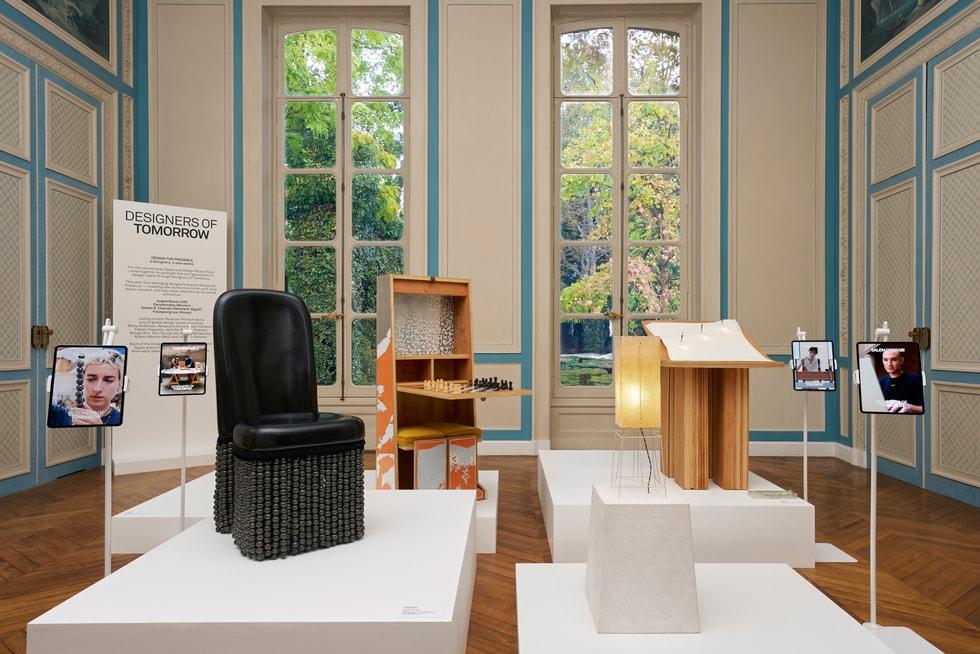
Apple on October 20, 2026 unveiled its 2026 Designers of Tomorrow showcase, an exhibition made in collaboration with Design Miami that opened that day at Hôtel de Maisons in Paris. Curated by Rodman Primack, it features new work by Salem S. Charabi, Isabel Rower, Yoonjeong Lee and the studio Parafernalia.
This is the program’s second year. According to Apple’s announcement of the 2026 Designers of Tomorrow, this edition centers on the theme of presence, exploring what still holds people’s attention amid the hurried pace of modern life. Each designer also described which Apple products they used to make their piece.
The theme and the jury
Primack, the program’s curator and former longtime creative director of Design Miami, explained where the theme came from.
Don’t miss the best of The Mac Observer
Set us as a preferred source and our Apple reporting ranks higher in your Google Search results and Discover feed — one tap, no account changes.
“The theme was born from an honest recognition of just how busy our lives have become,” says Primack. “In answering it, our designers demonstrate the power of objects to shape our physical environments and transform the human experiences that are possible within them.”
The participants were handpicked by a jury that included Alexandra Cunningham Cameron, Fabien Cappello, Jennifer Dunlop Fletcher, Minjae Kim, Hun Chung Lee, Marion Mailaender, Nifemi Marcus-Bello, Jennifer Roberts and Apple’s Molly Anderson. Apple says they were chosen for their storytelling, material innovation and craft.
“Apple products continue to emerge as a through line so many extraordinary designers share, spanning disciplines, cultures, and processes,” Primack says.
The four pieces at a glance
| Designer | Background | Piece | Apple tools named |
|---|---|---|---|
| Salem S. Charabi | Egyptian Danish architect | The Eminence of Light | MacBook Pro |
| Isabel Rower | Brooklyn-based designer | Padded Chair 1860 | iPhone, AirPods Pro, MacBook Pro, Keynote |
| Yoonjeong Lee | Seoul-based designer | New Form | iPad Pro, Apple Pencil, iCloud, AirDrop, Notes |
| Parafernalia | Studio spanning Monterrey to Mexico City | MonoAmbiente 1 | iPhone, iPad Pro, iCloud, Messages, FaceTime |
Salem S. Charabi: a lantern of palm fronds
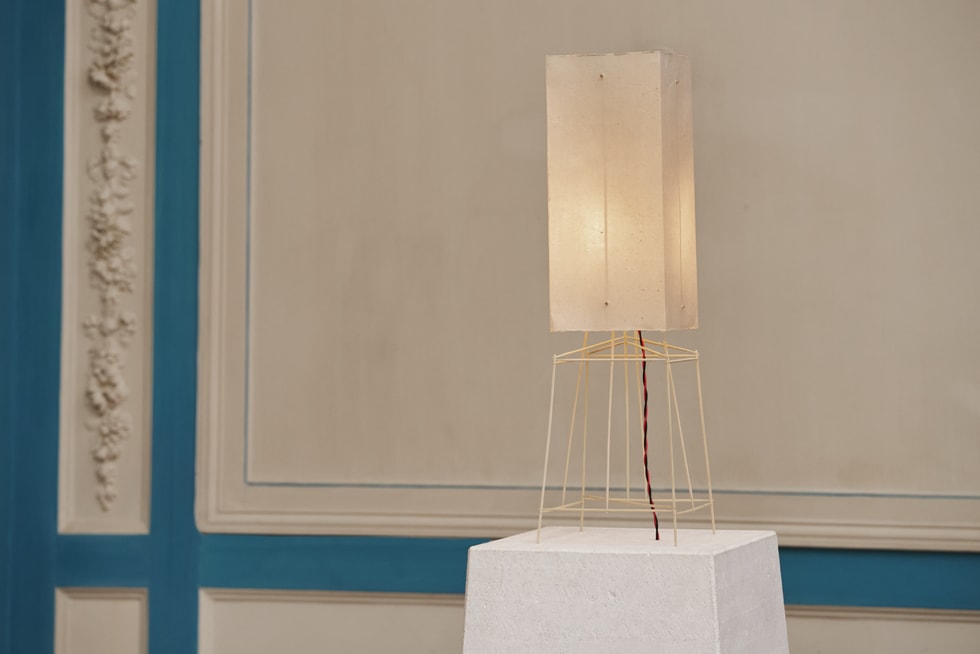
Charabi’s The Eminence of Light is a lantern with a skeleton of stacked date palm fronds on a limestone base. He made the veil from banana paper, applying Japanese methods to Egyptian palms.
“Each strand is an octagon in profile,” Charabi explains, each one “just 3 millimeters wide, split by hand, and carefully drilled.” He adds that “the ends are then sharpened with a chisel to interlock.”
He planned the whole piece on a Mac. “I sketched and did all the 3D modeling on my MacBook Pro,” Charabi says. “It was a complex process getting everything to fit just right,” from the carving of the stone and the paper molds “down to the delicate base.”
Isabel Rower: a chair that makes a sound
Rower’s Padded Chair 1860 draws on 18th- and 19th-century papier-mâché furniture and objets d’art. Its high-gloss finish contrasts with the beaded fringe lining the seat.
“The ceramic beads make a sound when brushed, drawing attention to both the material and its form, turning the unconscious act of sitting down into a mindful encounter,” Rower says.
Her Apple setup covers capture, listening and archiving. “I use iPhone to capture quick thoughts and document my process, AirPods Pro to listen to music, and MacBook Pro to build my personal visual archive,” says Rower. “I’ll also use Keynote to juxtapose ideas and explore the relationship between images and text.”
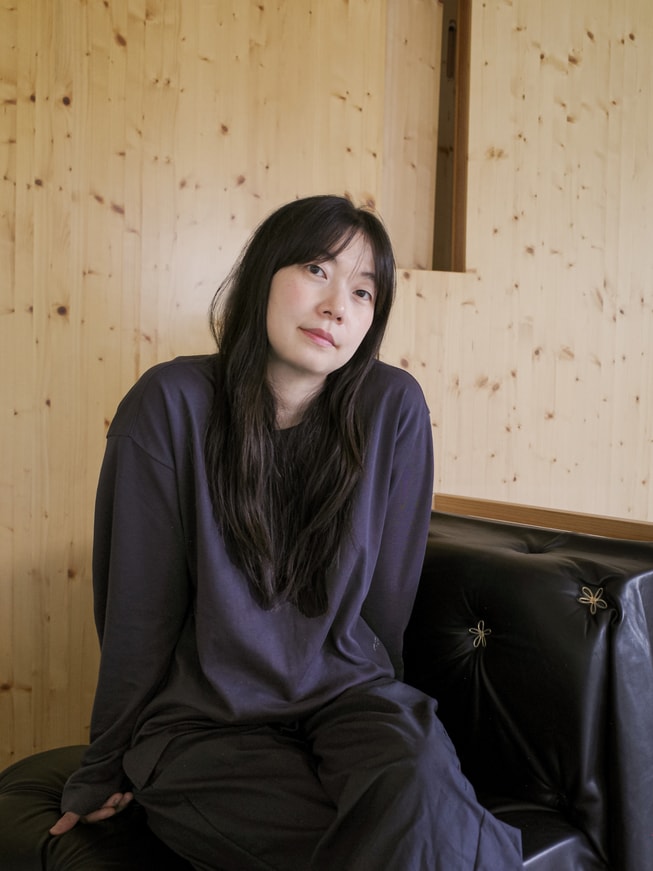
Yoonjeong Lee: pencils as nails
Lee’s New Form uses a trio of worn-down pencils as nails. The base doubles as a wooden table and lamp, with sheets of paper acting as a lampshade held in place by the pencils. Apple says Lee stacked roughly 5,000 thin sheets of veneer to build the wooden base.
“I wanted to express this year’s theme through something small that we could all recognize,” Lee explains, calling it “a shared experience.”
She credits iCloud, AirDrop and Notes for keeping her process moving. “I often use iPad Pro and Apple Pencil to create a sketch and jot down quick thoughts, but it’s how my devices connect to each other that makes them, and all their flexible features, truly useful,” she says.
Parafernalia: a landscape that opens into a table
Parafernalia was founded by Genki Matsumura and Sebastián Zorrilla. Their MonoAmbiente 1 has an acid-etched stainless steel surface that forms a landscape when closed. Expanded, it reveals stools and a table where two people can talk, play chess or share a drink.
“For us, presence can take many forms,” says Matsumura. “We experience it with ourselves, with our surroundings, and with others. Our piece explores how all these expressions can coexist within a single object.”
The two designers work in different cities and rely on iPhone and iPad Pro to trade sketches, along with Messages, FaceTime and Procreate. “We don’t share a physical desk. Our studio is iCloud,” Matsumura explains. “Apple plays an integral part in how we think, design, and communicate. In many ways, it’s how we cultivate presence with each other.”