
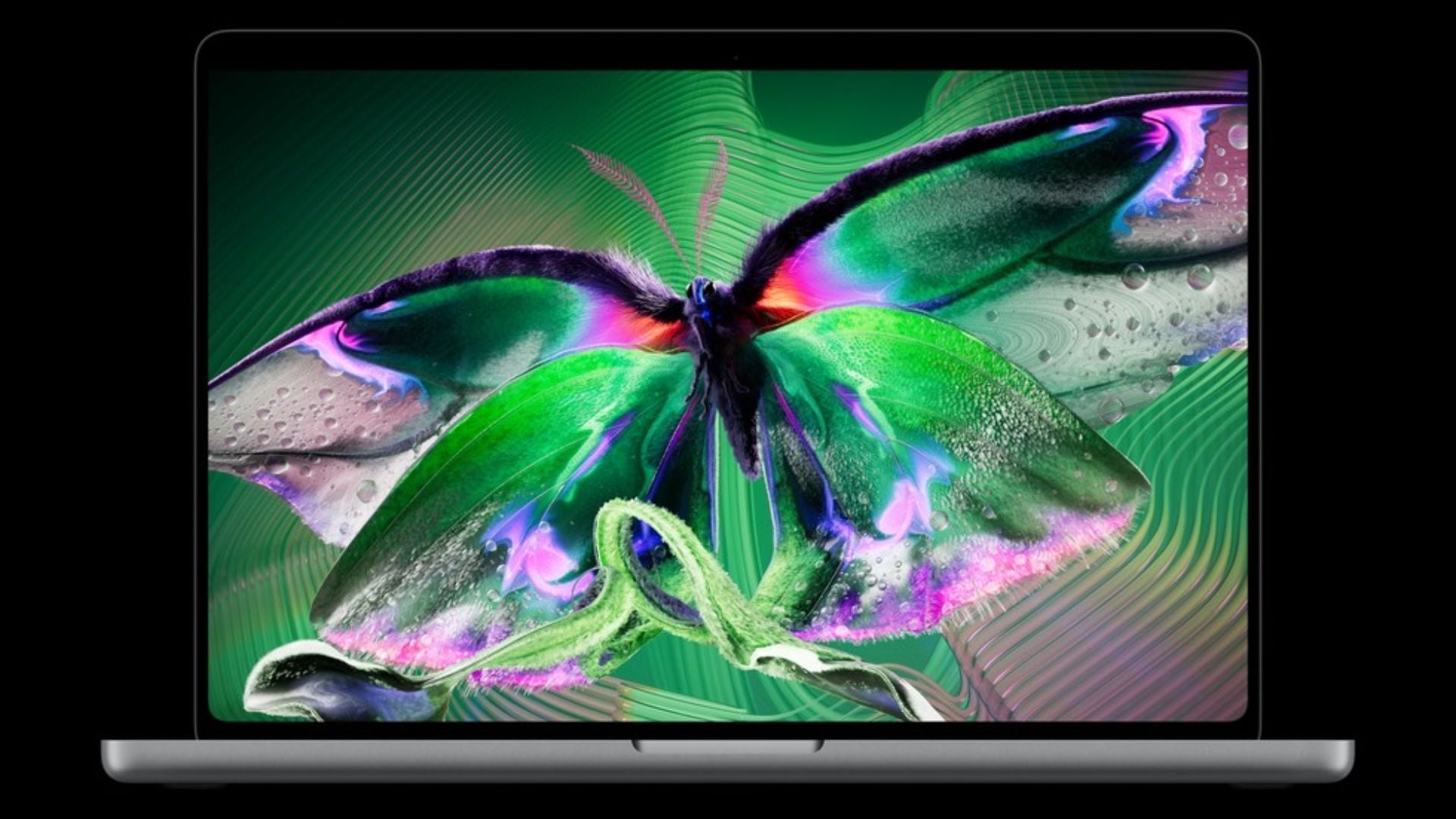
Apple is exploring a cheaper manufacturing process for the advanced OLED display technology used in its new touchscreen MacBook Pro. The company is reportedly working with Samsung Display and LG Display to improve high-mobility oxide (HMO) technology, potentially making OLED panels more affordable to produce across future Mac models.
According to a new report from The Elec, Apple is considering a manufacturing technique called sputtering, which allows display manufacturers to use existing production equipment instead of investing in more expensive alternatives.
How Apple’s Cheaper OLED Technology Works
HMO improves the performance of thin-film transistors (TFTs), which control individual pixels in OLED displays. Conventional oxide transistors offer electron mobility of approximately 10 cm²/V·s, while HMO targets 30 to 50 cm²/V·s.
Don’t miss the best of The Mac Observer
Set us as a preferred source and our Apple reporting ranks higher in your Google Search results and Discover feed — one tap, no account changes.
Higher mobility allows transistors to deliver more current, supporting higher resolutions and refresh rates while maintaining power efficiency.
Apple is evaluating two manufacturing methods:
- Sputtering: Deposits semiconductor materials using plasma and works with existing OLED production equipment, reducing manufacturing costs.
- Atomic Layer Deposition (ALD): Builds extremely thin layers one atomic layer at a time, offering greater precision but requiring more expensive equipment and materials.
An industry official told The Elec:
Samsung Display and LG Display are both prioritizing sputtering while also researching ALD.
Future MacBook Air and iMac Models Could Benefit
Apple is reportedly considering HMO as a successor to LTPO technology, potentially simplifying OLED production by replacing certain silicon-based manufacturing steps.
Samsung is evaluating the technology for larger eighth-generation manufacturing lines, while LG is developing its approach using existing sixth-generation equipment.
The development could eventually benefit future MacBooks and iMacs, especially as Apple is already testing OLED displays for the MacBook Air and iMac.
However, manufacturers still need to verify performance and long-term reliability before choosing a final production method. Apple has not announced when these manufacturing improvements will reach commercial products.




Discussion