The iPhone 18 Pro records 4K Dolby Vision video at 24, 25, 30, 60, 100 or 120 frames per second, and two of those six numbers exist for one region rather than one purpose. Broadcast and streaming delivery across most of the world outside North America runs at 25 frames per second, so Apple’s list carries 25 fps and its high frame rate multiple, 100 fps.

Apple’s tech specs page publishes the frame rates and nothing about choosing between them. So the useful work is separating the 50 Hz numbers from the 60 Hz ones and doing the arithmetic, which anyone can check. No one outside Apple has shot with this camera, and the phones do not reach buyers until Friday, September 18.
The frame rates Apple publishes
| Key fact | What Apple lists |
|---|---|
| 4K Dolby Vision | 24, 25, 30, 60, 100 or 120 fps |
| The 50 Hz pair | 25 fps and 100 fps |
| Cinematic mode ceiling | Up to 4K Dolby Vision at 60 fps |
| ProRes | Up to 4K at 120 fps, with external recording |
| Spatial video | 1080p at 30 fps |
| Also listed for both Pro models | Apple Log 2, ProRes RAW, Genlock |
| Port | USB-C with USB 3, up to 10 Gb/s |
| Models | iPhone 18 Pro and iPhone 18 Pro Max, same rows |
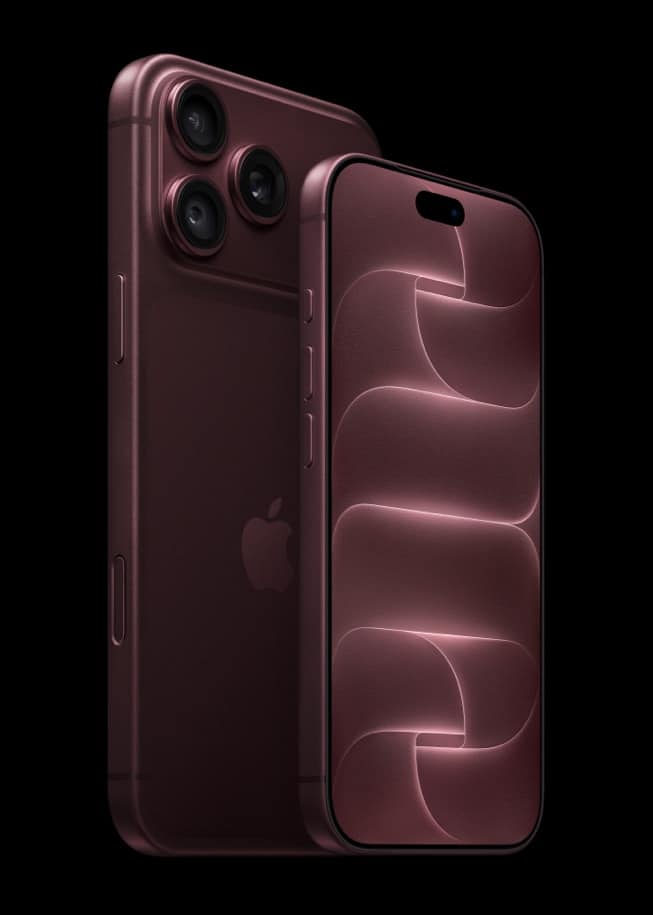
Apple’s video rows are identical for the 6.3-inch and 6.9-inch models, so the choice between iPhone 18 Pro and iPhone 18 Pro Max changes battery ratings and price, not recording formats. Both also carry the same 48MP Fusion Main camera at 24 mm with the four-stop variable aperture.
Don’t miss the best of The Mac Observer
Set us as a preferred source and our Apple reporting ranks higher in your Google Search results and Discover feed — one tap, no account changes.

Why 25 and 100 fps are on the list
Split the six numbers into two families. The 60 Hz family is 30 and 60 fps, with 120 fps sitting above them as a clean multiple. The 50 Hz family is 25 fps, the delivery standard used across Europe, India, Australia and much of Africa and Asia, with 100 fps above it. The odd one out is 24 fps, the cinema rate, which belongs to neither family and is a multiple of nothing else on the list.
That matters if your footage has somewhere to go. Material shot at 30 fps and dropped into a 25 fps timeline has to lose frames, and 60 fps into 25 fps is no cleaner. Shooting 25 or 100 fps keeps the maths whole from the first clip.
Mains electricity in those same countries runs at 50 Hz, and shutter speeds matter under artificial light for that reason. Apple has given the Camera app a set of Pro controls with manual aperture, shutter speed and white balance plus a histogram, and it publishes nothing at all about flicker or how the shutter control interacts with 50 Hz lighting.
The slow-motion arithmetic
The other use for 100 and 120 fps is slowing footage down. The factor is the capture rate divided by the timeline rate, and it is the same sum on any editor.
| Capture rate | Timeline rate | Slowdown |
|---|---|---|
| 100 fps | 25 fps | 4.0x, whole frames |
| 100 fps | 24 fps | About 4.17x |
| 120 fps | 30 fps | 4.0x, whole frames |
| 120 fps | 24 fps | 5.0x, whole frames |
| 60 fps | 25 fps | 2.4x |
| 60 fps | 30 fps | 2.0x |
Two rows are the tidy ones. At 100 fps into 25, and at 120 fps into 30 or 24, every captured frame lands on the timeline once. Apple has not published whether the phone conforms high frame rate clips itself or hands over files at their capture rate, so that part is untested until the software ships.
What the 50 Hz pair does not change
- Cinematic mode stops at 4K Dolby Vision 60 fps, so the depth-of-field mode does not reach 100 or 120 fps.
- Spatial video is 1080p at 30 fps only. Apple lists no 25 fps variant of it.
- ProRes runs up to 4K at 120 fps with external recording over the USB-C port, which carries USB 3 at up to 10 Gb/s.
- Apple Log 2, ProRes RAW and Genlock appear on Apple’s comparison page for both Pro models with no frame rate detail attached.
None of that is new to this generation, and Apple did not put a number on any of it during the keynote. The announcement itself led with the aperture and the A20 Pro chip, and the frame rate list arrived on the spec page afterwards.
What Apple has not said
- Bit rates or file sizes per minute at any frame rate, for Dolby Vision or ProRes.
- Whether 100 and 120 fps are available on the 13 mm Ultra Wide and 100 mm Telephoto as well as the 24 mm main camera.
- Any maximum clip length, recording duration or thermal limit at the top frame rates.
- Whether Apple Log 2 can be combined with 100 or 120 fps capture.
- Whether the 25 and 100 fps options are presented differently in 50 Hz markets.
Pre-orders open at 5 a.m. PT on Saturday, September 12, iOS 27 arrives free on Monday, September 14, and the phones reach stores on Friday, September 18. Every frame rate question Apple has left open becomes testable that Friday and not before.