
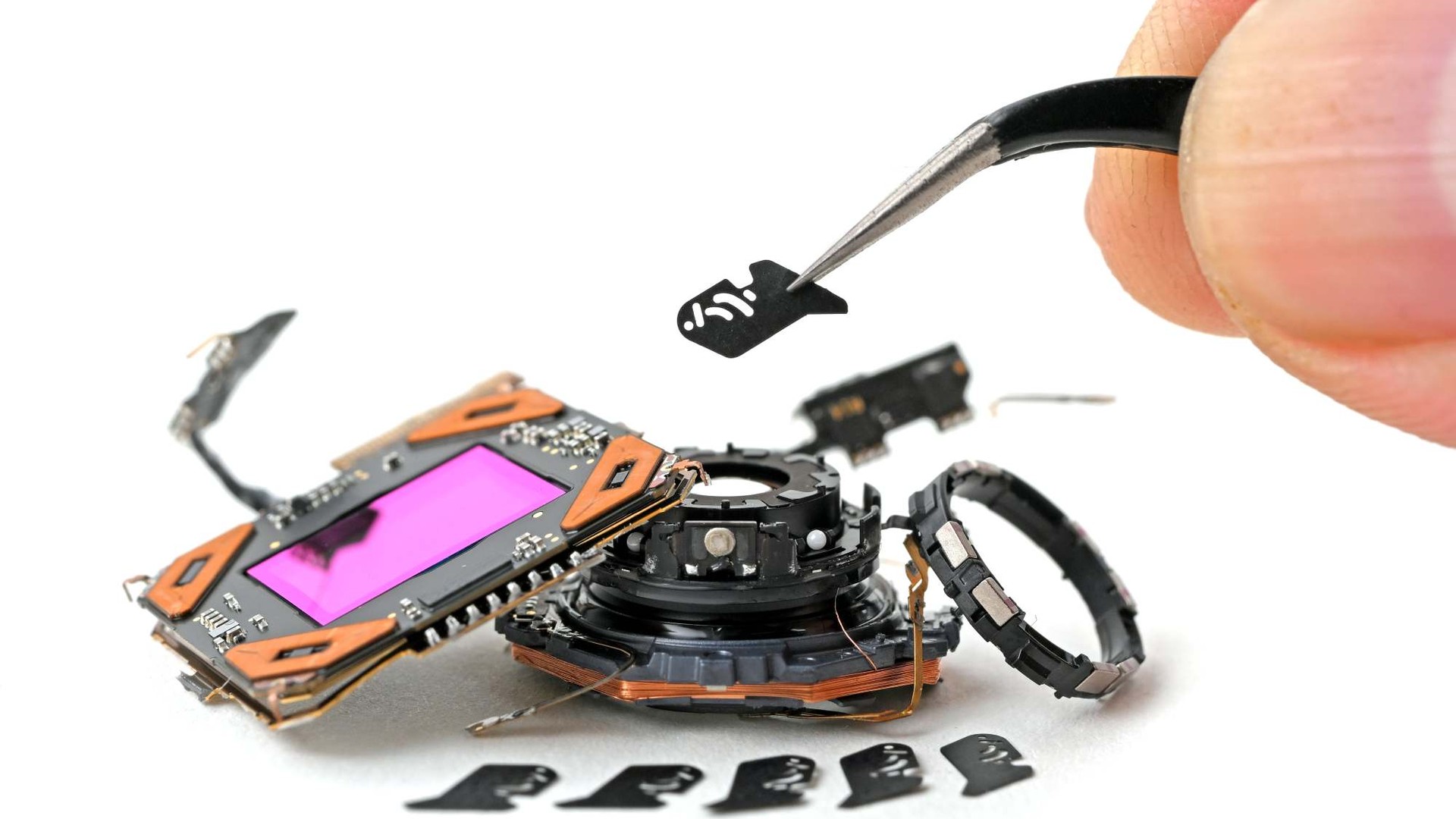
The iPhone 18 Pro’s variable-aperture camera is a miniature mechanical system, not a software simulation. iFixit’s teardown shows six overlapping blades moving inside the main camera to change how much light reaches the sensor.
iFixit opened the camera module and found that magnetism drives the aperture. The blades are roughly as thin as a human hair, and their movement keeps the opening close to circular across Apple’s four Camera app settings: ƒ/1.48, ƒ/1.8, ƒ/2.8, and ƒ/4.0.
That range gives photographers control over light and some control over depth of field. The widest setting admits substantially more light than ƒ/4.0, but a phone sensor and short lens still cannot produce the same background separation as a large camera using the same f-number.
Don’t miss the best of The Mac Observer
Set us as a preferred source and our Apple reporting ranks higher in your Google Search results and Discover feed — one tap, no account changes.
Precision creates a repair tradeoff
The teardown also shows why repairing the mechanism itself is unrealistic. Tiny blades, close tolerances, and adhesive make clean disassembly extremely difficult. If one blade sticks or breaks, a repair will probably require replacing the complete main-camera assembly rather than fixing the aperture.
The good news is that the camera module is removable and relatively accessible after the display is opened. Apple has not yet published the price of an iPhone 18 Pro replacement camera. For context, iFixit notes that the previous model’s assembly costs $249 through Apple’s self-service channel.
Our report on Apple’s new repair manual explains what owners can access today. The iPhone 18 Pro camera score offers a separate look at image performance rather than repairability.
iFixit gave both Pro models a provisional 7 out of 10 overall. The aperture is impressive engineering, but it adds moving parts that ordinary repair shops are unlikely to service at component level.
Apple’s four built-in aperture steps are confirmed, but support in third-party camera apps will depend on their developers and Apple’s APIs. iFixit’s teardown does not establish how frequently the mechanism may fail in normal use.



Discussion