
One week after releasing iOS 14 public beta 5, Apple has seeded iOS 14 public beta 6 for iPhone and iPad testers.

Apple TV+ to Introduce Bonus AR Content
Apple is working to added AR content to Apple TV+ with characters or objects displaying on a user’s iPhone or iPad.

macOS: Getting Rid of the Windows EFI Boot Entry
When you delete a Windows partition, but don’t use Boot Camp Assistant to remove the installation, something pesky gets left behind. In this Quick Tip, Jeff Butts shows how to delete the leftover EFI Boot entry from when you dual-booted between macOS and Windows.

Pixelmator Pro on Sale After Reaching 10,000 Five Star Reviews
Pixelmator Pro reached a milestone on Tuesday: It has gained over 10,000 five star reviews in the Mac App Store. To celebrate, the team is offering Pixelmator Pro at 30% off for the next several weeks.
So, after all the hard work that has gone into making Pixelmator Pro the app we knew it could be, this moment is extra sweet. And, of course, we have no plans to stop, another major updates is currently in beta and we’re already working on something extra special for Pixelmator Pro 2.0, which is also be a free update. You’ll love it, we promise.
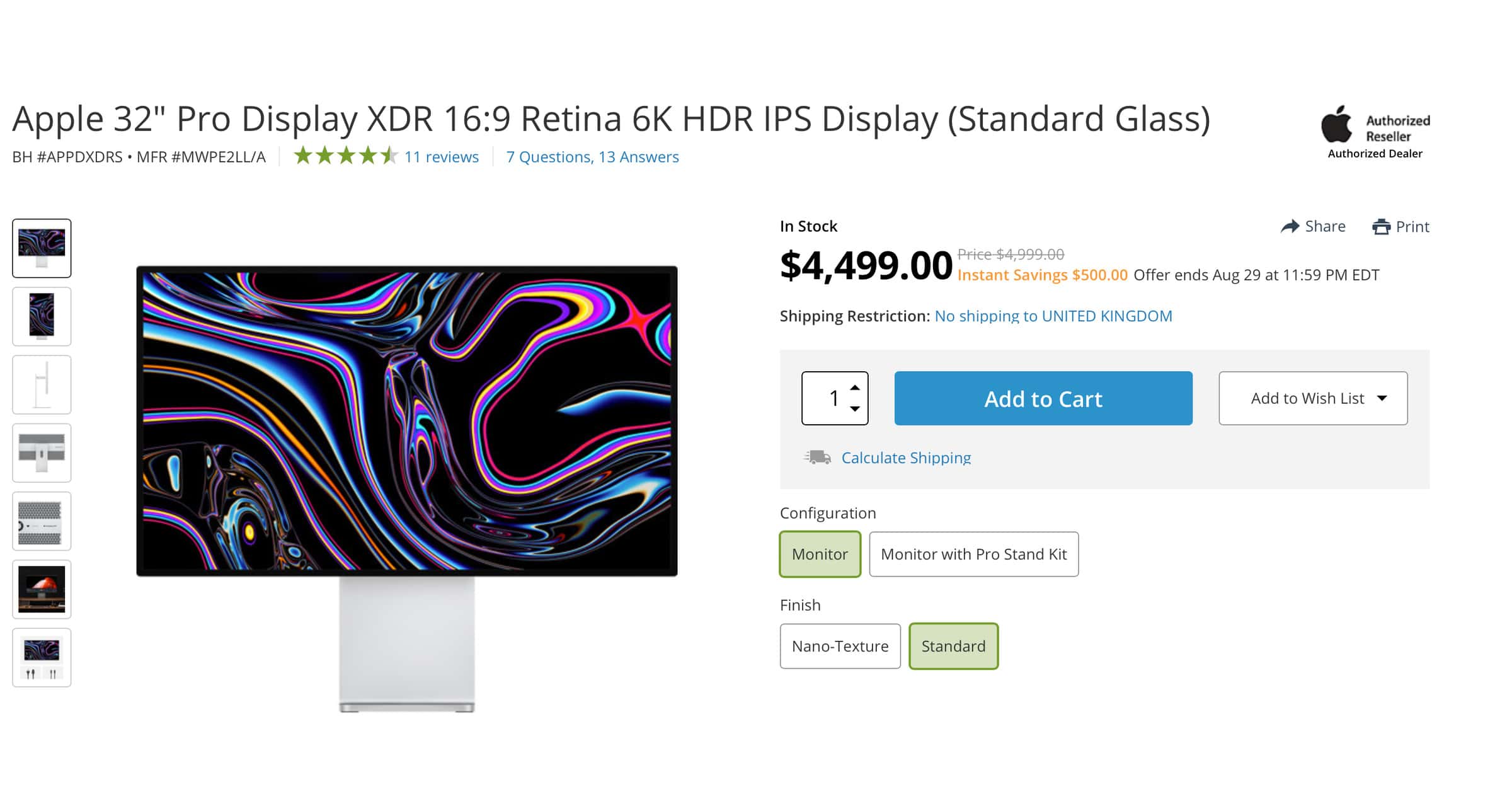
Apple Pro Display XDR Available With $500 Discount For Limited Time
Apple’s stunning 32″ Pro Display XDR is available with a huge $500 discount. Normally $4,999, the standard version is available from B&H for $4,499. The higher-end offerings, including those with a stand or nano-texture finish, also have the discount applied. The offer ends at 11.59 pm EST on August 29.

The New Fitbit Sense... Looks a Lot Like an Apple Watch
Fitbit unveiled a new set of products today, including the Sense, as well as the Versa 3. You’d be forgiven for thinking the Sense looks… familiar. The Verge has a rundown of the device’s specs.
The Sense has a few more advanced health tracking features, such as detailed heart rate scans with atrial fibrillation (afib) detection via the electrocardiogram (EKG) app built into the watch (still pending FDA approval). In that way, it’s on par with Apple’s and Samsung’s recent smartwatches (though, Samsung’s EKG capability in the Galaxy Watch 3 isn’t available in the US yet). Where the Sense stands out is with its stress detection features, which it’s pitching as something that’s crucially needed — especially in today’s increasingly stressful world. To take a reading, you hold your palm over the screen and start to breath. The Sense will measure your heart rate, and uniquely, your skin’s temperature will be collected with its electrodermal activity (EDA) sensor. If your skin feels hot, chilled, or clammy, the Sense might be able to make sense of why it’s happening over time. Fitbit’s app will score you on your stress level, with a higher score being better than a lower one.

Protect Your iPhone and Enable Qi Wireless Charging with the Magnetic Desk Stand: $69.99
We have a deal on the XVIDA Wireless Charging Desk Stand kit. It includes both a Qi wireless charging stand and a case for your iPhone with magnets that then stick your iPhone to the stand while charging. That makes for a smaller footprint for the stand and protection for your iPhone, too. You can get the stand and case for iPhone 11, iPhone 11 Pro, iPhone 11 Pro Max, and iPhone SE for $69.99 through our deal.

Apple Releases iOS 14 Developer Beta 6
Today Apple released iOS 14 developer beta 6 for iPhones, seeding only a week after iOS beta 5, reflecting the OS stability.

Apple v. Epic Could Change All Apple's Relationships – TMO Daily Observations 2020-08-25
Charlotte Henry joins host Kelly Guimont to discuss how Apple’s legal dispute with Epic could have a ripple effect on other relationships.

Germany’s Sparkasse Bank Supports Apple Pay
Apple Pay users in Germany can now add their Sparkasse Giro debit card (Sparkassen-Card) to iOS Wallet, just like their credit cards.