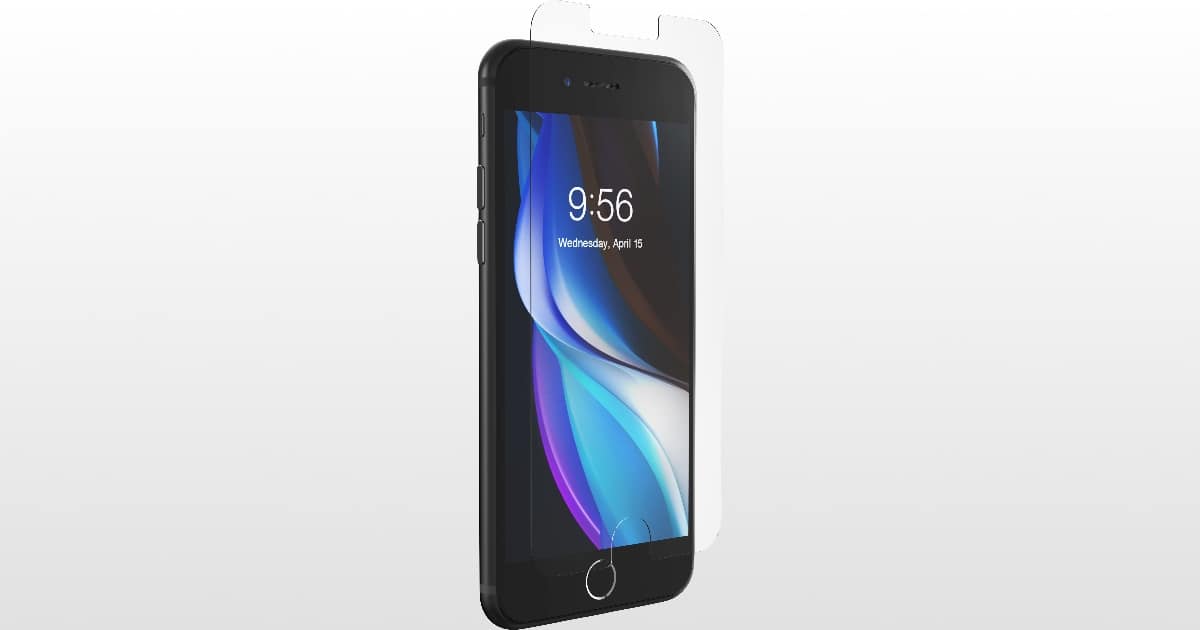
InvisibleShield and Gear4 have released cases and iPhone SE screen protectors. The InvisibleShield Glass Elite VisionGuard+, Glass Elite+ and Glass+ provide customers with tempered glass protection for extreme impact and scratch protection. Meanwhile, Gear4 is manufacturing antimicrobial iPhone SE cases with D3O reinforced backplate and others made with recycled materials.
![[UPDATE] Apple Carrying Special COVID-19 ‘One World Together’ At Home Broadcast on Saturday](https://www.macobserver.com/wp-content/uploads/2020/04/World-One-Together-COVID-19-broadcast.webp)
[UPDATE] Apple Carrying Special COVID-19 'One World Together' At Home Broadcast on Saturday
Apple is amongst a host of tech firms set to broadcast the One World at Home global special in Support of the WHO’s COVID-19 fund.

Tim Cook Holds Private Meeting With Staff on COVID-19
On Thursday Tim Cook held a private meeting (virtual of course) with Apple employees on how the company is being impacted by COVID-19.

Cryptomator 1.5.0 Update Adds New UI and Dark Mode
Recently released for customers, the new Cryptomator 1.5.0 update gives us a redesigned user interface, dark mode, and a new code structure.

Google Fi Customers Can Use iPhone eSIM
Google watchers have noticed that Google Fi customers can use the iPhone’s eSIM, although Google says this feature is in the process of rolling out.
A modern Apple device is required — XR, XS, XS Max, and 11 series, while this simplified iOS eSIM activation is currently only available to “new users who sign up for Google Fi.” The just-announced iPhone SE should also support eSIM, according to tech specs for the device.

Change Your Linksys Smart Wi-Fi Password Now
Linksys Smart Wi-Fi customers are being asked to change their passwords after hackers hijacked some accounts and changed router settings to direct users to malware sites.
The company decided to lock accounts and prompt a password reset because it couldn’t detect which accounts were hacked and which were not, and decided to act on all.
“Linksys is doing everything we can to make it tougher for the bad guys. But there are no guarantees,” Linksys said.

Gryphon Guardian Mesh Router, with Wi-Fi Network Protection: $98.99
We have a deal on the Gryphon Guardian mesh Wi-Fi router, a compact all-in-one mesh Wi-Fi security router and parental control system. It features intrusion detection and malware filtering, and lets you manage online activities. It’s $98.99 through our deal.

The Second Beta of macOS 10.15.5 is Available
The second beta of macOS 10.5.5 has been released. AppleInsider took a look at the new Battery Health Management feature.
Apple has made privacy a tentpole of this new Battery Health Management feature. The company says that all charging data is kept on-device unless the user opts-in to sharing anonymous analytics data with Apple. Finally, Apple is enabling the Battery Health Management feature by default, but users can turn it off by unchecking a new Battery Health Management box in System Preferences, under the Energy Saver category. This is similar to the Battery Heath features that have come to the iPhone over the last two years. On the iPhone, Apple allows users to manage their Battery Health and capacity, and disable performance throttling caused by reduced battery capacity. iOS 13 also quietly added a new Optimized Battery Charging feature, which aims to extend the lifespan of your iPhone’s battery to reduce how often the battery stays at 100% charge.

Facebook Scales Back Libra, Ties it to Fiat Currency
Facebook is scaling back its cryptocurrency project ‘Libra.’ Instead of trying to become the dominant global financial system, its new goals are less ambitious. Instead it will work as a layer on top of traditional fiat currency, much like Apple Pay.
The Libra Association said it had begun the process of getting regulatory approval for the payment network from the Swiss Financial Markets Supervisory Authority. To ensure that authorities around the world are on board, the Swiss agency is working with a “college” of regulators from over 20 countries. The association said it still aimed to bring the system live this year.
A good move by Facebook, in part because there was always going to be strong opposition to Libra. You might work with the government in some aspects, but you don’t mess with its money. And ultimately it’s still a way to compete with the likes of PayPal, Google Pay, and Apple Pay.c
Saved by The Bell is Back - Trailer For Its Peacock Reboot is Here
Saved by the Bell is back! A reboot of the classic ’90s high-school show has been revived for Peacock, which will launch fully in July. Stars Mario Lopez and Elizabeth Berkley are back as A.C. Slater and Jesse Spano. Meanwhile, Zack Morris (Mark-Paul Gosselaar) is the Governor of California…