
It’s time for a Deep Dive! This time, Backups. Local backups, online backups, remote backups, paid backups, free backups. Just promise us one thing: no matter what you choose after listening to this episode, please make sure you’re backing up your data!

Tim Cook Pivots to Play Active Role in Shaping Apple Narrative
Apple CEO Tim Cook has made a major pivot in managing the affairs of Apple. Bryan Chaffin believes Mr. Cook made a conscious decision to play an active role in shaping the Apple narrative.

WhatsApp's New Privacy Policy is a Big Trust Killer
When Facebook bought WhatsApp in 2014, the WhatsApp team promised nothing would change for its users. Fast forward to today where WhatsApp changed its privacy policy to start sharing some information with Facebook. That feels like a betrayal to at least some users, and at a minimum it sure sounds like Facebook—the company with a reputation for playing fast and loose with our privacy—is about to have a link into our WhatsApp data.

Soundjump Bluetooth Speaker Has Built-In Portable Charger: $104.99
Check out the Soundjump Bluetooth Speaker , a portable speaker that can serve double duty as a portable battery for your mobile devices. As a speaker, this device has dual custom 45mm drivers and a machined aluminum body. Its rechargeable battery has a capacity of 6,000mAh, plus you can pull it out and use it to recharge your mobile devices. You can get the Soundjump Bluetooth Speaker for $104.99 through our deal.

How to Opt Out of WhatsApp's Facebook Data Sharing
WhatsApp changed its privacy policy so it can share information with Facebook. The idea is that by sharing some information about you, Facebook can display more relevant ads. If that doesn’t sound like anything you’re interested in, don’t dispair because WhatsApp lets you opt out. Read on to learn how.
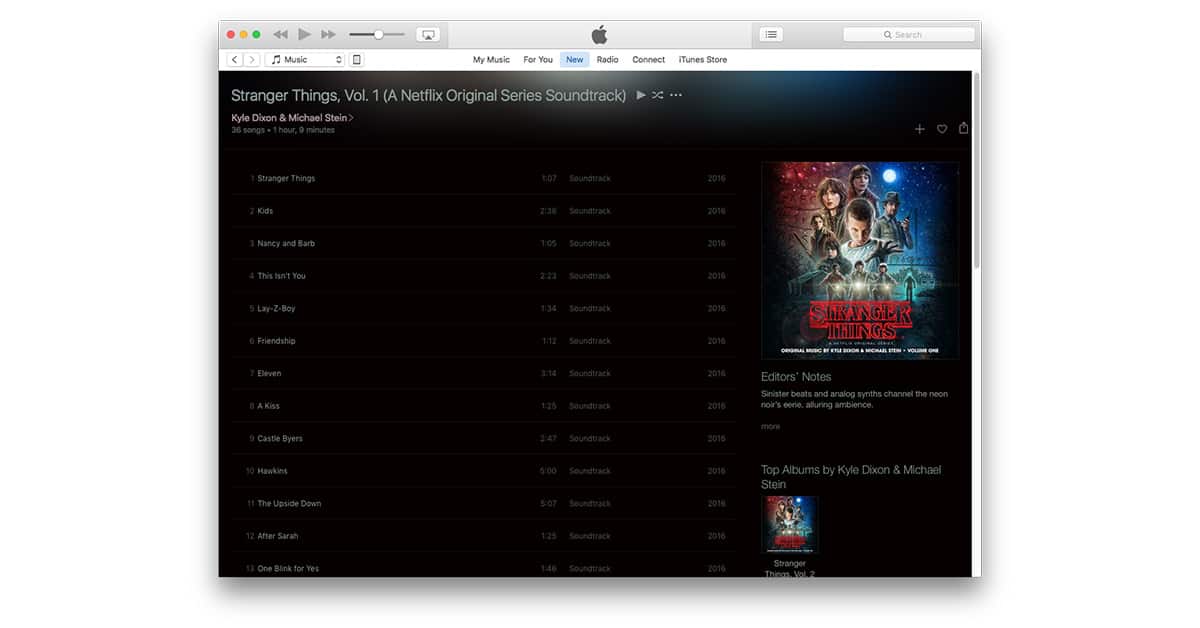
Get Your 80s Synth on with the Stranger Things Soundtrack on Apple Music
Now that we’ve all had enough time to watch all of Stranger Things on Netflix it’s safe to check out the soundtrack on Apple Music without worrying about spoilers. Stranger Things Volume 1 includes is loaded the show’s decidedly 80s synth tracks from Kyle Dixon and Michael Stein like the show’s theme, Eleven’s theme, and the creepy The Upside Down. The playlist has 36 tracks, and there’s a volume 2 for when you’re ready for even more Stranger Things music. And if you haven’t seen the series yet, clear your schedule now and start watching.

The iPad Pro 9.7-inch Keyboard Case for Road Warriors
In a perfect world, Dr. Mac says he’d ditch his laptop and hit the road with just a svelte 9.7-inch iPad Pro. Two recent events make it possible; find out more in Dr. Mac’s Rants & Raves #189: The iPad Pro 9.7-inch Keyboard Case for Road Warriors

TMO Daily Observations 2016-08-26: Interview with Fling's Dave Hamilton
This week TMO’s Daily Observations turns to the musical side of the Apple community. Today Dave Hamilton from Fling and Mac Geek Gab joins Jeff Gamet to talk about his musical life outside of the podcasting world, recording and producing Fling’s Bovine Abduction, the tools he uses for recording and mixing, and more.

Seeing a Folder's Size in the Terminal
Mac Geek Gab listener Daryn is interested in seeing the size of both files and folders when using the Terminal. We’ll help him utilize the ‘du’ command to glean that information, and then we’ll talk about how to do that in Recovery Mode where ‘du’ isn’t readily available.
How to Enable Apple Watch Screenshots in watchOS 3
Want to snap screenshots in watchOS 3 on your Apple Watch? The feature is disabled by default, but it’s pretty easy to turn on. Follow along with TMO’s video Quick Tip to learn how.