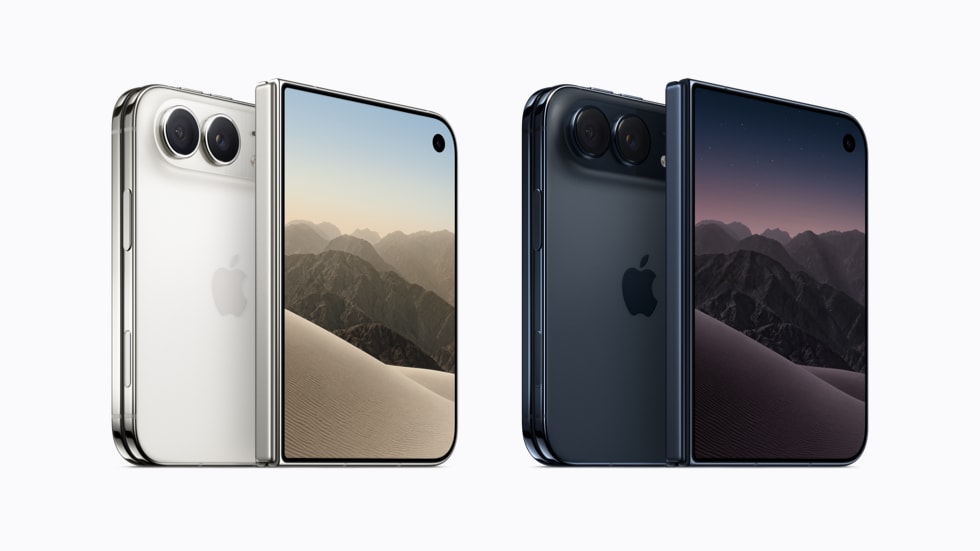
The iPhone Duo’s outer display is a 5.4-inch Super Retina XDR OLED at 1398 by 2034 pixels and 460 ppi, and Apple says it carries more than 90 percent of the screen area of the 6.3-inch iPhone 18 Pro. It runs ProMotion up to 120Hz and Always-On, sits under Ceramic Shield 2, and is attached to Apple’s longest battery figure for the phone: up to 44 hours of video playback, against 31 hours on the inner display.
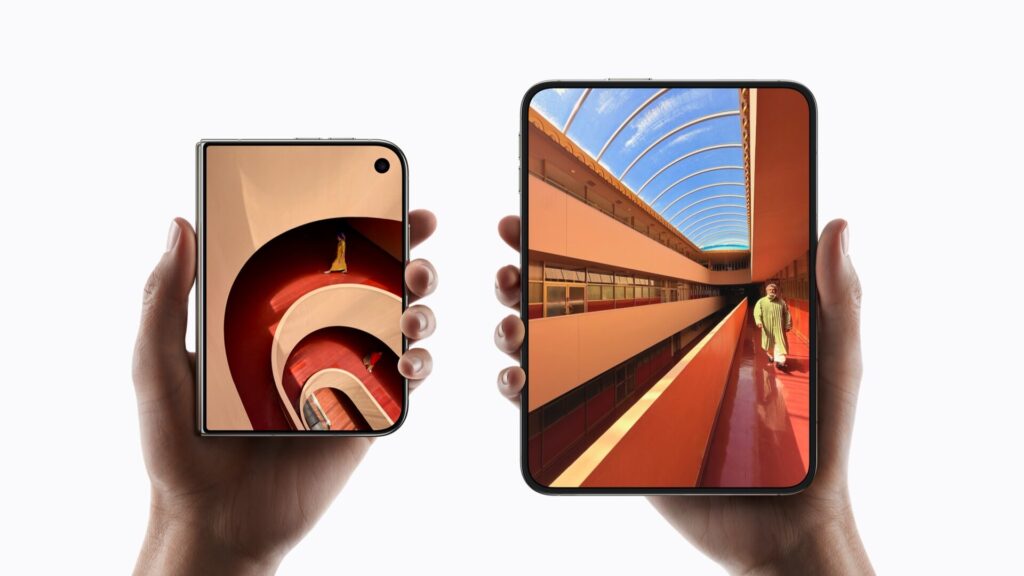
That combination is the part of the iPhone Duo spec sheet most likely to decide whether the phone is pleasant to own, because the cover display is what you use every time you do not open the phone. Apple gives it the same pixel density as the iPhone 18 Pro and a higher density than the 7.6-inch inner panel’s 430 ppi.
Key facts: the iPhone Duo cover display
| Spec | Outer display |
|---|---|
| Size | 5.4-inch Super Retina XDR OLED, 5.36 inches measured diagonally |
| Resolution | 1398 by 2034 pixels at 460 ppi |
| Refresh | ProMotion adaptive refresh up to 120Hz, Always-On |
| Brightness | 1000 nits typical, 1600 nits peak HDR, 3000 nits peak outdoor |
| Cover | Ceramic Shield 2, credited with three times better scratch resistance |
| Apple’s comparison | More than 90 percent of the screen area of the iPhone 18 Pro |
| Front camera | 12MP Center Stage, f/2.2, with Retina Flash |
| Video playback | Up to 44 hours, and up to 37 hours streamed |

How much smaller it really is than an iPhone 18 Pro
The diagonal is the misleading number here. A 5.4-inch screen sounds far smaller than the 6.3-inch iPhone 18 Pro, and Apple’s own framing is that the area gap is under 10 percent.
Don’t miss the best of The Mac Observer
Set us as a preferred source and our Apple reporting ranks higher in your Google Search results and Discover feed — one tap, no account changes.
That works because the cover display is a different shape. It is shorter than a standard iPhone screen and noticeably wider, which is also why Apple says the two Duo displays share the same aspect ratio.
Pixel density is unchanged at 460 ppi, the same figure Apple lists for the iPhone 18 Pro, the Pro Max and the rest of the current lineup. The inner display is the only iPhone screen Apple lists below that, at 430 ppi.
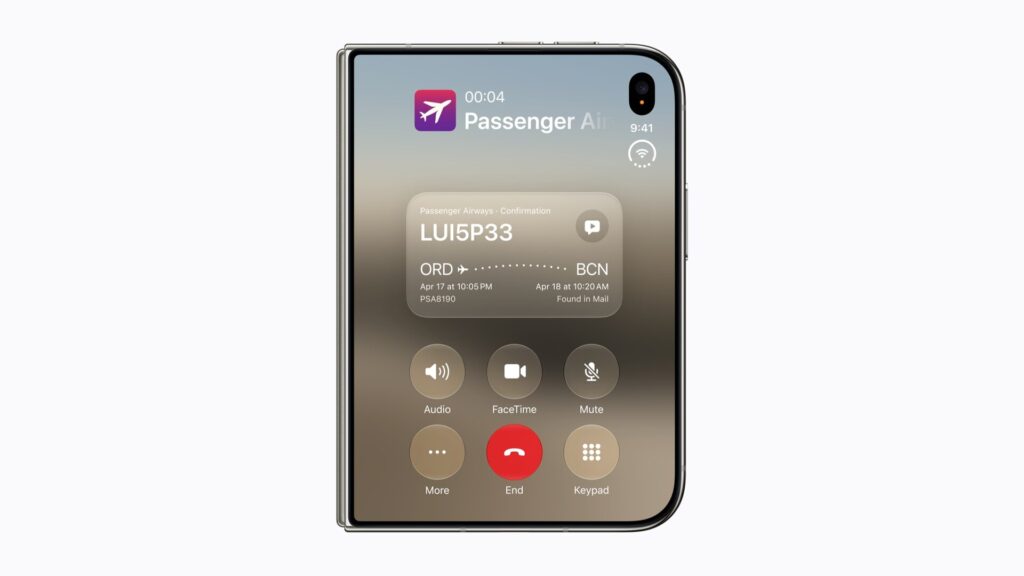
The cover display is where the cameras point
Apple put the 12MP Center Stage front camera on the outer display, at f/2.2 with Retina Flash, and it records 4K Dolby Vision at 24, 25, 30 or 60 fps. The inner display’s FaceTime camera sits under the panel at f/1.8 and tops out at 1080p.
Four of the Duo’s exclusive camera features also run on this screen: Smart Take, Duo Preview, Kid Cue and Duo FaceTime all use the cover display to show the subject something while the rear 48MP Dual Fusion cameras do the work.
Apple also lists a Camera Control button with a Siri Camera mode, which means the outer display is the viewfinder for most shots you take with the phone closed.
The battery case for keeping it shut
Apple publishes separate battery ratings for each display, and the gap is large. Video playback runs up to 44 hours on the outer display and up to 31 hours on the inner one, with streamed video at up to 37 and 26 hours.
The headline 24-hour typical use figure sits below both, because Apple states it assumes equal use of the inner and outer displays. Apple’s dual-battery design puts one cell on each side of the fold.
| Battery rating | Outer display | Inner display |
|---|---|---|
| Video playback | Up to 44 hours | Up to 31 hours |
| Streamed video | Up to 37 hours | Up to 26 hours |
| Typical use | Up to 24 hours, assuming equal use of both displays | Same figure |
| Charging | 50 percent in about 20 minutes with a 60W adapter | Same figure |
For comparison, the iPhone 18 Pro Max is rated at up to 45 hours of video playback, a figure our iPhone 18 Pro battery guide breaks down. The Duo’s closed figure gets within an hour of it.
What Apple has not said
Apple publishes no absolute screen area for either panel, only the percentage comparisons, and it does not repeat the inner display’s 2,000,000:1 contrast figure in the outer display listing. There is no minimum brightness figure and no stated lower bound for ProMotion on either screen.
Nobody outside Apple has used an iPhone Duo, so the cover display’s usability closed is untested. Pre-orders open Friday, October 16 at 5 a.m. PT, and the phone goes on sale Friday, October 23.