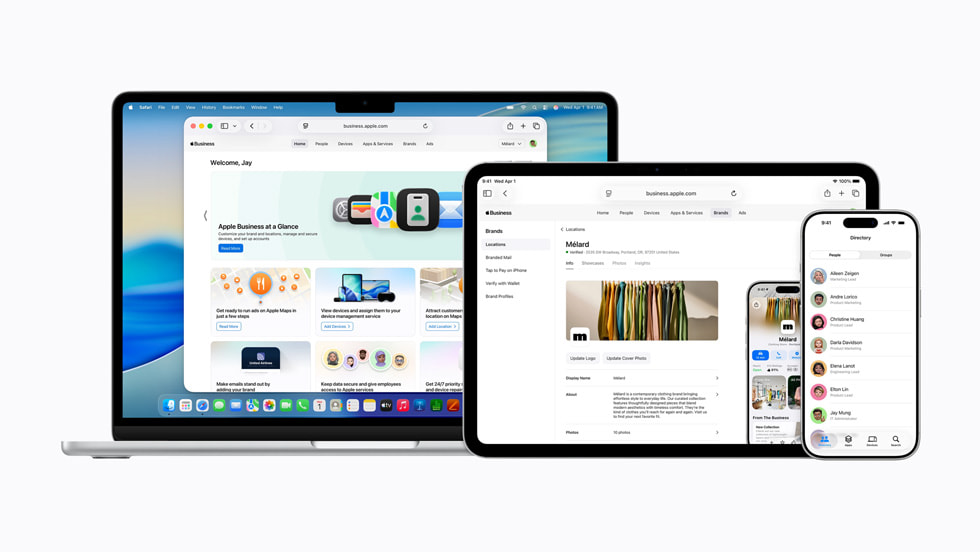
Apple has added contract terms that govern how developers sell auto-renewable subscriptions to organizations using Apple Business and Apple School Manager through Volume Purchasing. The changes are part of the Apple Developer Program License Agreement update Apple posted on October 13, 2026, ahead of the October 22, 2026 launch of Volume Purchasing.
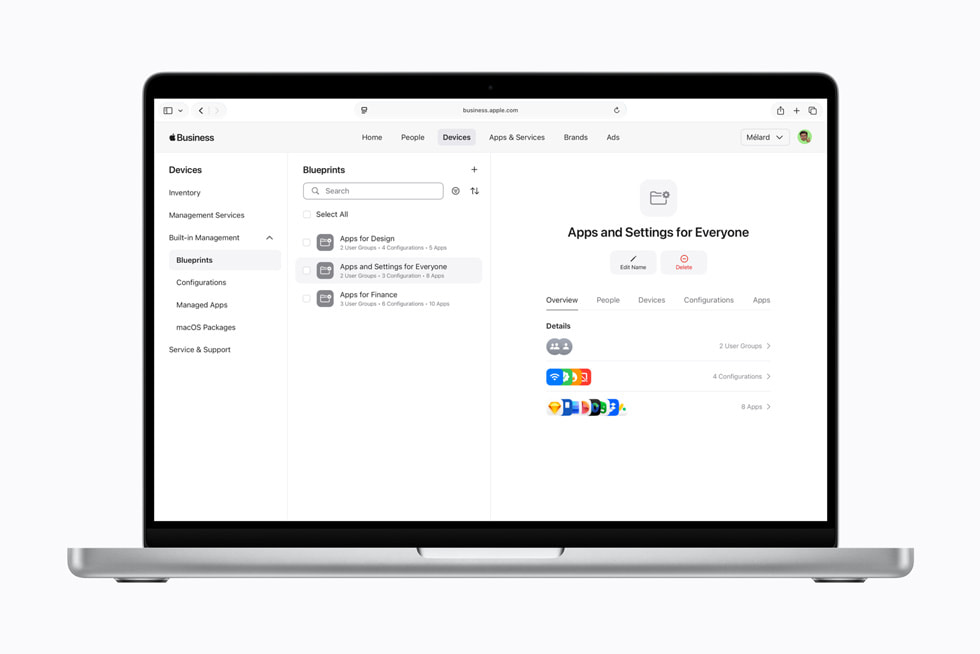
Apple first announced Volume Purchasing in September, and we covered how buying subscriptions by the seat works at the time. The new agreement text is the fine print: what counts as a Volume Purchase, who gets a refund, what happens if a developer pulls out, and how tax information is handled.
What Apple changed on October 13
Apple’s summary lists the Volume Purchasing changes under Schedule 3, Sections 1.1(b), 1.2(d)(iii), 3.1, 3.8(a) and 3.8(c), as “Specified terms for offering subscriptions to Apple Business and Apple School Manager organizations through Volume Purchasing.” Schedule 3 is the part of the agreement that covers Custom App Distribution.
Don’t miss the best of The Mac Observer
Set us as a preferred source and our Apple reporting ranks higher in your Google Search results and Discover feed — one tap, no account changes.
Two more changes apply to both Schedule 2 and Schedule 3, in Section 3.3(a) and 3.3(b). One specifies that Apple will report legally required information such as tax, sales and contact details to tax authorities. The other restricts the use of any customer tax information Apple shares with developers to purposes mandated by law.
Developers have to sign in to their account to accept the updated terms. The changes are listed in Apple’s developer news post on the updated agreement.
What counts as a Volume Purchase
The agreement now defines the term directly: “A ‘Volume Purchase’ is an auto-renewable subscription purchased by an institutional purchaser through Apple Business or Apple School Manager to be shared with a group of individuals.”
Each person who gets access is a “Group Member,” and for auto-renewable subscriptions the agreement counts every Group Member as an End-User. Developers authorize distribution to “Group Members of Volume Purchases purchased through Apple Business or Apple School Manager.”
Section 3.1 adds that developers authorize Apple “to market, solicit, and facilitate purchases of Your Volume Purchases under a single transaction for use by multiple End-Users.” That matches how Apple described the feature in September: organizations “buy your subscriptions through a single Apple In-App Purchase and assign seats using a device management provider.”
Refunds go to the school or business
The refund rule in Section 3.8(c) is the clause buyers will care about most. For Volume Purchases, developers instruct Apple “to refund to the institutional purchaser (i) the full amount of the price paid for the entire Volume Purchase, or (ii) a partial amount equivalent to the price of any unused subscription.”
There is a limit. The agreement says “Apple will not grant partial refunds for any subscription that is currently accessed by an active Group Member.” If Apple does refund, the developer reimburses Apple or grants a credit for the same amount.
Read plainly, the clause lets Apple refund a school or business for seats it bought but never assigned, while seats that students or staff are actively using are not eligible for a partial refund.
Opting out can affect renewals
Multiseat purchases are on by default in App Store Connect, and developers can turn them off. Section 3.8(a) spells out the consequence for organizations that already bought in.
Developers acknowledge “that opting out of multi-seat purchasing for a subscription or otherwise changing Your availability settings via App Store Connect may affect the ability to renew or add to that auto-renewable subscription, including removal of the subscription from Apple Business and/or Apple School Manager, as described in the Documentation.”
For an IT department, that is the line to note: a developer’s settings change can stop a renewal or remove the subscription from the organization’s catalog.
Volume Purchasing compared with Group Purchases
The same update adds matching terms for Group Purchases under Schedule 2. The two work differently.
| Detail | Volume Purchasing | Group Purchases |
|---|---|---|
| Who buys | An institutional purchaser using Apple Business or Apple School Manager | A subscriber, called the Group Organizer |
| Agreement section | Schedule 3 | Schedule 2 |
| How seats are given out | Assigned using a device management provider | Buyer invites others to join |
| Who gets refunds | The institutional purchaser | The Group Organizer |
| Launch | October 22, 2026 | This winter |
Both share the same partial refund limit for seats in active use. Schedule 2 adds one more detail: where the developer “hosted and managed the invitations,” Apple decides whether a seat is in use based on information the developer provides.
Tax data stays limited
Section 3.3(a) of Schedule 3 says information developers give Apple “may be disclosed by Apple to the applicable tax authorities to the extent required under applicable law,” and that this disclosure is not a breach of confidentiality.
Section 3.3(b) works in the other direction. If Apple discloses information it is legally required to share, “including without limitation any tax information relating to any End-User,” the developer may use it “solely for the purpose of complying with applicable tax obligations, including tax reporting, remittance, and audits as required by applicable law, and for no other purpose.”
What developers can control
Apple said in September that developers “can disable multiseat purchases entirely, or selectively manage availability across the App Store, Apple Business, and Apple School Manager.” Translations of the updated agreement will be available on the Apple Developer website within one month.