

Smartphone sales across Latin America took a sharp hit during the third quarter of 2026, yet Apple managed to weather the storm better than its biggest rivals. According to Counterpoint Research’s Q3 2026 Market Monitor report, total shipments in the region fell 24% compared to the same period last year. Even in a shrinking market, the tech giant posted the smallest drop among the top five brands and climbed to fourth place.
Apple climbs to fourth place as rivals face steeper drops
While regional smartphone volume hit its second-lowest quarterly level since 2015, Apple’s shipments declined by only 10% year-over-year. That steady showing lifted its share of the Latin American smartphone market to 9%, up from 7% in the third quarter of 2025.
Several key factors helped the company outperform competitors during a tough stretch. It absorbed rising component costs better than most brands, maintained strong stock levels across stores, and benefited from the late-quarter launch of the iPhone 18 Pro lineup.
Don’t miss the best of The Mac Observer
Set us as a preferred source and our Apple reporting ranks higher in your Google Search results and Discover feed — one tap, no account changes.
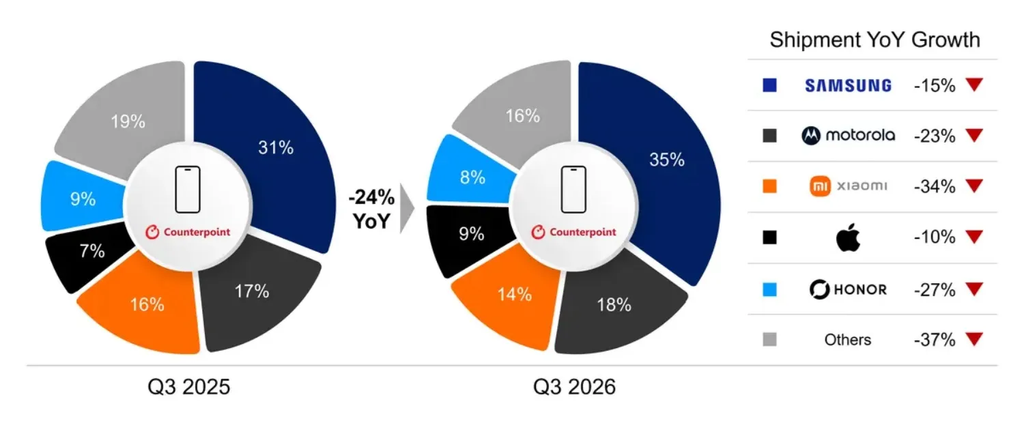
At the top of the rankings, Samsung held onto first place with a 35% market share. Motorola followed in second with 18%, while Xiaomi took third place at 14%.
Memory shortages and higher prices push regional shipments down sharply
The slowdown in Latin America reflects a broader supply crunch affecting the entire phone industry. Counterpoint Research reports that global smartphone shipments fell 20% year-over-year in the third quarter, marking the lowest third-quarter total in 14 years.
Ongoing shortages of DRAM and NAND memory chips have driven up manufacturing costs for phone makers across the board. Many companies passed those extra costs onto shoppers, pushing global retail smartphone prices up by 20% so far in 2026. In Latin America, the 24% drop was made even steeper because Chinese phone brands sent more of their limited inventory to Asian markets instead.
With memory prices still high and shoppers holding onto older phones longer, budget brands continue to feel the heaviest pressure. Apple’s focus on higher-end devices and steady store supply puts it in a strong spot to defend its growing share as the year wraps up.



Discussion