

Apple’s iPhone 18 Pro lineup is shaping up to bring major internal changes, with reports pointing to a full shift away from Qualcomm’s 5G modems. Instead, Apple plans to use its own C2 baseband chip across the flagship models. The upgrade does not stop there. Analysts also expect a new N2 wireless chip, a smaller Dynamic Island, and the debut of Apple’s first 2nm A20 Pro processor.
These changes focus on connectivity, performance, and display design. If accurate, the iPhone 18 Pro and iPhone 18 Pro Max will represent one of the biggest technical transitions in recent years. The devices are still months away from launch, but key hardware details are already circulating.
According to a research note from GF Securities analyst Jeff Pu, several upgrades are planned for the iPhone 18 Pro models. The note, via MacRumors, outlines five major features expected in the September release.
Don’t miss the best of The Mac Observer
Set us as a preferred source and our Apple reporting ranks higher in your Google Search results and Discover feed — one tap, no account changes.
C2 Modem and N2 Wireless Chip

One of the biggest changes involves Apple’s custom C2 modem. Apple introduced its in-house cellular modem strategy with the C1 in the iPhone 16e, followed by the C1X in the iPhone Air. Apple claims the C1X modem is up to twice as fast as the C1 and touts it as the most power-efficient modem ever in an iPhone.The C2 is expected to continue those gains.
Reports suggest the C2 will support both mmWave and sub-6GHz 5G. That would make it the first Apple modem to fully support ultra-high-speed mmWave connectivity across Pro models. The chip is also expected to use TSMC’s 4nm process, which should improve power efficiency and thermal control.
Alongside the modem, Apple plans to introduce the N2 wireless networking chip. The current N1 chip enables Wi-Fi 7, Bluetooth 6, and Thread. Apple said the N1 improves performance for features such as Personal Hotspot and AirDrop. However, no specific improvements for the N2 have been detailed yet.
Smaller Dynamic Island and Under-Screen Face ID
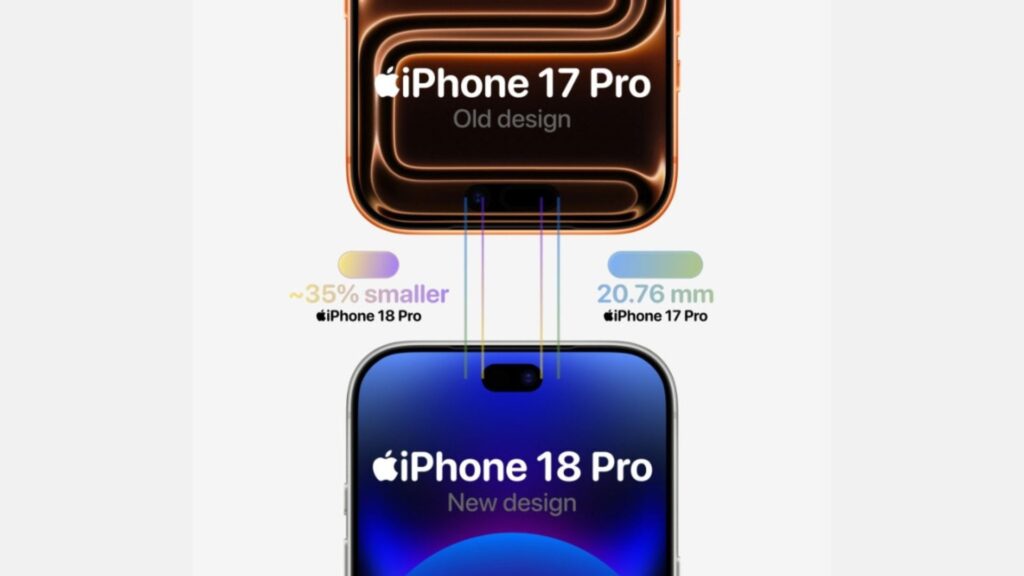
Display changes are also on the table. Analysts expect Apple to move Face ID components, including the flood illuminator, under the OLED panel. This shift would allow Apple to reduce the size of the Dynamic Island.
Reports suggest the Dynamic Island could shrink by around 35 percent. That change would increase the screen-to-body ratio on both the iPhone 18 Pro and iPhone 18 Pro Max. The adjustment would not remove the feature entirely, but it would make the cutout less noticeable during daily use.
A20 Pro and Variable Aperture Camera

Performance upgrades are expected as well. The iPhone 18 Pro models are rumored to use Apple’s A20 Pro chip. This processor will reportedly rely on TSMC’s first-generation 2nm process. The current A19 Pro uses a 3nm architecture, so the shift to 2nm should bring stronger year-over-year gains in speed and efficiency.

Camera hardware may also see a significant improvement. The main 48-megapixel Fusion camera is rumored to gain variable aperture support. This technology would allow users to control how much light enters the lens, offering better depth-of-field control and improved shooting flexibility in different lighting conditions.
While smartphones have smaller image sensors compared to dedicated cameras, variable aperture can still enhance portrait shots and low-light photography when properly optimized.
Expected Launch Timeline
Apple is expected to launch the iPhone 18 Pro and iPhone 18 Pro Max in September. The company typically announces its flagship models during its annual fall event, and this year appears to follow the same timeline.
In addition to the Pro models, reports also suggest that Apple’s long-rumored foldable iPhone could arrive later in the year. However, the iPhone 18 Pro lineup remains the primary focus, especially with Apple accelerating its transition to fully in-house modem and wireless chip designs.
If these reports hold true, the iPhone 18 Pro series will highlight Apple’s push for tighter hardware integration, improved connectivity, and refined display design. The final details will become clear closer to launch, but the direction is already taking shape.




Discussion