
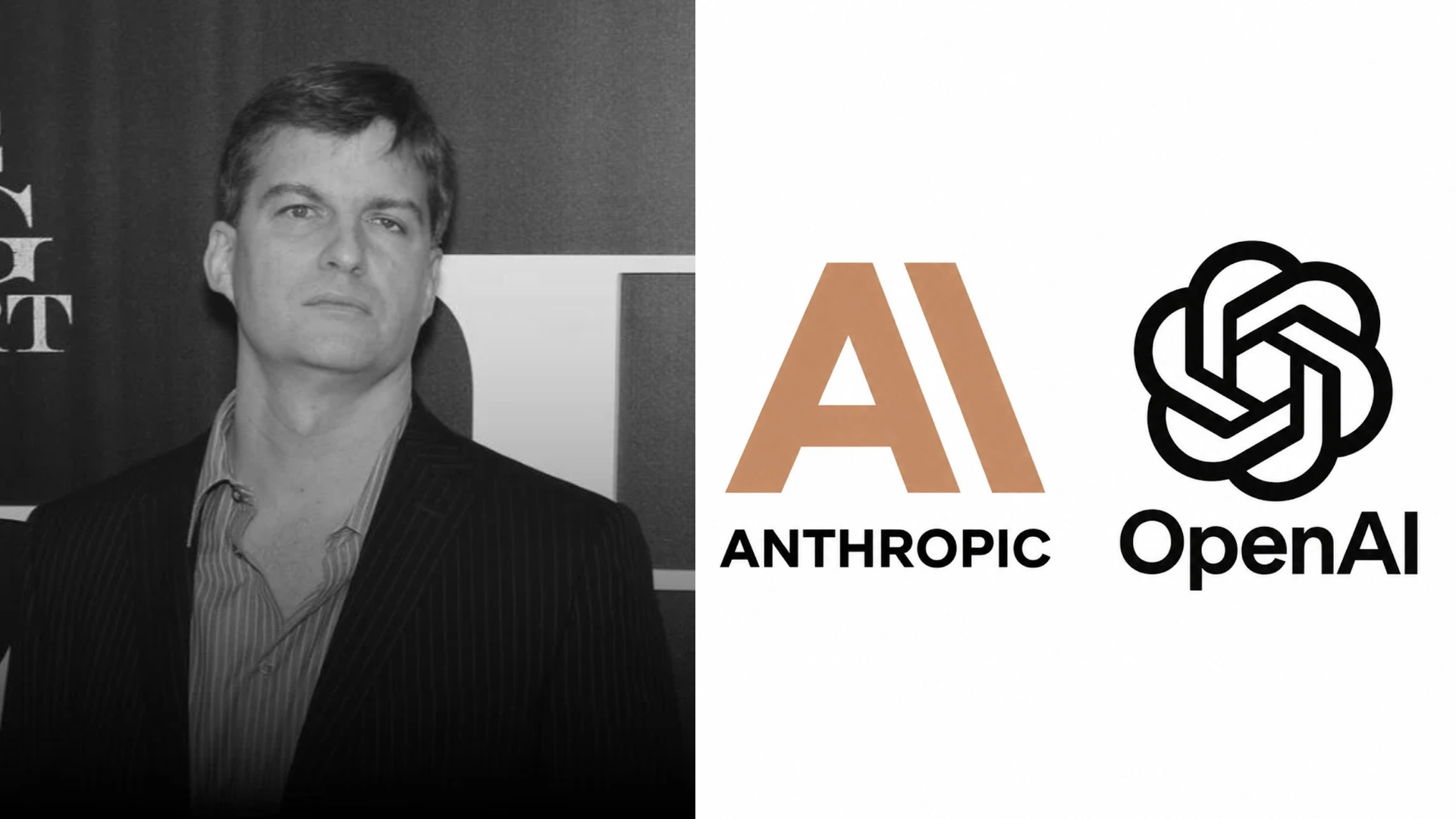
Michael Burry is accusing OpenAI, Anthropic, and other major AI companies of using warnings about increasingly powerful artificial intelligence to protect their businesses as growth slows and closely watched IPO plans face delays.
The investor, best known for predicting the 2008 housing crash, called recent demands to slow AI development “self-serving.” In a new post, Burry argued that warnings about dangerous AI systems help established companies strengthen their position against competitors while creating more hype around their technology before public listings.
His criticism comes shortly after Anthropic CEO Dario Amodei called for AI companies to slow model development so safety systems and independent oversight can catch up. OpenAI CEO Sam Altman supported those concerns and has now said OpenAI does not plan to go public in 2026, citing the amount of safety and alignment work still ahead.
Don’t miss the best of The Mac Observer
Set us as a preferred source and our Apple reporting ranks higher in your Google Search results and Discover feed — one tap, no account changes.
Burry thinks AI safety warnings also serve a business purpose
Burry laid out four main arguments:
- Current large language models are not artificial general intelligence, or AGI, in his view.
- Slowing development benefits established companies by giving faster-moving competitors less room to catch up.
- Describing AI as extraordinarily powerful and potentially dangerous creates additional hype before an IPO.
- Safety concerns provide what Burry described as “cover” for slowing business growth and delayed public listings.
The IPO argument has become especially relevant. Anthropic confidentially filed a draft S-1 for an IPO in June, while OpenAI had also been preparing for a future listing and building ChatGPT into a broader AI platform ahead of its IPO push.
| Company | Current IPO position | Recent safety position |
|---|---|---|
| OpenAI | No IPO planned for 2026 | Altman says more safety and alignment work is required |
| Anthropic | Confidential draft S-1 filed | Amodei wants frontier AI development slowed |
| Burry’s view | IPO delays reflect broader business pressure | Safety warnings also benefit incumbents |
Are OpenAI and Anthropic actually seeing slower growth?
There is some evidence behind concerns about growth rates, although it does not prove Burry’s broader accusation.
Earlier transaction data cited by Deutsche Bank researchers indicated that ChatGPT consumer subscription growth had started flattening in some major European markets. At the same time, OpenAI remains enormous, with ChatGPT reaching around 900 million weekly users earlier this year.
Anthropic has also continued raising capital at extremely high valuations, with reports earlier this year placing a potential new funding round at a valuation above $900 billion.
Burry’s argument therefore remains an interpretation of the companies’ motives rather than proof that their AI safety concerns are fabricated. However, the timing puts an uncomfortable question in front of investors: whether increasingly dramatic AI warnings reflect purely technical risks, or also help the largest AI companies defend valuations, slow competitors, and explain why blockbuster IPOs are taking longer to reach Wall Street.


Discussion